The most popular advice about the GLP-1 weight loss timeline is also the least useful: “You'll lose dramatically in the first few weeks, then reach your goal within a few months.” That promise ignores how these medications are prescribed. Semaglutide and tirzepatide usually begin with lower doses, then increase gradually while your body adjusts to appetite changes and gastrointestinal effects.
The scale may move slowly at first. That doesn't automatically mean the medication has failed. A realistic timeline is a phased medical journey, shaped by the medication, dose, starting body size, tolerability, adherence, and the point at which your body settles into a plateau.
The Reality of Early Dose Titration
The first injection isn't supposed to create an instant transformation. Early treatment is primarily about dose titration, which means gradually increasing the medication until you reach a dose that offers meaningful appetite and metabolic effects without creating side effects you can't tolerate.
Semaglutide commonly begins at 0.25 mg, while tirzepatide commonly begins at 2.5 mg. These introductory doses are used for adaptation, not as a test of your maximum weight-loss potential. Providers increase the dose carefully because nausea, vomiting, reflux, constipation, diarrhea, and fatigue can become harder to manage when the dose rises faster than your body can accommodate.
Why the first month can feel underwhelming
During the opening weeks, some patients notice less food noise, smaller portions, or earlier fullness. Others notice little change in appetite and almost no movement on the scale. Both experiences can occur during a medically appropriate start.
The purpose of this stage is to establish tolerability. Your provider may keep you at a dose longer than the standard schedule if nausea or other symptoms interfere with eating, hydration, sleep, or daily activity. A slower increase isn't a sign that treatment is off track. It can be the decision that allows you to continue treatment rather than stop after an unpleasant reaction.
Practical rule: Don't judge the medication by your first injection. Judge the early phase by whether you can follow the plan safely and consistently.
What to monitor before increasing
Track more than body weight. Note hunger, fullness, food cravings, bowel habits, fluid intake, energy, and the timing of symptoms after each injection. That information helps a clinician decide whether a dose increase is appropriate or whether the current dose needs more time.
A useful semaglutide titration schedule can help you understand the general logic of gradual escalation, but your prescribed plan should come from your licensed provider. Online anecdotes about doubling a dose, skipping steps, or taking more medication after a slow week aren't substitutes for individualized monitoring.
The early plateau-like period is often pharmacologic adjustment, not treatment failure. The strongest trial evidence for semaglutide and tirzepatide comes from treatment lasting many months, so expecting the final result during the first few weeks sets an unrealistic standard.
Clinical Benchmarks for Semaglutide and Tirzepatide
Clinical trials provide a more useful reference than before-and-after posts. They do not forecast one patient's result, but they show how weight reduction develops with structured treatment, dose escalation, and lifestyle support.
In the STEP 1 trial, 1,961 adults with overweight or obesity, without diabetes, received once-weekly semaglutide 2.4 mg plus lifestyle intervention for 68 weeks. At week 68, mean body-weight reduction was 14.9% with semaglutide, compared with 2.4% with placebo, a treatment difference of 12.4 percentage points (STEP 1 trial data).
The trial also found that 86.4% of semaglutide recipients achieved at least 5% weight loss by week 68, compared with 31.5% receiving placebo. That timeframe matters clinically. A patient still adjusting to treatment after several injections should not be judged against the eventual trial average.
Tirzepatide reached another benchmark in the SURMOUNT-1 trial, which followed adults with obesity for 72 weeks. Mean weight loss at week 72 was 15.0% with 5 mg, 19.5% with 10 mg, and 20.9% with 15 mg, compared with 3.1% with placebo (SURMOUNT-1 trial results). The highest dose produced up to 22.5% weight loss, described in topline results as about 52 lb. or 24 kg.
Comparing the trial trajectories
The average early curves are different. A trial-based semaglutide trajectory places average loss at about 5% by week 12, roughly 10% by week 28, and 14.9% by week 68 (semaglutide timeline analysis). Tirzepatide data show approximately 7.2% at 5 mg, 8.4% at 10 mg, and 9.5% at 15 mg by week 12 (tirzepatide response analysis).
| Medication | Week 12 average | Week 68 to 72 average | Mechanism |
|---|---|---|---|
| Semaglutide | About 5% | 14.9% at week 68 | GLP-1 receptor agonist |
| Tirzepatide 5 mg | About 7.2% | 15.0% at week 72 | GLP-1 and GIP receptor agonist |
| Tirzepatide 10 mg | About 8.4% | 19.5% at week 72 | GLP-1 and GIP receptor agonist |
| Tirzepatide 15 mg | About 9.5% | 20.9% at week 72 | GLP-1 and GIP receptor agonist |
These figures are benchmarks, not promises. Dose, time at each dose, tolerability, and individual biology all affect when progress slows. Tirzepatide may show faster early reduction in trial data, while semaglutide can continue accumulating weight loss over a prolonged treatment period.
Your Month by Month Progression
A calendar cannot predict your response. The hidden variable is titration. Early months often reflect dose adjustment, tolerability, and consistency before the medication reaches a dose that meaningfully controls appetite. Use the timeline as a series of clinical checkpoints, not a promise of a specific result.
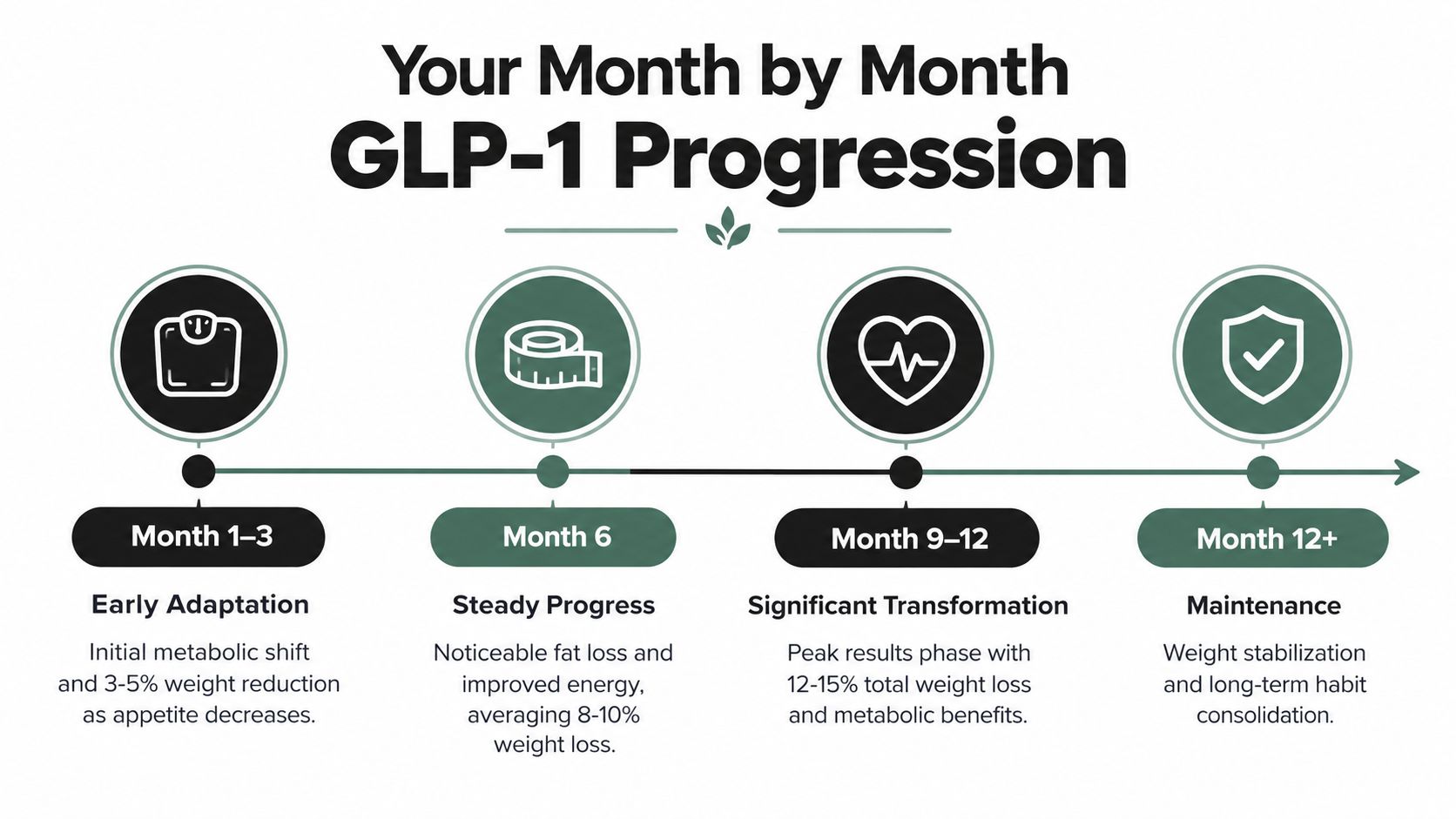
Months one through three
The opening phase is often about adaptation. Track whether you can take each dose as prescribed, whether nausea, vomiting, constipation, or other symptoms interfere with eating and hydration, and whether hunger or intrusive food thoughts are changing. A slower scale response can be appropriate when you are still on an introductory dose or have paused escalation because of side effects.
Small changes count. Smaller portions may feel sufficient, meals may require less planning, and snacking may become easier to control before weight loss becomes obvious. Review your weight trend, waist measurement, symptoms, and dosing record rather than judging one week in isolation. This guide to how fast GLP-1 medication can work provides patient-facing context for why early progress varies.
Contact your provider sooner if symptoms prevent fluids or food, vomiting persists, constipation becomes severe, or you are unsure how to adjust after a missed dose. Do not increase the dose to match another patient's pace.
Around month six
By this checkpoint, some patients have reached a later maintenance dose, while others remain at a lower dose because their response is adequate or their side effects require slower escalation. Review the trend across several weeks, appetite control between injections, activity, nutrition, and treatment consistency with your provider.
Weight loss commonly becomes less dramatic from week to week. Clothing fit, waist measurement, mobility, blood pressure, glucose readings, and energy can clarify whether treatment is helping, but the relevant measures depend on your health goals and medical history.
Around months nine through twelve
Longer treatment provides a better test of response than the first few months. Some patients continue losing gradually; others approach a stable weight. At this stage, discuss whether the current dose still offers useful appetite control, whether side effects remain acceptable, and what maintenance would require.
A stable weight is not automatically treatment failure. It may signal that the regimen is working at its current level, or it may justify reviewing adherence, dose timing, medications, sleep, nutrition, and activity with your provider. Safety symptoms or a sudden change in appetite deserve review rather than self-directed dose changes.
Understanding the True Plateau Timeline
A patient reaches week 30 with controlled hunger but no scale change. Another stalls soon after a dose increase because constipation and fluid shifts mask progress. A third has regained appetite after months of steady loss. These are different clinical situations, and each calls for a different response.
Start by asking three questions: Has the current dose had enough time to work? Are appetite and eating patterns still controlled? Has anything changed in adherence, digestion, activity, sleep, or other medications? The answers help distinguish a temporary fluctuation from a titration-related stall or a genuine plateau.
Trial-based summaries indicate that semaglutide can continue trending downward until around week 60, while tirzepatide may plateau earlier. Reported median plateau timing varies from about 24 to 36 weeks by BMI category, so starting body size can influence the shape of the curve (plateau timing analysis).
A temporary stall may reflect water retention, digestion, or menstrual-cycle changes. If hunger remains controlled and waist measurements, clothing fit, or mobility continue improving, observing the trend is often more useful than escalating immediately.
A titration stall occurs while someone remains on a lower dose or pauses increases because of tolerability. Judge the response against the current dose and treatment duration, not against a patient using a later maintenance dose.
A true plateau calls for a structured review with your provider. Check injection technique, missed doses, medications affecting weight, sleep, nutrition, physical activity, constipation, and any change in appetite control. Options may include dose adjustment, a longer maintenance period, a different medication, or a revised health target.
A plateau changes the question from “Why did this stop working?” to “What has changed in dose, appetite, body size, behavior, or biology?”
Avoid chasing an earlier rate of loss. A smaller body requires less energy, so slower progress can reflect normal physiology rather than treatment failure. Persistent appetite changes or unexplained symptoms still deserve clinical review.
Navigating Side Effects and Appetite Changes
The side-effect timeline often determines the weight-loss timeline. Nausea, reflux, constipation, diarrhea, delayed gastric emptying, and fatigue can appear during initiation or after a dose increase. If symptoms prevent adequate hydration or nutrition, increasing the dose faster won't improve the overall outcome.
A common pattern is a difficult adjustment after a new dose, followed by better tolerability as the body adapts. That pattern isn't universal, and severe or persistent symptoms shouldn't be dismissed as something you need to endure. Your provider may hold the dose, extend the current step, modify meal timing, or investigate another cause.

Appetite suppression needs to be calibrated
Many patients describe less intrusive food thinking, earlier fullness, and less interest in large or highly rewarding meals. The desired effect is better control, not an inability to eat. If you're skipping meals, struggling to meet fluid needs, feeling persistently weak, or developing aversion to most foods, tell your clinician.
Food-related emotional changes also deserve attention. Some people feel relief when food noise quiets, while others notice a flatter response to rewards or a sense of emotional distance. The discussion of GLP-1s and anhedonia risks offers useful context for patients who notice changes beyond appetite.
For a practical review of common symptoms and warning signs, consult this guide to GLP-1 medication side effects. Seek prompt medical care for severe or persistent abdominal pain, repeated vomiting, signs of dehydration, or other symptoms your prescribing team identifies as urgent.
Small meals, slower eating, lower-fat choices when nausea is active, and a consistent hydration routine can help some patients. Don't add supplements or laxatives casually, especially if you take other medications. Your treatment team should know what you're using.
Optimizing Results During Active Treatment
Medication can reduce appetite, but it doesn't decide whether the weight you lose is mostly fat, lean tissue, or a mixture. The active-loss phase needs a body-composition strategy, not just a lower number on the scale.
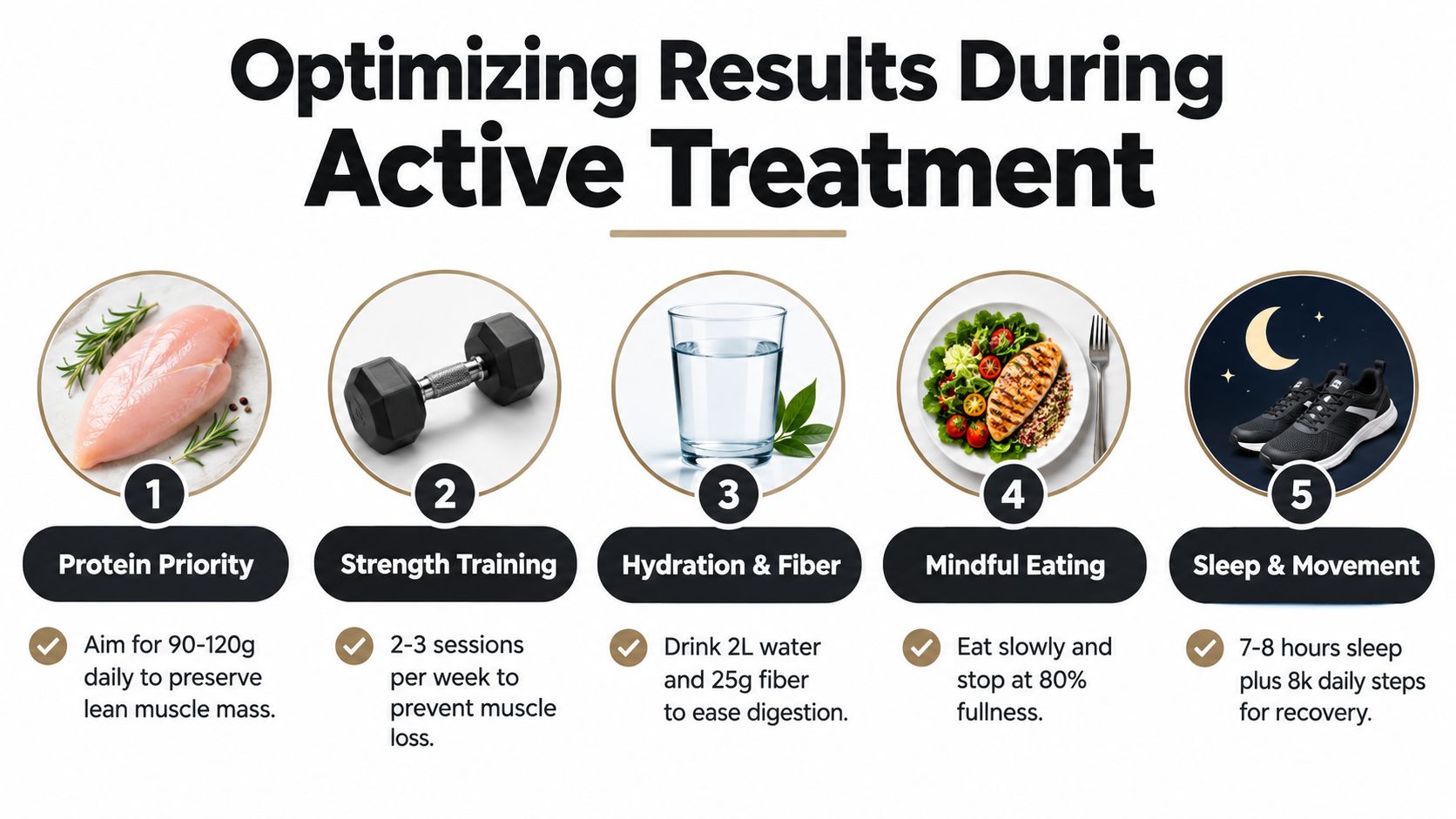
Protect muscle while appetite is lower
Make protein the first item you plan, especially when smaller meals make it difficult to eat enough. Eggs, Greek yogurt, fish, poultry, tofu, beans, and other protein-rich foods can make meals more nutritionally useful without requiring large portions.
Resistance training gives your body a reason to preserve and use muscle. Start with manageable movements, such as sit-to-stand exercises, resistance bands, machines, or free weights, then progress gradually with guidance if you have pain, weakness, or a chronic condition.
Use a simple daily checklist
- Protein priority: Include a meaningful protein source at each meal rather than trying to compensate at night.
- Strength work: Train major movement patterns consistently, with rest between sessions.
- Fluids and digestion: Sip fluids through the day and choose fiber-containing foods as tolerated.
- Mindful portions: Eat slowly enough to notice fullness before the plate is empty.
- Recovery: Treat sleep and ordinary movement as part of treatment, not optional extras.
If nausea or early fullness makes these habits difficult, the answer isn't to force large meals. Discuss smaller, more frequent meals, a slower dose increase, or a referral to a registered dietitian. A treatment plan that produces weight loss but leaves you exhausted, dehydrated, or physically weaker needs adjustment.
One practical option is a supervised telehealth program such as Weight Method, which connects eligible adults with licensed providers for semaglutide or tirzepatide evaluation, dose monitoring, progress tracking, messaging, and home delivery. Regardless of where you receive care, the essential element is ongoing clinical oversight.
Long-Term Durability and Life After GLP-1s
The hardest part of GLP-1 treatment may begin after weight loss slows. Reaching a target weight changes the medical question from active loss to durability. Your provider may recommend continued treatment, a lower maintenance dose, a carefully planned taper, or another approach based on appetite control, health conditions, side effects, access, and regain risk.
Stopping produces different outcomes. A two-year discontinuation analysis found that many patients retained at least some weight loss two years after stopping. A 2025 review also reported that semaglutide users regained roughly two-thirds of lost weight after withdrawal. These findings can coexist. Some people maintain part of their loss, while others experience substantial hunger and regain after treatment ends.
What a maintenance conversation should include
A useful plan examines whether hunger has returned, whether weight remains stable, whether the current dose is tolerable, and whether eating and activity patterns remain sustainable without excessive restriction. It should also address the health effects of regain, rather than focusing only on appearance or a target number.
Some patients may be appropriate candidates for a lower maintenance dose. Others may need ongoing therapy because appetite and weight rise when treatment is reduced. There is no universal stopping date. Abruptly stopping without a plan can leave you unprepared for renewed hunger or food noise.
Maintenance insight: The goal is to preserve health improvements with a plan you can monitor and revise.
Speak with your provider before changing or stopping semaglutide or tirzepatide. Ask which measurements will define success, how often follow-up will occur, which symptoms require contact, and what to do if weight begins to rise. A realistic GLP-1 weight loss timeline includes the period after the scale stops falling, because maintenance is part of treatment.
Weight Method offers online evaluation and ongoing provider support for adults considering medically supervised semaglutide or tirzepatide treatment, including personalized dose monitoring and progress tracking. Visit Weight Method to learn whether its telehealth approach fits your health history, schedule, and long-term weight-management goals.