The tirzepatide weight loss price can range from $399 for a four-week supply of the 2.5 mg starting-dose vial to $1,049 for a 15 mg refill outside Lilly's discount window, before any additional care fees. The advertised starting price is often an induction-dose price, not a reliable estimate of what you'll pay at a maintenance dose.
That gap is easy to miss. Someone searching prices may see a low monthly offer, then discover that it applies only to a particular dose, refill schedule, insurance status, or medication channel. To budget sensibly, compare the dose you may use over time, what the quoted price includes, and how coverage or refill timing could change your bill.
What Tirzepatide Really Costs
A patient comparing prices may encounter four different figures for the same treatment: the manufacturer's list price, a cash-pay vial price, an insurance copay, and a promotional savings-card price. They aren't interchangeable. Each reflects a different route to access, and none alone guarantees what a particular patient will pay.
When the FDA approved Zepbound for chronic weight management, Eli Lilly announced a $1,059.87 list price for a one-month supply across six strengths, from 2.5 mg to 15 mg. That was the undiscounted list price, not a universal patient bill. Lilly said eligible people with commercial insurance covering Zepbound could pay as little as $25 through a savings-card program; commercially insured patients whose plans didn't cover it could potentially pay $550 monthly through the program. Those offers were subject to eligibility and program terms. Lilly's announcement of Zepbound's approval and launch pricing sets out the distinction between list price and possible savings-card prices.
Why the headline price can mislead
A low advertised price may describe only the starting dose or depend on a timely refill. A higher figure may describe a branded product at list price, while a telehealth fee might include medication and clinical services, or charge for them separately. Without the dose, dispensing channel, insurance terms, and included services, a monthly price doesn't tell you the full cost.
A more useful question is not "How much is tirzepatide?" Ask what the monthly total would be at the dose your clinician expects you to use, and whether the quote includes prescribing, follow-up, shipping, and dose adjustments. For people comparing local care options, find tirzepatide treatment in Ashburn provides a place to investigate a treatment pathway and clarify what a provider includes.
Pricing rule: Treat “starting at” as an entry point, not a long-term budget. Ask for dose-specific prices and the conditions required to keep them.
Tirzepatide is dose-dependent, and treatment may involve titration rather than remaining at the initial strength. That makes a short introductory offer a poor proxy for a longer course. The realistic comparison is the total cost over time, including clinical support and any changes in coverage, not just the first month's medication price.
Breaking Down the Price Drivers
Dose is the first major variable. In 2024, Lilly announced four-week single-dose vial supplies at $399 for 2.5 mg and $549 for 5 mg. Compared with its original monthly list price, those figures were about 62% and 48% lower, respectively. Lilly described the vial prices as at least 50% below the list price of other incretin medicines for obesity, though the comparison depends on which products and prices are included. The announcement provides a manufacturer-published cash-pay benchmark, but it doesn't establish what every patient will pay. Lilly's release on single-dose Zepbound vials also cautions, in practical terms, against treating the lowest dose as the price for every dose.
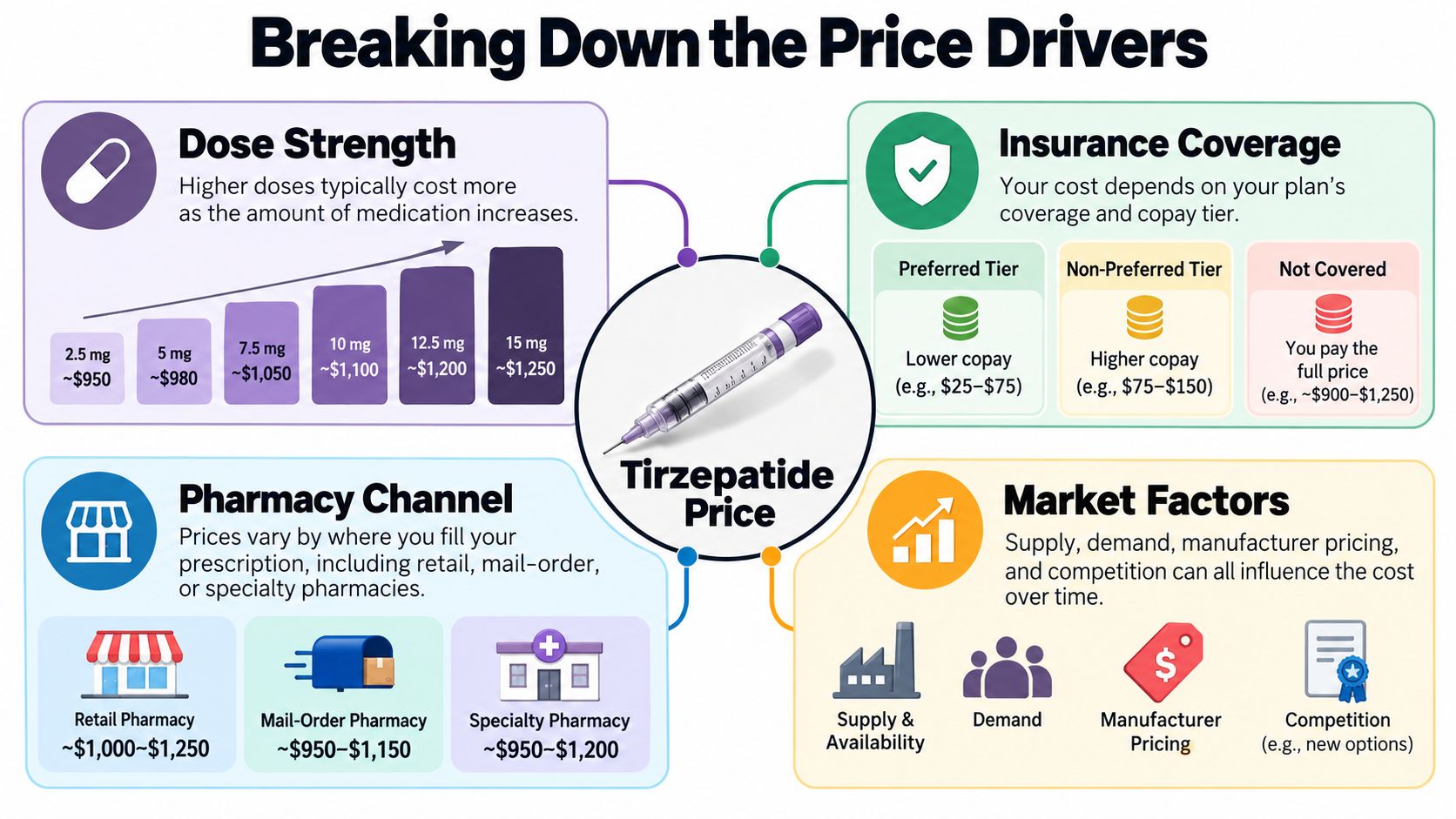
What sits behind the medication price
The vial amount isn't necessarily the complete treatment bill. Pharmacy charges, supplies, consultation fees, and later dose increases can add costs, and a provider may package these differently from a retail pharmacy. A telehealth subscription should be compared with the full set of services it covers, not just the medication component.
Insurance can alter the out-of-pocket figure more than the list price suggests. Commercial coverage, Medicaid, Medicare, and employer-plan exclusions follow different rules, and coverage for one approved use doesn't automatically mean coverage for weight management. For a practical overview of plan questions and benefit terms, use this guide to GLP-1 insurance coverage.
Refill conditions matter, too. Some manufacturer self-pay prices are tied to filling the next prescription within a specified window. Before choosing an option, ask whether a missed or delayed refill changes the price, whether the quoted amount applies to your prescribed strength, and what happens if your clinician recommends a dose change.
Compare the same treatment bundle. One quote might include the medication and virtual consultations, while another covers only the drug. Write down the dose, pharmacy or delivery channel, refill rules, clinical services, and insurance assumptions beside each price. If those details differ, the prices aren't directly comparable.
Tirzepatide vs Other GLP-1s
A lower list price doesn't automatically mean a lower bill, and a lower bill doesn't automatically mean better value. Tirzepatide launched at a list price about 20% below the then-list price of semaglutide 2.4 mg injection for obesity, but that was a list-price comparison, not a guarantee of a lower patient cost. Insurance benefits, savings-card eligibility, and cash-pay channels can change the comparison.
A second distinction is cash price versus net price. Cash price is what a patient may face when paying directly. Net price is an estimate of what a payer spends after discounts and rebates. ICER used an estimated 2025 net price of $7,973 annually, or about $664 monthly, in its model. That isn't a retail quote for a patient. In the model, tirzepatide remained cost-effective at a $100,000-per-QALY threshold and generated the greatest modeled gains in quality-adjusted life-years, equal-value life-years, and life-years among the obesity treatments evaluated. ICER's evidence report and price analysis provide the context for those payer-level estimates.
Read the comparison at the right level
| Metric | Tirzepatide (Zepbound) | Semaglutide (Wegovy) |
|---|---|---|
| Launch-price comparison | Lilly's announced list price was about 20% below the then-list price of semaglutide 2.4 mg for obesity | Used as the comparator in Lilly's launch-price comparison |
| Patient-facing cost | Depends on dose, coverage, channel, refill conditions, and eligible discounts | Depends on plan, channel, and any applicable discounts |
| Net-price evidence in the cited analysis | ICER modeled an estimated 2025 net price of $7,973 annually, about $664 monthly | No comparable net-price figure is provided here |
| Value finding in the cited analysis | Modeled cost-effective at a $100,000-per-QALY threshold | No direct patient-level cost conclusion follows from this comparison |
A payer model can help assess health value, but it can't tell an uninsured patient what a pharmacy will charge or whether a plan will approve treatment. That's why a clinical comparison and a price comparison should be kept separate. If you're weighing drug options, this resource can help you compare semaglutide weight loss options; for a more direct discussion of the medications, see this comparison of tirzepatide and semaglutide for weight loss.
When comparing telehealth offers, include the full bundle: prescribing, clinical monitoring, titration, messaging, shipping, and support for managing adverse effects. A lower monthly figure may exclude some of those services or change as the dose rises. ICER's net-price estimate is useful for payer economics, but it shouldn't be mistaken for a patient's cash-pay budget.
How to Lower Your Out-of-Pocket Costs
The most useful cost-saving move is to compare the price at your likely dose, not just the introductory offer. Lilly's U.S. self-pay program lists $299 monthly for 2.5 mg, $399 for 5 mg, and $449 for 7.5 mg through 15 mg when refilled within 45 days. Outside that window, regular prices can reach $599 for 7.5 mg, $699 for 10 mg, $849 for 12.5 mg, and $1,049 for 15 mg. The price schedule is described in Lilly's self-pay program announcement. The takeaway is plain: the lowest advertised figure may apply only to the starting strength, while a later refill or higher dose can cost substantially more.
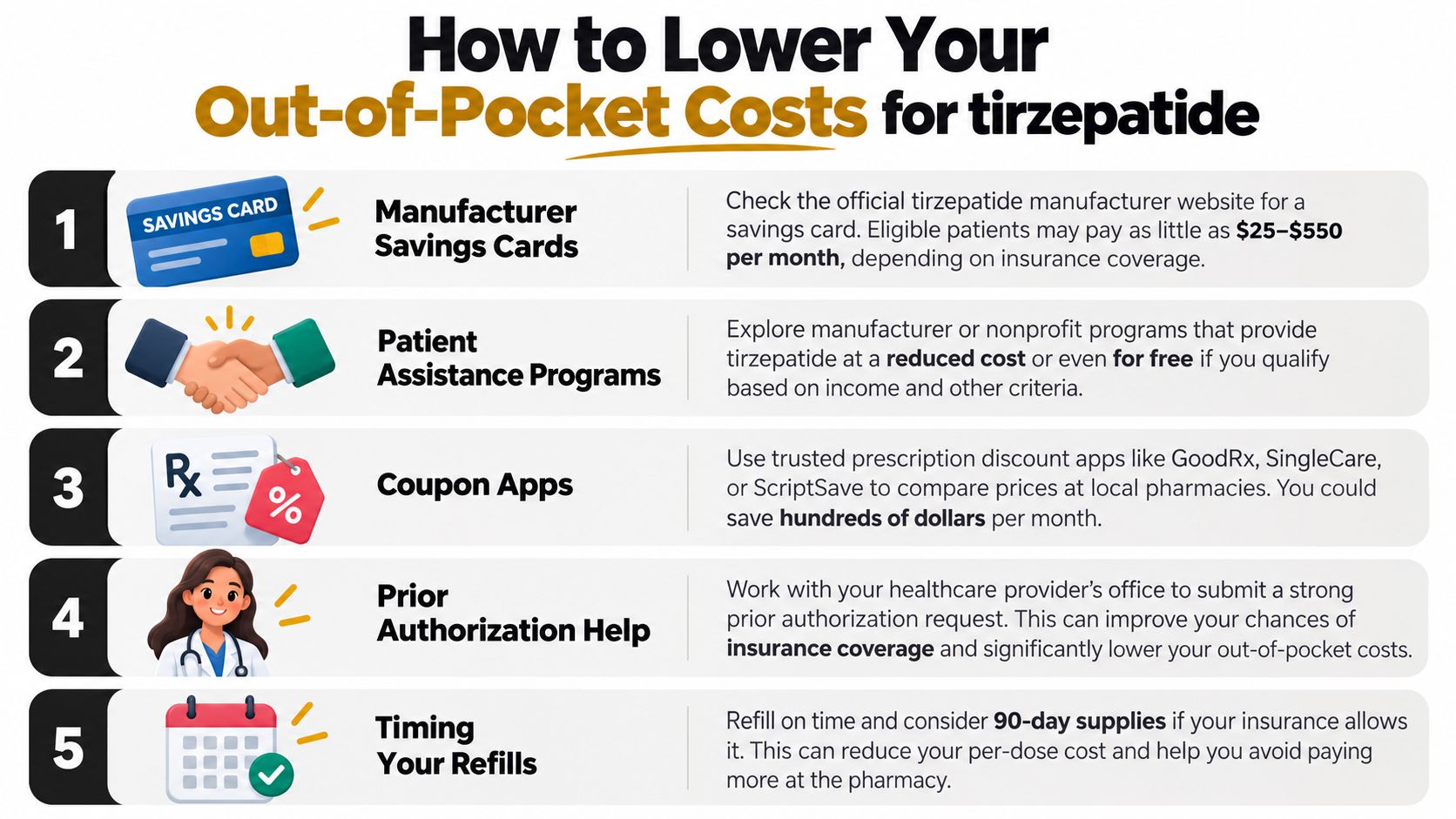
Build the comparison before you enroll
Ask the provider or pharmacy for a written price schedule at the doses you may use. Then check the following:
- Savings-card eligibility: Confirm whether your insurance type and coverage status qualify, and whether the discount applies to the prescribed dose.
- Refill timing: Find out the deadline for receiving a promotional price and what the next refill costs if you miss it.
- Included care: Verify whether the fee covers clinician visits, dose management, follow-up, and shipping, or whether these are billed separately.
- Coverage review: Ask who checks prior authorization requirements and what you'd owe if the plan denies the claim.
- Cash-pay fallback: Request a dose-specific estimate in case insurance changes or the savings offer ends.
Manufacturer discounts aren't universal, and a savings card doesn't override every insurance rule. Likewise, a “flat monthly” telehealth fee is comparable only if you know whether the price stays the same as the dose changes and which services it includes. This guide to saving on GLP-1 treatment can help you organize the questions before comparing providers. For a local perspective on evaluating lower-cost options without ignoring care details, see this resource on cheap tirzepatide in San Antonio.
A six-to-twelve-month budget should include medication, visits, monitoring, shipping, and the possibility of a gap in treatment. If you use an FSA or HSA, check with your plan administrator about whether your particular expenses qualify rather than assuming every charge is eligible. The same principle applies to bundled telehealth services: compare the annual total, not a monthly headline detached from dose and refill conditions.
Real-World Cost Scenarios
A useful budget starts with a dose plan and then tests what happens if coverage or refill timing changes. The examples below use published prices as reference points, not promises about an individual's eligibility or final bill. They exclude any extra consultation, laboratory, pharmacy, or shipping fees unless those are included in a particular offer.
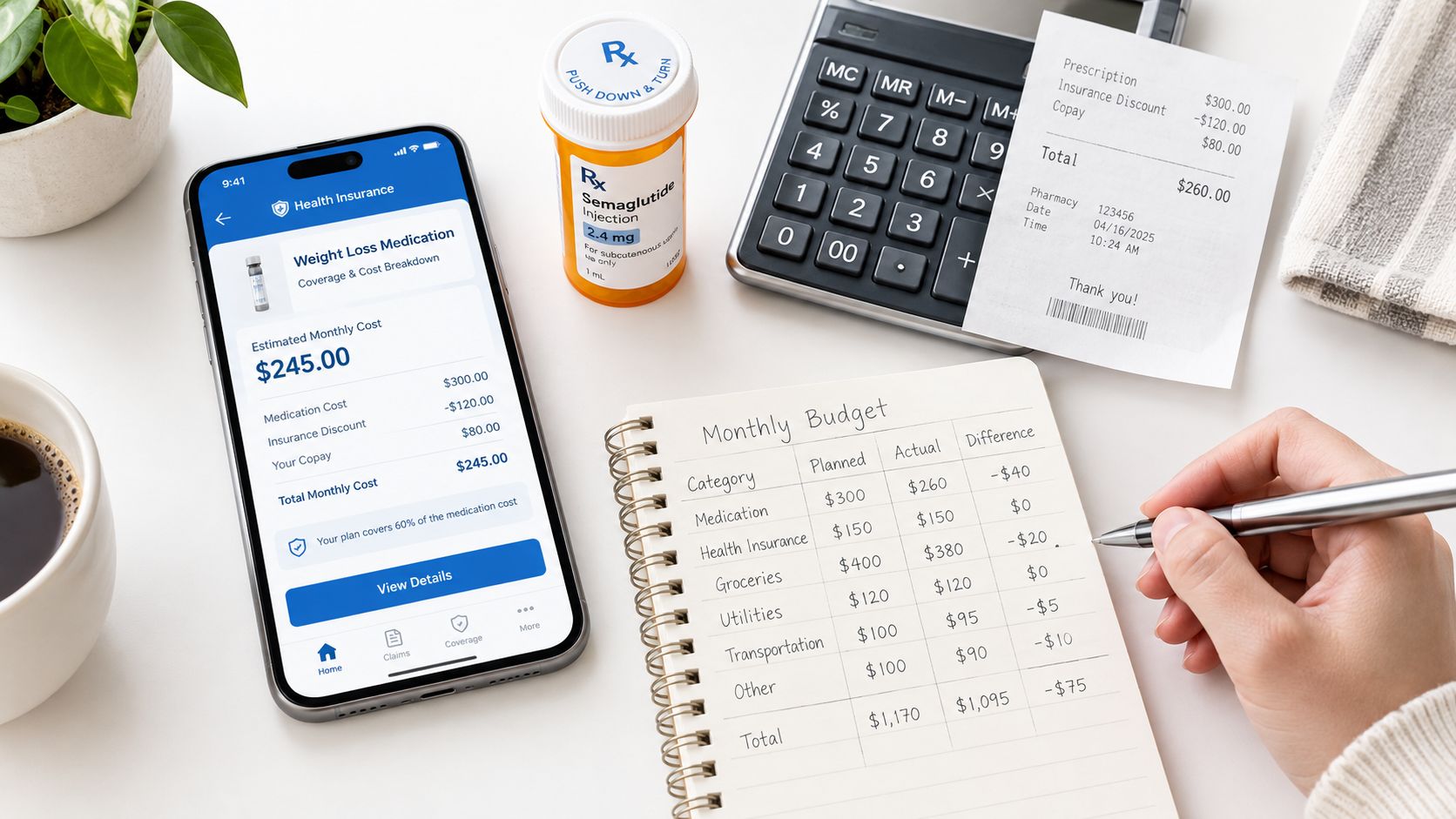
Three budgets to test
Commercially insured patient. Start by asking the insurer whether the plan covers Zepbound for weight management, then confirm the copay and any prior authorization requirements. Lilly's savings-card announcement said eligible people with commercial coverage could potentially pay as little as $25 for a one-month or three-month prescription. That is a conditional offer, not a dependable budget figure until the patient confirms eligibility and plan terms.
Patient paying cash. A person considering the manufacturer's vial route can use the announced four-week prices of $399 for 2.5 mg and $549 for 5 mg as starting reference points. Those are not a complete annual estimate: a later dose may have a different price, and care or dispensing costs may sit outside the vial price. The patient should ask for a written schedule at the expected maintenance dose before calculating the total.
Patient whose coverage changes. A plan may impose new limits, deny a renewal, or stop covering obesity treatment. Coverage isn't uniform across public programs: KFF reported that 13 state Medicaid programs covered GLP-1 medicines for obesity under fee-for-service as of January 2026, after four states removed coverage following an earlier count of 16 states in October 2025. Medicare coverage for obesity treatment remains prohibited under current law, while Medicaid coverage is optional for states; different rules may apply when the indication is diabetes or another condition. KFF's reporting on Medicaid coverage changes underscores why patients should verify their own plan rather than assume coverage will continue.
Budget test: Calculate a low-, middle-, and high-dose version of your plan, then add the costs that your quoted monthly price leaves out.
For each version, write down the expected dose by month, the price at that dose, the refill deadline, and the cost if coverage disappears. Add visits, monitoring, shipping, and any fees that aren't bundled. If a provider can't explain what happens after the introductory dose or a missed refill, the quoted price isn't enough to make a sound comparison.
The Cost-Effectiveness Question
Cost-effectiveness asks whether the health benefits of a treatment justify its cost compared with an alternative. A quality-adjusted life-year, or QALY, is a modeling measure that combines length of life and health-related quality of life. It helps analysts compare treatments, but it isn't a forecast of an individual patient's results, nor does it set the price that a patient will pay.
A 2025 obesity-modeling study compared tirzepatide doses of 5 mg, 10 mg, and 15 mg with lifestyle modification alone. It estimated incremental costs of $79,288, $70,453, and $75,839, respectively, alongside 0.54, 0.55, and 0.61 additional QALYs. The resulting cost-effectiveness ratios were $146,331, $127,644, and $125,053 per QALY, respectively. In that analysis, higher doses produced more modeled health benefit and a lower cost per QALY than the 5 mg dose. The study's cost-effectiveness analysis also found tirzepatide cost-effective at a $150,000-per-QALY threshold, while the probability that 10 mg was cost-effective rose from 23% at a $100,000 threshold to 57% at $150,000.
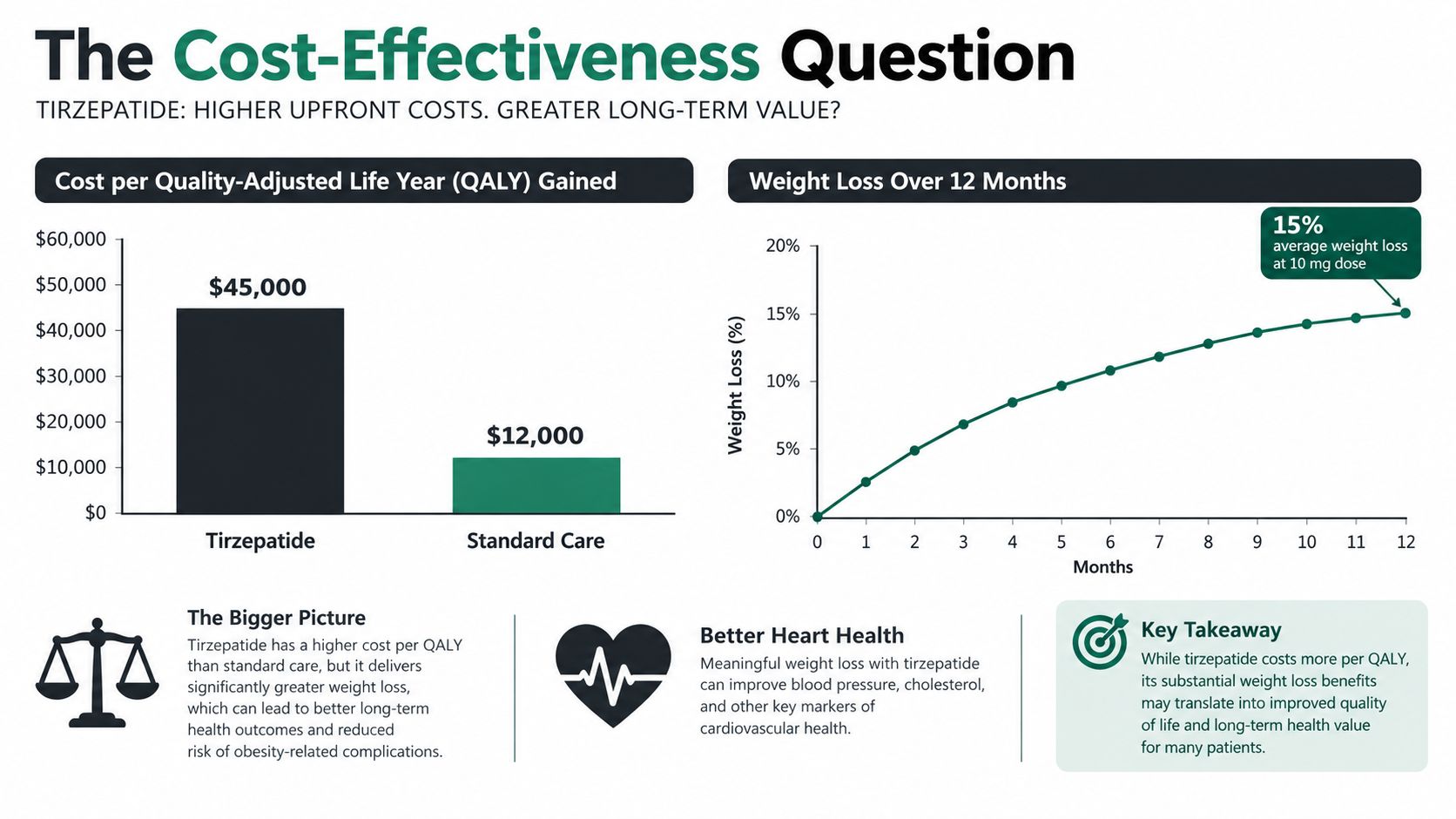
What the model can and can't tell you
The study's results don't prove that a higher dose is the right choice for a particular person. The model compares costs and outcomes across groups, while an individual's treatment decision also depends on response, tolerability, clinical judgment, and what they can afford. A clinician can help weigh those factors during supervised dose adjustments.
The pricing implication is more practical: don't judge value from the cost of the introductory month. Compare the price of the expected maintenance dose with the duration of treatment and the care included. A treatment can look cost-effective in a payer model and still be unaffordable to someone facing the full cash price or a high deductible.
That distinction also explains why dose transparency matters. Ask what the recommended dose could cost, whether the fee changes with titration, and what options exist if the price becomes unsustainable. A model can inform a conversation about value, but it can't replace a patient-specific budget.
Key Takeaways for Your Budget
The lowest “starting at” price is a poor stand-in for long-term cost. Build your estimate around the dose your clinician expects you may use, the refill terms, and whether the quoted amount includes medication, consultations, monitoring, and shipping.
Before choosing a program or pharmacy, confirm the dose-specific price, the conditions for any discount, what insurance will cover, and what happens if coverage changes. A cash-pay backup plan matters because eligibility and public-program coverage can shift. Recheck your estimate when your dose, insurance, or refill schedule changes.
Compare annual totals, not isolated monthly offers. That's the clearest way to see whether two options are comparable and whether the treatment remains affordable beyond the introductory phase.
Weight Method offers telehealth care for adults considering GLP-1 medication, including provider evaluation, ongoing support, dose management, and home shipping. If you're comparing treatment costs, visit Weight Method to review its program details and pricing alongside other options.