IBS can be associated with a smaller appetite, but appetite loss isn't a defining diagnostic feature. Persistent appetite loss with unintended weight loss isn't typical of uncomplicated IBS.
The popular advice to cut out more foods or try low FODMAP misses an important distinction: feeling less bloated isn't the same as feeling hungry again. If eating has become difficult, the useful question is what stops you from eating: pain, fullness, nausea, fear, or a change that needs medical assessment.
Can IBS Cause Loss of Appetite
Yes, IBS can make eating less appealing. But a smaller appetite doesn't establish an IBS diagnosis, and having an existing diagnosis doesn't make every new appetite change part of IBS.
The usual IBS pattern involves abdominal pain alongside changes in bowel habits. Gas, cramping, bloating, and a feeling of fullness can accompany that pattern. Someone may want less food because their abdomen already feels uncomfortable, not because they've lost the biological drive to eat.
What establishes the IBS pattern
MedlinePlus, a U.S. National Library of Medicine resource, describes a diagnostic pattern of abdominal pain at least 1 day per week during the previous 3 months, with symptom onset at least 6 months earlier, alongside changes in stool frequency or appearance. It also notes that some people with IBS lose their appetite.
Those criteria concern pain and bowel function. They don't mean you should wait through prolonged appetite loss before seeking help. They also don't mean that constipation, reduced hunger, or occasional discomfort alone proves IBS.
A clinician considers how symptoms fit together: whether pain changes around bowel movements, whether stools become harder or looser, and whether another condition could explain the symptoms. Appetite change is additional information, not the deciding feature.
Say you have a familiar constipation flare. Your abdomen feels tight before lunch, you eat less than usual, and your appetite returns as the discomfort settles. That can fit an indirect, symptom-related appetite dip.
Now consider a different pattern: food has become unappealing even when your usual bowel symptoms are quiet, and you're steadily eating less. That deserves a fresh assessment rather than an automatic extension of your IBS diagnosis.
Appetite patterns and whether they fit IBS
| Pattern | What it often means | Typical of IBS? | Next step |
|---|---|---|---|
| Less desire to eat during pain or bloating | Pain, cramping, or fullness makes meals unpleasant | Sometimes, during a flare | Track appetite against pain and stool pattern |
| Early fullness after a small meal | Gas, constipation, or visceral sensitivity | Can accompany IBS | Treat the symptom; don't cut more food groups |
| Skipping meals from fear of a flare | Conditioned food avoidance | A coping response, not a diagnostic feature | Reintroduce foods with a clinician or dietitian |
| Nausea around meals | Overlapping discomfort; not consistently diet-responsive | Possible, not defining | Seek care if nausea or vomiting persists |
| Ongoing poor intake plus unintended weight loss | A problem other than uncomplicated IBS | No | Prompt medical assessment |
| Anemia, rectal bleeding, or black stool | Possible blood loss, malabsorption, or bleeding higher in the gut | No | Prompt medical assessment |
| Fever, persistent vomiting, or night symptoms | Outside the usual IBS pattern | No | Prompt medical assessment |
| In children, weight loss, vomiting, or blood in stool | IBS doesn't cause these, according to NIDDK | No | Prompt medical assessment |
Use the table to describe your experience, not to diagnose yourself. Early fullness means you start eating but feel finished unusually soon. Fear-based skipping means you may feel hungry but decide eating isn't worth the expected discomfort.
These patterns can overlap. A person might initially eat less because of bloating, then continue skipping meals even after the bloating eases. That shift matters because managing the bowel symptom alone may no longer be enough to restore adequate intake.
When an IBS label isn't enough
The National Institute of Diabetes and Digestive and Kidney Diseases diagnostic guidance identifies unintentional weight loss, anemia, rectal bleeding, bloody stool, and black or tarry stool as signs that may suggest a problem other than IBS. Its guidance also distinguishes children's IBS from symptoms such as weight loss, vomiting, and blood in the stool.
Fever, persistent vomiting, progressive pain, and symptoms that wake you from sleep also warrant assessment rather than another round of food exclusions. A clinician may consider celiac disease, inflammatory bowel disease, infection, medication effects, or other causes according to your history and examination.
Unintended weight loss shouldn't be treated as a normal IBS outcome. Even if avoiding food explains why your weight has fallen, the cause of that avoidance and its nutritional consequences still need attention.
That distinction is especially important if you've been trying to lose weight. A quieter appetite can look like progress, but being unable to eat enough, losing weight outside your plan, or developing new symptoms isn't evidence that your approach is working safely.
Practical rule: Judge an appetite change by its pattern and consequences, not just by whether you already have IBS.
Stress can influence how you experience digestive symptoms without making those symptoms imaginary. For an accessible introduction to that relationship, Wallaby Wellness helps readers explore the gut and emotions connection.
Before changing how you eat, match your recent week to the closest table row. Write down what stopped the meal and whether the pattern is familiar, new, or getting worse.
Why Meals Feel Harder in an IBS Flare
Loss of appetite is not a defining feature of IBS, but a flare can make eating feel difficult. Pain, bloating, early fullness, fear of symptoms, or a growing list of avoided foods can all reduce how much someone eats.
IBS is a disorder of gut-brain interaction. The digestive tract and nervous system process signals in ways that can produce pain and altered bowel habits without visible tissue damage. During a flare, ordinary stretching from food or gas may feel disproportionately uncomfortable, like a smoke alarm set to react to burnt toast.
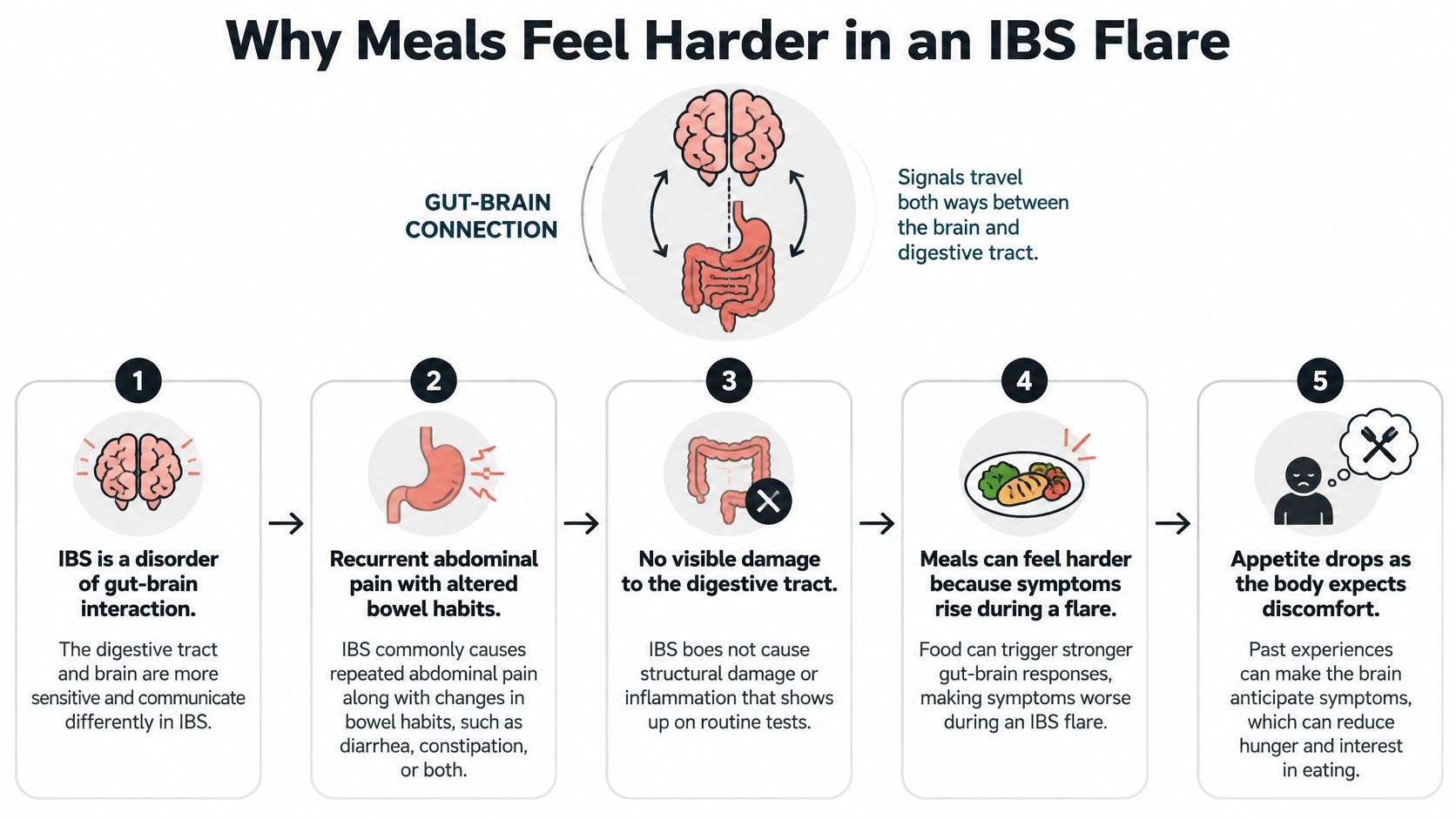
From discomfort to avoiding the next meal
Suppose someone eats breakfast while constipated and bloated. The meal adds stretch to an already uncomfortable abdomen, so they stop eating sooner than expected. At lunchtime, they remember the discomfort and hesitate before taking a bite.
After repeated unpleasant meals, a person may start avoiding food in anticipation of symptoms. This learned response can develop even when no single food intolerance explains every episode.
IBS isn't expected to damage the intestine or prevent normal nutrient absorption. Eating less because a meal hurts differs from losing nutrients because another disease interferes with absorption. That distinction helps a clinician decide what to investigate.
Name the experience precisely
Several experiences can be mistaken for appetite loss:
- Reduced desire to eat: Food doesn't appeal, even before you begin.
- Early satiety: You want food initially but feel full after a small amount.
- Nausea: Queasiness makes eating unpleasant or difficult.
- Active food avoidance: You're hungry but skip food because you expect symptoms.
If you leave lunch untouched because you fear diarrhea during a meeting, reduced hunger may not describe the problem. You may need help managing urgency and food-related fear, rather than advice to wait until you feel hungry.
Some people with IBS gradually restrict more foods. As the acceptable-food list shrinks, meeting energy and nutrient needs can become harder, and anxiety about eating may grow. Symptom care should make eating more possible, not make the list of acceptable foods continually smaller.
Medication history matters, too. If symptoms began after starting or changing a weight-management treatment, reviewing GLP-1 medication side effects can help you prepare specific questions for your prescriber.
A marked appetite decline with measurable weight loss needs assessment for other or coexisting causes, including hormonal disorders, malabsorptive disease, medication effects, and eating disorders. A clinician or dietitian can help address symptoms while keeping intake adequate.
What Low FODMAP Does for Appetite
Trying low FODMAP isn't automatically the right response to eating less. The diet can help certain digestive symptoms, but it hasn't reliably been shown to restore appetite.
A low-FODMAP diet temporarily reduces fermentable carbohydrates that can contribute to gas, bloating, and intestinal stretch. It's a structured symptom-management approach, not a permanent list of forbidden foods or a treatment for every reason someone feels less hungry.
Low-FODMAP effects on fullness and appetite
| Outcome | What the evidence found | Practical reading |
|---|---|---|
| Early satiety in controlled studies | A systematic review published in Health Science Reports found a weighted mean difference of −0.69, with a 95% confidence interval of −0.92 to −0.46 | Fullness after small meals may ease |
| Nausea | Most randomized-trial participants had no significant reduction | Don't expect nausea to clear |
| Bloating in a dietitian-led feasibility study | Strongest improvement | Symptom relief isn't the same as hunger returning |
| Early satiety in that feasibility study | Change wasn't statistically significant | An individual may or may not notice improvement |
| Loss of appetite in that feasibility study | Change wasn't statistically significant | Diet alone isn't an appetite treatment |
The early-satiety result is a difference on symptom measures, not a percentage of appetite restored. It doesn't tell an individual how much more food they'll want or whether their nausea will improve.
The feasibility findings make the distinction particularly clear. Someone can feel less bloated while still leaving meals unfinished. In that situation, further restriction isn't justified merely because the diet helped a different symptom.
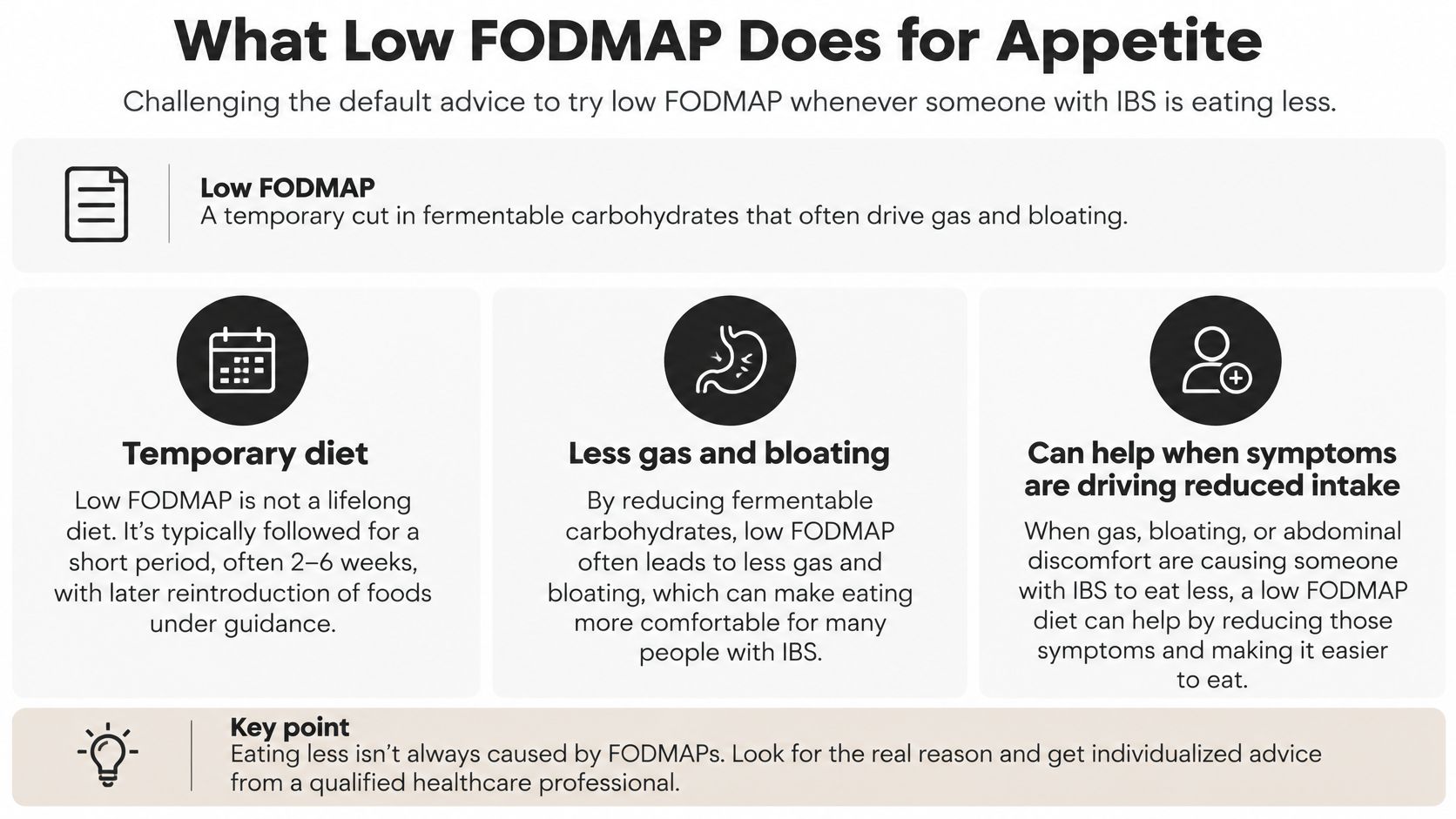
Restriction needs a planned exit
A supervised trial begins with a nutrition assessment. Your dietitian needs to know what you're already eating, which foods you've removed, whether meals contain protein, and whether weight is changing unintentionally.
The process moves from temporary elimination to structured reintroduction and then personalization. Reintroduction helps identify what you tolerate; personalization keeps the long-term menu as broad as your symptoms allow.
Don't judge success only by a flatter-feeling abdomen. Also notice whether you're completing meals, drinking adequately, getting enough overall food, and tolerating suitable fiber sources.
For someone already taking an appetite-suppressing weight-loss medicine, an open-ended elimination diet can make inadequate intake easier to overlook. A prescriber and dietitian can review hydration, meals, symptoms, and weight together rather than assuming every change requires another dietary ban.
How Appetite Loss Shows Up Day to Day
Recognizing the situation behind a missed meal is more useful than adding another food rule. Clinical guidance discussed in this review available through PubMed Central distinguishes associated symptoms from warning signs that call for assessment.

When discomfort or fear interrupts eating
Early satiety during a familiar flare. Someone with constipation-predominant IBS feels stuffed partway through a bowl of lunch on painful days but eats comfortably between flares. That suggests an episodic, symptom-linked interruption rather than continuous loss of hunger. Write down whether fullness begins when pain and constipation worsen.
Avoidance after an unpleasant experience. Another person removes bread, dairy, fruit, and onions after a bad weekend and keeps avoiding them long after it ends. They start skipping breakfast because eating before work feels risky, even when they're hungry. Write down the foods they've cut, including exclusions that were never tested through reintroduction.
These situations need different conversations. The first person needs help making meals manageable during discomfort; the second may need support rebuilding confidence and dietary variety.
When the explanation needs reassessment
An alarm pattern. An adult notices steadily shrinking portions, looser clothes without trying, blood in the stool, and unusual tiredness. This isn't a situation to manage by selecting a gentler lunch and waiting indefinitely. Arrange prompt medical assessment, and record the bleeding and fatigue clearly for the clinician.
Reduced desire after a medication change. Someone using a GLP-1 weight-loss medicine also has IBS and assumes new disinterest in food must come from their bowel condition. Their medication effect and digestive symptoms may overlap, so their prescriber needs to know whether they can still eat adequately. Record when the appetite change began relative to starting treatment or changing the dose.
A useful food log records why you stopped eating, not just what remained on the plate.
These examples aren't diagnoses. Their purpose is to make the observation specific enough that a clinician or dietitian can act on it. Timing, exclusions, warning symptoms, and medication changes offer more useful information than the label poor appetite alone.
How to Keep Eating During a Flare
If the pattern matches your established flares and you don't have warning symptoms, use a routine that protects intake while you arrange appropriate symptom care. You don't need to force a large meal through discomfort, but repeatedly skipping food isn't a workable long-term solution.
Make meals easier to complete
-
Eat smaller amounts more often. Keep regular eating opportunities instead of waiting for strong hunger. Guidance on eating smaller portions can help with meal size, but here the purpose is to spread adequate food across the day, not merely eat less overall.
-
Keep a familiar fallback ready. For example, if eggs and rice are foods you reliably tolerate, have the ingredients available for a straightforward meal. A predictable option reduces the chance that an uncomfortable morning becomes a day of avoiding food.
-
Sip fluids across the day. If drinking a large volume with food makes fullness worse, try smaller drinks alongside meals and drink regularly between them. Don't respond to fullness by neglecting hydration, especially when diarrhea is present.
These adjustments work around the size of a meal rather than its nutritional value. A smaller serving still needs food that supplies energy and protein, not just a few bites of whatever feels least threatening.
Keep the plan from becoming more restrictive
-
During a supervised low-FODMAP trial, keep to the agreed elimination window and reintroduction plan. Don't extend elimination or add new bans whenever a symptom appears. The reason for testing foods is to identify tolerances, not to remove uncertainty by removing everything.
-
Keep a brief written record. Note pain, stool form, what you ate, approximately how much, and why you stopped. A phone note or simple notebook is enough to distinguish fullness, nausea, urgency, and fear without turning every meal into an elaborate tracking exercise.
-
Watch what restriction costs you. If weight is falling without intent or your workable menu keeps shrinking, stop tightening the diet and seek assessment. Symptom reduction doesn't compensate for inadequate nutrition.
Ask your clinician whether soluble fiber or medication adjustments could help your particular bowel pattern. Those choices should follow your symptoms and medical history, not a self-directed supplement protocol.
If you're considering supplements, Pumpernickel Health Foods' guide to understanding probiotics for gut health offers background for that conversation. Probiotics shouldn't replace assessment of persistent appetite loss.
Weekly aim: Quieter symptoms and meals that still happen, not a longer list of forbidden foods.
Decide Your Next Step
Choose the route that matches your current situation. Medical assessment takes priority over both dietary experimentation and intentional weight loss when your appetite change is unexplained or concerning.
When assessment comes first
If appetite loss is new, persistent, worsening, or accompanied by warning symptoms, arrange a clinician visit. Bring your medication list and a brief account of eating, bowel changes, and weight trajectory. Don't wait for a diet experiment to explain a pattern that needs investigation.
When nutrition support is the next move
If warning features are absent, you're not pursuing medical weight loss, and familiar flares or food fear are reducing intake, seek dietitian-guided care. A nutritionist consultation can be a starting point for discussing support, but ask specifically for a qualified professional experienced in IBS and restrictive eating.
The practical priorities are adequate energy, protein, tolerated fiber, and a workable reintroduction plan. Bring the list of foods you've removed, not just the foods you believe trigger symptoms.
When supervised weight care fits
If concerning causes have been assessed, weight loss remains an appropriate intentional goal, and you're considering or using appetite-suppressing treatment, have your provider review digestive symptoms and intake together. Weight Method is one telehealth option for adults seeking supervised medical weight care, alongside primary care and specialist services.
Don't start an appetite-suppressing medicine to fix IBS-related poor intake. When fullness prevents adequate eating, the immediate task is to understand and address it, not intensify appetite suppression.
Protect nutrition first. Investigate warning signs promptly, use dietary restriction with a planned exit, and pursue weight-loss treatment only when that is your goal and a clinician is monitoring how you're eating.
Weight Method offers provider consultations and ongoing support for adults pursuing medical weight loss. If IBS symptoms make it difficult to distinguish treatment-related appetite changes from inadequate intake, discuss both with your provider. Visit Weight Method to explore supervised weight-management care, not treatment for IBS itself.