You've tried changing what you eat, downloaded another tracking app, and wondered whether prescription treatment might help. An online weight-loss visit sounds convenient, but the questions start quickly: Which medication would you receive? Who adjusts the dose? What happens if you feel sick, your insurance declines coverage, or the monthly bill changes?
Telehealth weight loss medication is a treatment plan, not just a delivery service. The first appointment should establish who's responsible for your care, how you'll increase the dose, and how you'll protect your nutrition while your appetite changes.
What Telehealth Weight Loss Medication Actually Is
Telehealth weight loss medication usually means a prescription medicine such as semaglutide, sold as Wegovy, or tirzepatide, sold as Zepbound, selected and monitored through remote medical care. A clinician evaluates you, sends an appropriate prescription to a pharmacy, and follows your response. Home delivery may be available.
Both drugs build on signals your body already makes. GLP-1 is one of the fullness messengers released after eating; these medicines strengthen that signal so you may feel satisfied sooner, and they slow stomach emptying. Tirzepatide also acts on a second hormone pathway, GIP.
Telehealth describes how you receive care, not a different kind of drug. A virtual appointment leaves the medicine's ingredients, approval status, and monitoring needs unchanged. What changes is where the visits happen and who stays responsible for the plan between them.
Semaglutide and tirzepatide at a glance
The comparison below covers the branded weight-management injections. Compounded preparations are a separate product question and are not interchangeable with what this table describes.
| Feature | Semaglutide | Tirzepatide |
|---|---|---|
| Developer | Novo Nordisk | Eli Lilly |
| Mechanism | GLP-1 receptor agonist | Dual GIP/GLP-1 receptor agonist |
| Weight-management brand | Wegovy | Zepbound |
| FDA approval for weight management | Approved for chronic weight management | Approved for chronic weight management |
| Dosing frequency | Once-weekly injection | Once-weekly injection |
| Maximum maintenance dose | 2.4 mg once weekly | 15 mg once weekly |
| Average weight loss in trials | 14.9% over 68 weeks (STEP 1) | 20.9% at the 15 mg dose over 72 weeks |
In STEP 1, adults without type 2 diabetes receiving semaglutide alongside lifestyle intervention lost 14.9% of baseline body weight over 68 weeks, compared with 2.4% with placebo, according to the FDA's Wegovy prescribing information.
In the tirzepatide trial summarized in its labeling, adults receiving the 15 mg dose alongside lifestyle intervention lost an average of 20.9% of body weight over 72 weeks, compared with 3.1% with placebo, according to the FDA's Zepbound prescribing information.
Those are averages from structured treatment, not predictions for an individual patient.
Neither product starts at its maintenance dose. The prescription begins lower and increases on a set schedule, which means the first telehealth visit opens a months-long dosing plan rather than a single order. Because appetite falls, protein intake and regular strength work become part of protecting lean mass while weight comes down. The right medicine also depends on health history, tolerability, access, and the ability to continue care, so a headline percentage alone should never make the choice for you.
Practical rule: Ask for the exact brand or preparation before comparing outcomes. An ingredient name alone doesn't tell you what the pharmacy will dispense.
The drug choice matters, and so does the program around it. A prescription without clear follow-up leaves you managing questions that belong with a clinician: when to raise the dose, how to handle side effects, and when to pause.
How a Telehealth Weight Loss Program Works Step by Step
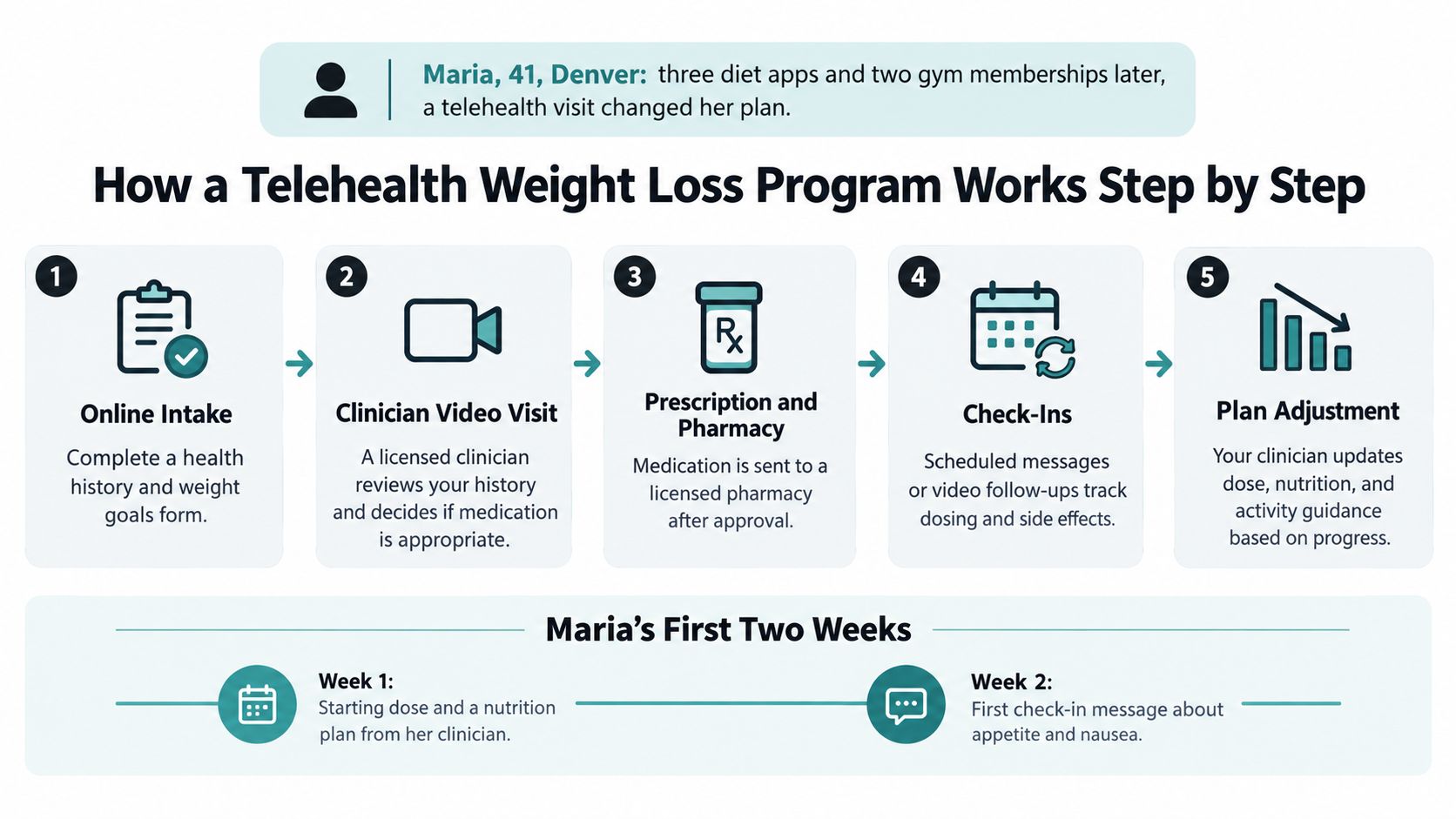
Maria has tried diet apps and gym memberships without finding a sustainable approach. During her first stretch of telehealth care, the changes that matter aren't dramatic scale readings. They're a medical review, a clear prescription, injection teaching, and a reliable way to report symptoms.
Her experience should feel like an ongoing clinical relationship rather than an online checkout. Each stage exists to catch a specific problem before it reaches her doorstep.
From intake to an adjustable plan
-
Complete the health intake. Maria enters her height, current weight, weight history, medical conditions, and medications. Include supplements and prescriptions from other practices, since an incomplete medication list can delay the review while the clinician checks for anything that conflicts with treatment.
-
Establish eligibility. The provider calculates BMI and reviews weight-related conditions, pregnancy plans, and relevant personal and family history. Wanting medication doesn't make it appropriate, and a gap in the history may need clarification before prescribing.
-
Meet the clinician. During a video visit, Maria explains her goals, eating patterns, previous attempts, and practical concerns. The clinician discusses options and decides whether remote treatment is suitable. Sometimes the right next step is an in-person examination or additional testing, and a good program says so.
-
Send and clarify the prescription. The prescriber sends the order to a pharmacy, and Maria confirms her delivery address and payment arrangements. Insurance authorization, stock availability, or an unclear prescription can hold up fulfillment.
-
Check the delivery. Maria compares the medicine label with her prescription and reviews the storage and injection instructions. The care team explains what supplies she needs, including safe sharps disposal. Damaged packaging or an unexpected product needs resolving before use.
-
Begin the prescribed starting dose. Maria follows the clinician's instructions rather than copying someone else's schedule. Injection teaching should cover the actual device she receives. If the device or directions are unfamiliar, she asks before injecting.
-
Report progress and symptoms. Maria keeps a consistent weight record and notes appetite, bowel changes, nausea, fluid intake, and missed doses. A useful message describes what happened and whether she can still eat and drink. Because appetite often falls during treatment, this is also the right moment to ask the clinician about eating enough protein and protecting muscle while the weight comes down.
-
Adjust the plan. The clinician decides whether to increase, hold, or change treatment and discusses longer-term maintenance. Maria confirms the next dose before ordering another supply. A delayed follow-up is never a reason to change the dose herself.
When testing enters the process
Testing should answer a clinical question, not fill a package for its own sake. If home collection would make clinician-requested testing easier, Lola's at-home blood tests for weight loss offer a resource to discuss with your provider. Ask which tests you need, who interprets the results, and how an abnormal result would change care.
The first visit starts a plan that runs for months. Medication repeats on a regular schedule, while clinical decisions stay adjustable: the patient reports what's happening, and the prescriber decides what changes.
How Dose Escalation Shapes the First Six Months
The starting dose is deliberately low. Clinicians increase treatment gradually to find a useful, tolerable dose, not to reach the strongest available dose as quickly as possible.
A calendar can help you understand the sequence, but it shouldn't function as permission to increase automatically. Your prescription and the product's instructions determine the actual dose.
Typical weekly dose ladder for each medication
| Treatment weeks | Semaglutide, weekly | Tirzepatide, weekly |
|---|---|---|
| Weeks 1–4 | Prescribed initiation dose | Prescribed initiation dose |
| Weeks 5–8 | Next prescribed step if tolerated | Next prescribed step if tolerated |
| Weeks 9–12 | Continue clinician-directed escalation | Continue clinician-directed escalation |
| Weeks 13–16 | Reassess symptoms before increasing | Reassess symptoms before increasing |
| Weeks 17–20 | Transition toward prescribed maintenance if appropriate | Continue escalation only if clinically appropriate |
| Week 21 onward | Continue the selected maintenance plan | Continue the selected maintenance plan |
These windows organize the conversation with your clinician. They aren't a substitute for product-specific dosing instructions or an individualized prescription.
The FDA's Zepbound prescribing information describes a trial protocol allowing up to 20 weeks for dose escalation, with weight reduction evaluated at 72 weeks. That study excluded people with type 2 diabetes, an important distinction when discussing whether its findings apply to you.
Why holding a dose can be appropriate
Say Maria notices less hunger but develops persistent nausea after a dose increase. Her provider may keep her at the current step longer, return to a previously tolerated step, or reassess whether the medicine remains suitable. The decision should reflect her symptoms and ability to nourish herself, not frustration with the scale.
A temporary plateau during escalation doesn't automatically mean treatment has failed. The clinician should review medication use, appetite changes, adverse effects, and the broader weight trend before deciding what comes next.
Increasing the dose isn't progress if you can no longer eat or drink adequately.
For more context before discussing your prescription, consult this guide to GLP-1 dosage for weight loss. Bring questions about missed doses and restarting after an interruption, too. Those situations need specific instructions rather than an improvised return to the previous schedule.
Benefits and Limits Patients Should Weigh
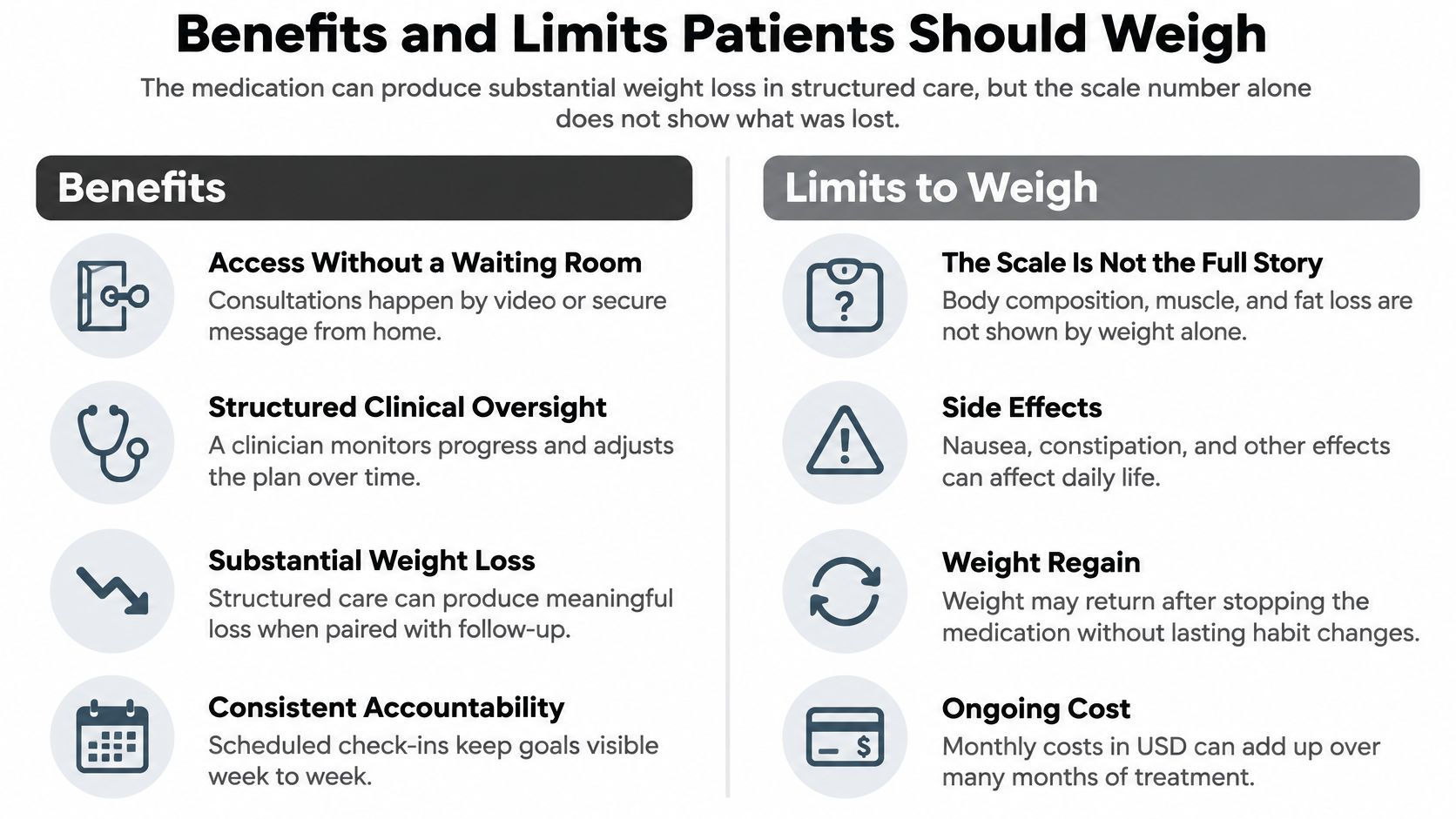
The most immediate benefit may be practical: you can speak with a clinician without arranging travel or sitting in a waiting room. Remote prescribing, home delivery, and messaging can make treatment easier to fit around work and family responsibilities.
But a lower scale reading doesn't reveal everything you've lost. Meaningful weight management also requires attention to strength, nutritional intake, symptoms, and everyday functioning.
A scoping review of GLP-1 treatment and nutrition found calorie intake reductions of 24%–39% across the included clinical trials, with approximately 40% of lost weight classified as lean tissue. Lean tissue isn't identical to skeletal muscle, but the finding makes body composition a legitimate care concern rather than an optional fitness topic.
Protect nutrition while appetite changes
Reduced hunger can make eating less feel effortless. It can also make it easier to skip meals until you've barely eaten, particularly when nausea accompanies appetite suppression.
- Set an individualized protein goal. Ask your clinician or dietitian to translate that goal into foods and portions you can tolerate. Kidney disease and other conditions may change the advice.
- Use resistance exercise. Choose manageable movements such as chair squats, resistance-band rows, or supervised strength training, adapted to your abilities.
- Plan manageable meals. Smaller meals with a protein source may be easier than waiting until evening for a large meal.
- Address symptoms early. Ask for an individualized hydration and constipation plan rather than accepting discomfort as the cost of treatment without question.
Empire Athletics' nutrition basics for gym weight loss can help you organize questions about food and exercise. Medication-related undernutrition, however, needs clinical attention rather than a generic workout meal plan.
Consider the support you'll actually receive
Trial participants receive organized follow-up. A commercial telehealth program may offer very different access to clinicians and dietitians, so ask who helps when food intake becomes difficult or your strength declines.
Maintenance deserves a discussion before you start. Ask what happens when you reach your goal, can't tolerate treatment, or need to stop because of cost. Don't assume every patient needs a taper, or that stopping requires no planning. Your clinician should document how nutrition, activity, appetite changes, and future treatment decisions will be managed.
Safety Checks and Warning Signs to Act On
Before prescribing, the clinician should review your full medication list, pregnancy plans, previous pancreatitis or gallbladder problems, and relevant contraindications. A personal or family history of medullary thyroid carcinoma or MEN 2 must be disclosed before starting. A general family history of thyroid disease isn't the same thing, so provide the actual diagnosis when possible.
Your provider also needs to know about diabetes medications that may require adjustment. Don't independently stop another prescription because you're beginning weight-loss treatment.
The FDA's Wegovy prescribing information describes a safety dataset including 2,116 adults treated with 2.4 mg for up to 68 weeks. That evidence supports monitored treatment over time, not the assumption that an uneventful first injection establishes long-term safety.
Warning signs and the right response
| Signal | Usual response | Urgency |
|---|---|---|
| Mild nausea or constipation early in treatment | Message the provider; the dose may need to be held or escalation slowed | Routine |
| Persistent vomiting or inability to keep fluids down | Contact the provider promptly; seek urgent assessment if dehydration or worsening symptoms develop | Same day |
| Severe abdominal pain spreading to the back | Stop dosing and seek emergency evaluation for possible pancreatitis | Emergency |
| Upper-right abdominal pain, fever, or yellow skin | Seek urgent evaluation for possible gallbladder disease | Urgent |
| Swelling of the face, lips, or throat, or trouble breathing | Call emergency services immediately | Emergency |
| Personal or family history of medullary thyroid carcinoma or MEN 2 | Don't start; disclose this before prescribing | Before first dose |
| New or worsening mood changes or suicidal thoughts | Seek prompt professional help; use emergency or crisis support if you may act on those thoughts | Urgent or emergency |
Don't wait for a portal reply during an emergency. Severe pain, breathing difficulty, fainting, or an immediate risk of self-harm requires real-time assistance.
Give the clinician actionable information
When you contact the team, include the product, prescribed dose, last injection, symptom onset, and whether you can keep food and fluids down. Mention dizziness, changes in urination, and any medicines you've taken to manage symptoms.
Mild gastrointestinal effects may improve with a slower increase or an adjusted eating plan. Persistent or severe symptoms need assessment, not reassurance that everyone experiences them.
For nonurgent preparation, review GLP-1 weight-loss side effects and ask your clinician which symptoms should bypass messaging altogether. Progress should also include waist measurements when appropriate, weight change relative to your starting weight, relevant health measures, and whether treatment remains manageable. Early scale changes alone aren't enough.
What Telehealth Weight Loss Medication Costs and Covers
Your payment route can matter as much as the medicine selected. A prescription benefit, a pharmacy cash price, and a telehealth membership are different expenses. A price that looks affordable may exclude the drug itself.
Ask for a written estimate tied to the exact product you'd receive. Without that, comparing advertised monthly fees can mean comparing entirely different services.
Payment routes for telehealth weight loss medication
| Payment route | What it typically covers | Typical cost | Check before paying |
|---|---|---|---|
| Insurance with prescription coverage | Covered medication under the plan's benefit rules | Plan-calculated copay or coinsurance, plus any applicable deductible | Weight-management coverage, formulary status, and prior authorization |
| Cash-pay brand-name medication | The prescribed brand purchased without an insurance claim | Pharmacy's current cash quote after applicable savings | Product, quantity, eligibility for discounts, and dispensing charges |
| Telehealth flat-fee program | Services specifically named in the membership agreement | Current written program quote | Whether medication, consultations, shipping, and messaging are included |
| FSA or HSA spending | Eligible expenses paid using available account funds | The underlying treatment cost | Administrator requirements and documentation |
| Compounded medication | A prescribed compounded preparation rather than an FDA-approved brand | Dispensing pharmacy or program quote | Product identity, lawful supply, concentration, and total charges |
Ask insurance about the prescription and the visits
Start with whether your plan covers medication for weight management at all. Coverage of the same ingredient for another condition doesn't establish coverage for your prescription.
Then ask about prior authorization, deductible treatment, copays or coinsurance, and renewal requirements. Don't assume every plan applies a deductible before every prescription benefit. Ask separately whether clinician visits or program fees are covered.
For cash purchases, request the actual pharmacy price rather than assuming a published list price equals your final bill. Savings arrangements can have eligibility restrictions or change over time.
Before paying: Ask whether a denied prescription, unavailable medicine, or decision not to prescribe triggers a refund of the program fee.
Compare the continuing commitment
A flat fee should identify what you receive and what costs extra. Ask about lab work, replacement shipments, follow-up appointments, dose-related price changes, and cancellation timing.
FSA or HSA funds are a payment method, not an additional discount from the provider. Confirm eligibility with your administrator and keep itemized receipts and prescription records.
Use a worksheet with separate lines for medication, clinical care, testing, supplies, and delivery. This guide to GLP-1 weight-loss costs can help frame the comparison. Request an itemized statement and calculate the cost of continuing treatment beyond any introductory offer before committing.
Verify a Provider Before You Order
A fast checkout is not proof of quality. A legitimate online prescription still requires an appropriate evaluation, an identifiable product, a licensed pharmacy, and clear follow-up. Verification works like hiring a contractor: check the license first, then get the specifics in writing before any money moves.
FDA-approved branded products and compounded preparations sit in different approval categories. Compounded medicines do not undergo the same FDA evaluation for safety, effectiveness, and quality, so the product named on your invoice matters as much as the prescription itself.
Medscape's reporting on FDA compounding policy states that semaglutide shortages ended in February 2025 and tirzepatide shortages in December 2024, removing the broad shortage-based justification for routine copying. That does not settle every individual compounding case. Ask the prescriber and pharmacy to explain the basis for your specific preparation.
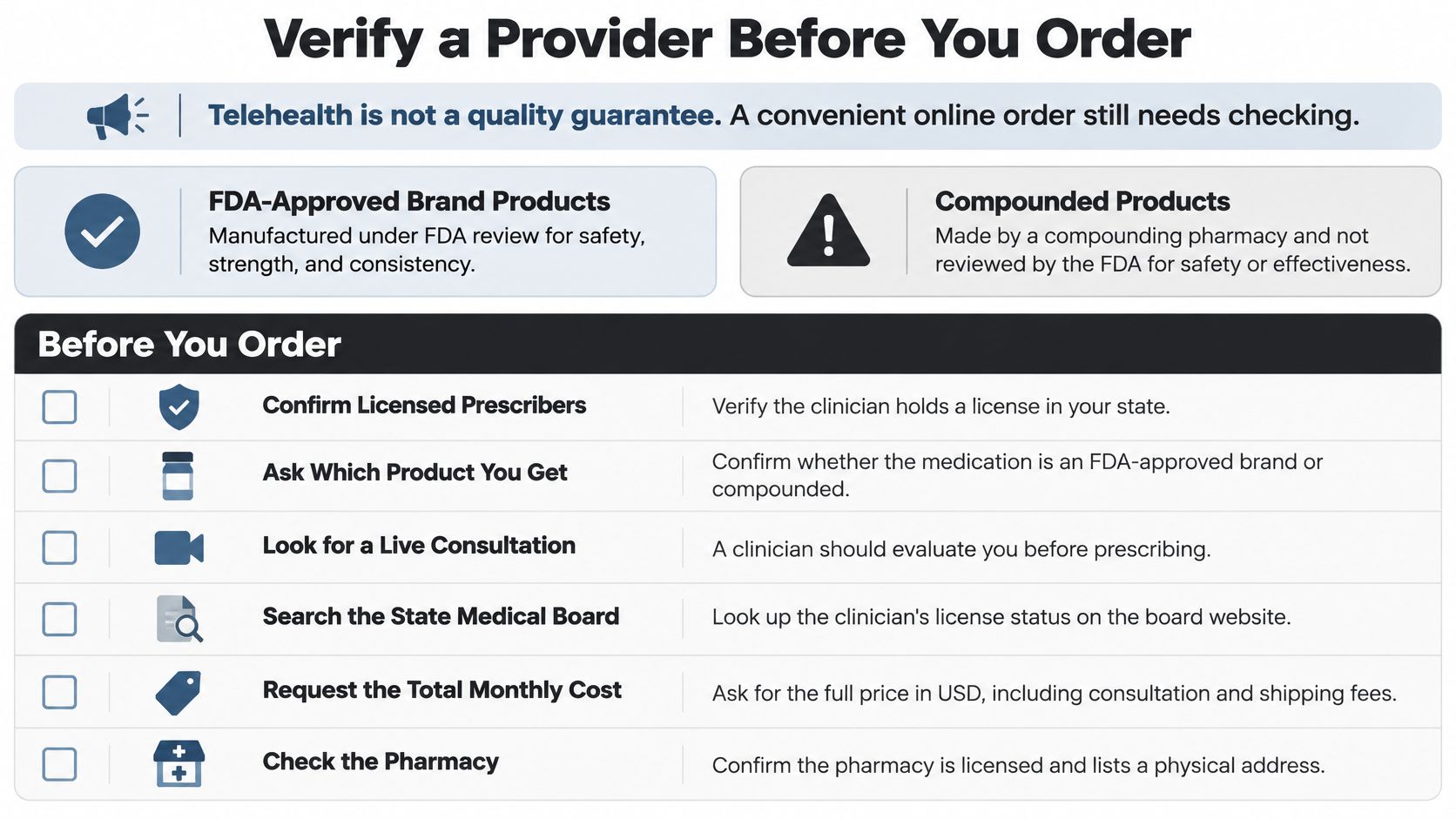
Check the people, product, and plan
- Verify the prescriber. Look up the clinician's license with the appropriate state licensing board, and confirm they can treat patients in the state where you live.
- Expect a clinical evaluation. A real intake covers your history, current medicines, and goals, and leaves room for your questions. A guaranteed prescription after checkout is not an evaluation.
- Identify the exact product. Ask whether you will receive a branded FDA-approved medicine or a compounded preparation, and get the answer in writing.
- Check the pharmacy. Confirm its licensing, physical address, and a working phone line staffed by a pharmacist. Registration alone does not establish that every product it dispenses is FDA-approved.
- Match the instructions. The label, concentration, device, and prescribed dose must agree. Never convert between milligrams and syringe units on your own.
- Confirm continuity. Ask what happens during supply interruptions and who authorizes a substitution.
- Review service terms. Establish how you reach the provider between visits, expected response times, cancellation and refund rules, and how your health information is protected.
Request care that changes a decision
More testing is not automatically better care. Large executive health panels show how easily tests can multiply without changing treatment, and the standard applied to cardiac testing that changes care applies equally to a weight-loss evaluation: a test earns its place only when the result would alter what happens next. So for any test a program proposes, ask two questions. What decision does it change? Who acts on the result?
Once the provider checks out, complete the intake, share your full medication list, and book the clinical visit. When a shipment or prescription changes, confirm the new product, concentration, and dose with the prescriber rather than adjusting anything yourself.
Weight Method offers telehealth weight-management evaluations, provider follow-up, and prescription treatment when clinically appropriate. Visit Weight Method to review the intake process, then ask which product you'd receive, what ongoing support includes, and what your complete treatment cost would be.