Trial data show that semaglutide generally lowers systolic blood pressure by roughly 2 to 5 mmHg, rather than raising it. A single higher home reading still deserves attention, but it doesn't by itself prove that Ozempic caused chronic hypertension.
You may be looking at the cuff after starting Ozempic and wondering what happened. Perhaps your usual systolic reading was lower, then a reading taken after a restless night, nausea, coffee, or a rushed morning came back higher. The number is worrying, especially if you're already taking blood-pressure medicine and haven't yet refilled it.
The useful distinction is between an average treatment effect and your short-term reading. Clinical studies track groups over time, while a home cuff captures one moment influenced by hydration, stress, posture, medication timing, and technique. This article separates those two questions, then explains what semaglutide does, what the evidence shows, why readings can temporarily rise, and how to monitor safely.
What the Question Really Gets At
You check your blood pressure after starting semaglutide and see several higher systolic readings. The timing makes Ozempic an obvious suspect, especially if nausea led you to drink less, eat differently, sleep poorly, or miss an antihypertensive dose. A single cuff result cannot separate those influences, so the useful first step is to review what changed around the measurement.
The broader trial pattern is reassuring: semaglutide generally lowers systolic blood pressure, with reported reductions of roughly 2 to 5 mmHg, rather than a sustained increase. A meta-analysis of 29 randomized controlled trials involving 26,985 people found an average systolic reduction of 2.31 mmHg compared with placebo or other comparators, and 3.01 mmHg compared with placebo alone.
Two different worries
The question “Can Ozempic cause high blood pressure?” usually contains two separate concerns:
- Chronic elevation: Could semaglutide gradually push readings upward over weeks or months?
- Temporary spikes: Could side effects, a stressful day, changed routines, or measurement error produce a higher result?
The overall evidence does not support semaglutide as a usual cause of chronic blood-pressure elevation. Short-term variation remains possible because the home cuff records one moment, not your long-term average. Hydration, sleep, caffeine, pain, anxiety, activity, posture, medication timing, and cuff technique can all shift that moment.
Under ACC/AHA guidance, readings at or above 130/80 mmHg fall within the hypertension range. That threshold helps identify a pattern, while one reading alone does not establish a diagnosis.
Practical rule: Treat one raised result as a reason to repeat the measurement correctly, not proof that Ozempic is raising your blood pressure.
If abnormal readings continue, a clinician can review your medicines, fluid intake, kidney and cardiovascular health, symptoms, and monitoring technique. People who need in-home support may also find house call hypertension care useful when arranging an assessment is difficult.
How Semaglutide Interacts With Blood Pressure
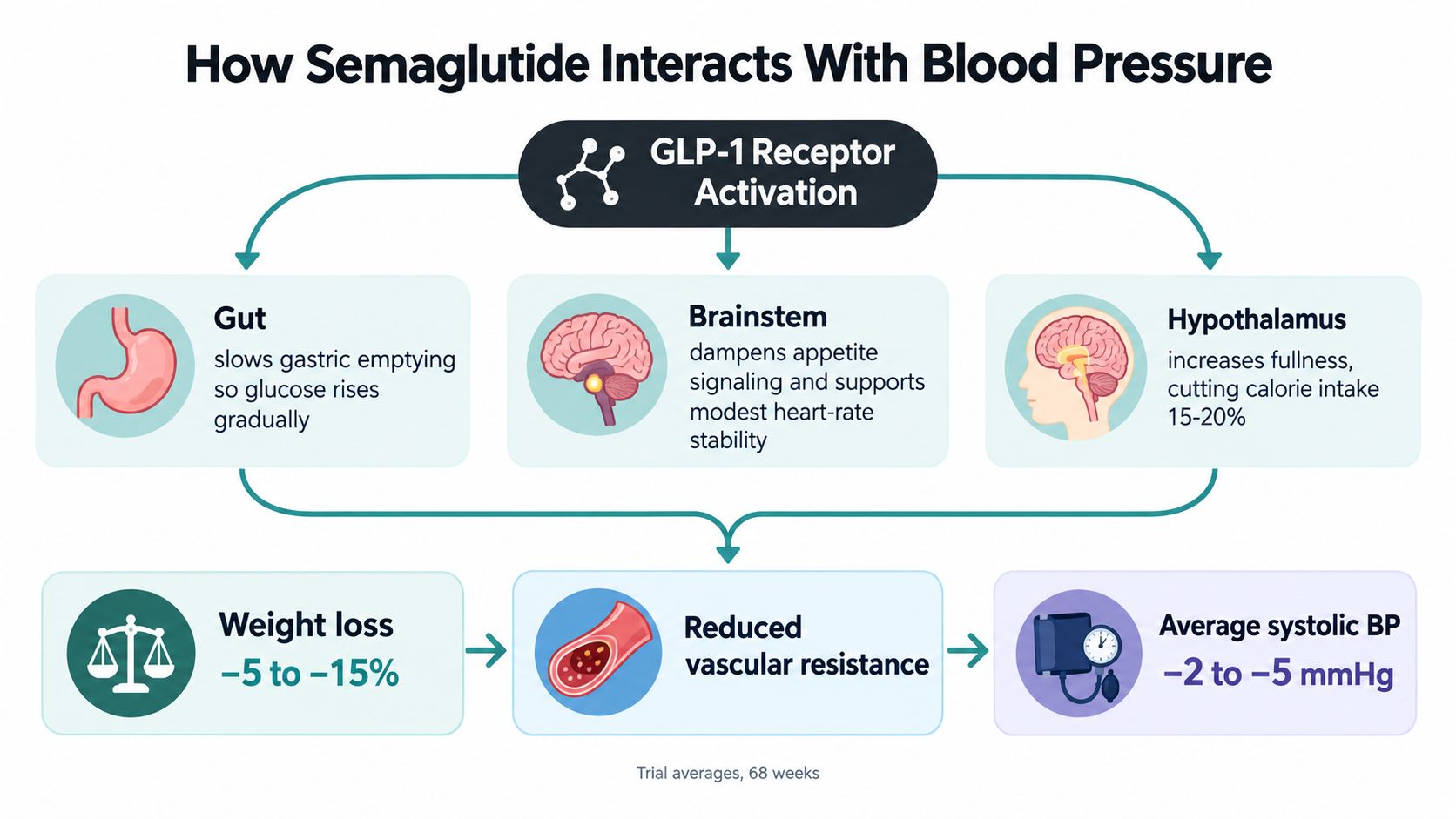
Semaglutide imitates a naturally occurring hormone called GLP-1. In simple terms, it helps the body respond to food more gradually, increases fullness, and reduces appetite. It acts through GLP-1 receptors in areas involved in digestion and appetite regulation, including the gut and brain.
Slower gastric emptying can change how quickly food leaves the stomach. Appetite signaling in the brain can make smaller meals feel satisfying, which may reduce total food intake. Over time, that can produce weight loss, and weight loss can reduce several contributors to elevated blood pressure, including excess abdominal fat, vascular resistance, and metabolic strain.
The effect isn't best understood as a single switch that directly turns blood pressure down. Instead, several changes may occur together:
- Less visceral fat can reduce pressure on metabolic and vascular systems.
- Improved glucose regulation may support healthier blood-vessel function.
- Changes in sodium and fluid handling can influence blood-pressure patterns.
- Lower energy intake and gradual weight loss can shift the average reading downward over time.
The same treatment can also create short-term conditions that make a cuff reading look worse. Nausea or vomiting may reduce fluid intake. Eating much less can alter caffeine or salt habits. Poor sleep, discomfort, anxiety about injections, and a missed antihypertensive dose can all affect the next measurement.
Why timing matters
A reading taken immediately after climbing stairs isn't comparable with one taken after sitting calmly. Neither is a reading taken with the wrong cuff size or with the arm hanging below heart level. Those errors can make a temporary change look like a medication effect.
The clinically documented acute concern is generally low blood pressure or volume depletion, not hypertension. A recent meta-analysis found no significant association between semaglutide and hypertension-related events, with a reported RR of 0.81 and 95% CI of 0.57 to 1.15, and it found no clear signal for hypotension-related events either (Endocrine-related meta-analysis). For a practical review of symptoms that may occur during treatment, a clinician-reviewed Ozempic symptom guide for women can help you organize questions for your prescriber.
What the Trials and Meta-Analyses Show
A home cuff may show a higher number during treatment, yet the trial evidence points in the opposite direction on average. Randomized studies in people with obesity, diabetes, or cardiovascular risk generally found lower systolic blood pressure with semaglutide than with placebo. Across the STEP obesity program, systolic reductions favored semaglutide in several trials. SELECT also recorded lower blood pressure while assessing cardiovascular outcomes.
In SELECT, systolic blood pressure fell by 3.82 mmHg with semaglutide and 0.51 mmHg with placebo, a between-group difference of 3.31 mmHg. Diastolic pressure fell by 1.02 mmHg with semaglutide and 0.47 mmHg with placebo, according to the published SELECT results.
These figures describe group averages, not a guaranteed response for each patient. A person whose pressure is close to a treatment threshold may notice a modest improvement, while another may see little change because sleep, sodium intake, kidney function, or existing medication has more influence.
Putting the evidence in context
Semaglutide product information reports significant mean systolic reductions of about 3.5 to 5.1 mmHg at 0.5 mg and 5.4 to 7.3 mmHg at 1 mg. It reports no significant diastolic differences versus comparators (semaglutide product information). A broader synthesis found systolic reductions ranging from about -2.58 to -7.27 mmHg. A separate cardiovascular analysis found reductions of roughly -2.8 to -3.7 mmHg versus placebo across baseline blood-pressure categories, including stage 2 hypertension.
| Trial or analysis | Population | Duration | Placebo-adjusted SBP change | Placebo-adjusted DBP change |
|---|---|---|---|---|
| STEP obesity program | Adults with overweight or obesity | Trial-dependent | Greater reduction with semaglutide | Generally neutral to lower |
| SELECT | Adults with overweight or obesity and cardiovascular disease | Trial-dependent | 3.31 mmHg lower between groups | 0.55 mmHg lower between groups |
| Meta-analysis | 29 randomized trials, 26,985 people | Trial-dependent | 2.31 mmHg lower versus comparators | Not consistently different |
| Product-information data | Adults in semaglutide comparative trials | Trial-dependent | About 3.5 to 7.3 mmHg lower, dose-dependent | No significant difference versus comparators |
The practical meaning is modest but relevant. An average fall of several mmHg may help someone whose pressure is near a treatment boundary, but it does not replace an antihypertensive prescription. Repeated lower readings may instead lead a clinician to reassess the existing regimen.
A patient-friendly review of whether semaglutide lowers blood pressure also separates population averages from individual readings. Overall, the studies support a neutral-to-lowering pattern rather than a chronic pressure-raising effect.
Why Some People Still See Higher Readings
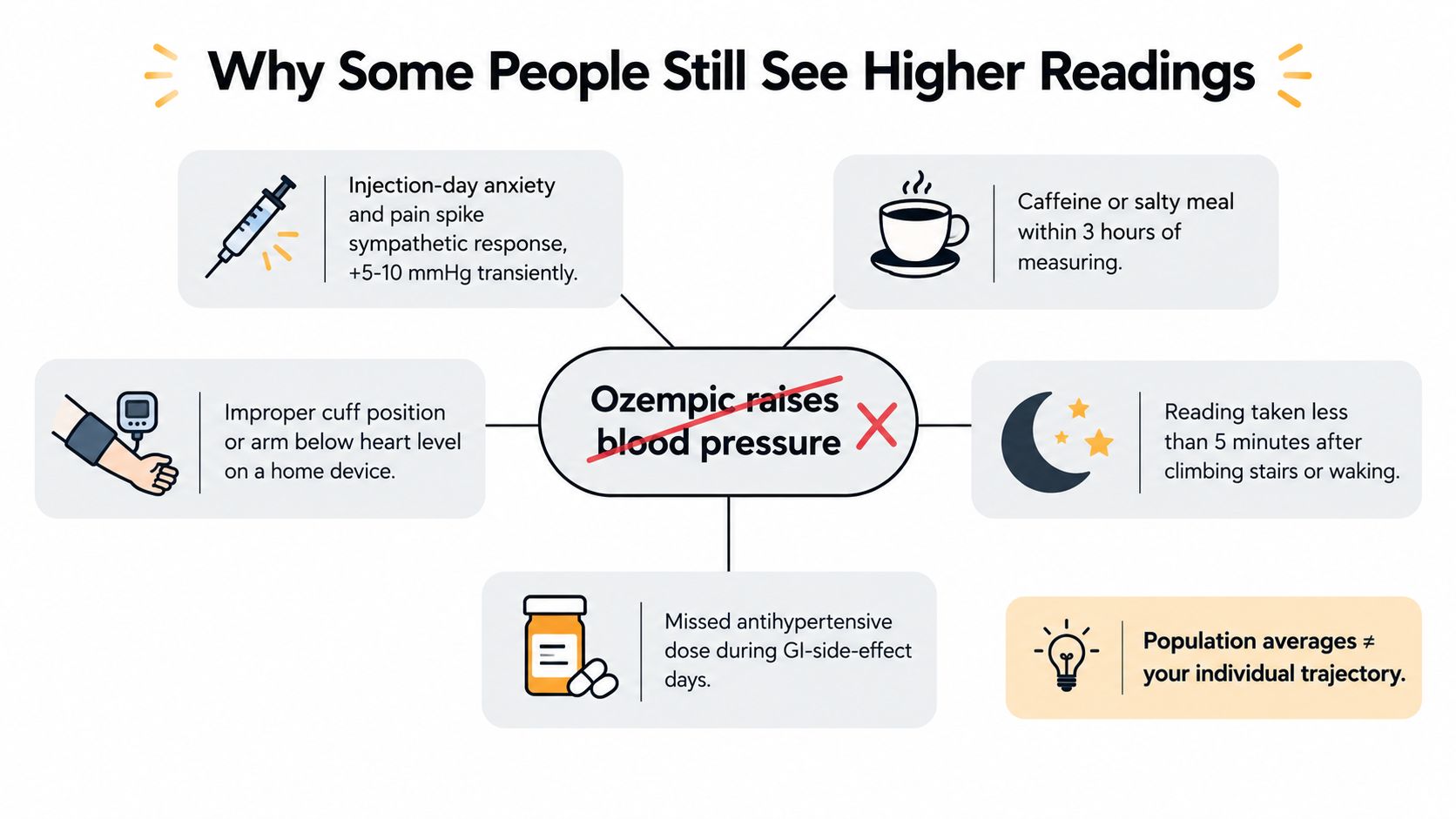
A higher home reading can be real without being caused directly by semaglutide. The number may reflect what happened in the hours before measurement rather than the medication's average effect over months.
During the early treatment period, several explanations deserve attention:
- Dehydration: Nausea, vomiting, or sharply reduced fluid intake can disturb circulation and make readings less predictable.
- Stress physiology: Discomfort, worry, and poor sleep can activate the sympathetic nervous system and temporarily raise pressure.
- Medication disruption: A person may delay or miss an antihypertensive dose while dealing with gastrointestinal symptoms.
- Diet changes: Less appetite can change caffeine, salt, and meal timing, sometimes in inconsistent directions.
- Measurement conditions: A cuff used over clothing, a poorly fitting cuff, an unsupported arm, or too little rest can distort the result.
The timing of measurement matters just as much as the timing of injection. A reading after stairs, caffeine, a salty meal, an argument, or a difficult night isn't a clean test of whether Ozempic raises blood pressure.
Confounders people often miss
Pain relievers such as NSAIDs may affect blood pressure in some people, particularly when kidney or fluid balance is already a concern. New caffeine habits can also matter if low energy leads you to drink more coffee than usual. Finally, rapid changes in weight or appetite may alter when you take other medicines, even when you haven't intentionally changed the prescription.
White-coat variability can appear at home too. Once people begin checking frequently, they may measure at moments of worry and then focus on the highest result. That creates a misleading picture of the usual level.
An isolated high reading doesn't equal chronic hypertension, but it shouldn't be ignored. Repeat it under consistent conditions and keep a 7-day log before discussing any medication change. Don't stop semaglutide or alter blood-pressure treatment independently.
Semaglutide Versus Tirzepatide for Blood Pressure
Semaglutide and tirzepatide are related therapies, but they aren't identical. Semaglutide acts through GLP-1 pathways, while tirzepatide activates both GLP-1 and GIP pathways. That difference can affect appetite, weight change, tolerability, and the way clinicians think about blood-pressure monitoring.
The available evidence suggests that tirzepatide may have a somewhat stronger blood-pressure event profile in some analyses, but it may also produce more hypotension-related events. A 2026 meta-analysis of 32 randomized trials involving 47,332 participants found fewer hypertension-related events with tirzepatide, with an RR of 0.40, but more hypotension-related events, with an RR of 2.45. Semaglutide showed no significant association with either hypertension-related or hypotension-related events overall (comparative meta-analysis).
| Metric | Semaglutide | Tirzepatide |
|---|---|---|
| Hypertension-related events | No significant overall association | Fewer events in the cited meta-analysis, RR 0.40 |
| Hypotension-related events | No significant overall association | More events in the cited meta-analysis, RR 2.45 |
| Main counseling concern | Review temporary spikes and medication timing | Watch for pressure falling too far, especially with other medicines |
| Patients needing closer review | People with dehydration, kidney disease, or antihypertensive changes | People taking diuretics, ACE inhibitors, or several pressure-lowering drugs |
This doesn't mean tirzepatide is unsafe or that semaglutide is preferable for everyone. It means the monitoring conversation should match the patient's baseline medicines and symptoms.
Someone taking lisinopril, hydrochlorothiazide, or a beta-blocker may feel light-headed as weight loss, lower intake, and treatment effects accumulate. Orthostatic symptoms, such as dizziness when standing, deserve more attention than a single mildly raised reading. A broader tirzepatide versus semaglutide comparison can help patients prepare focused questions, but the prescribing decision belongs with a qualified clinician.
Monitoring Blood Pressure While on Therapy
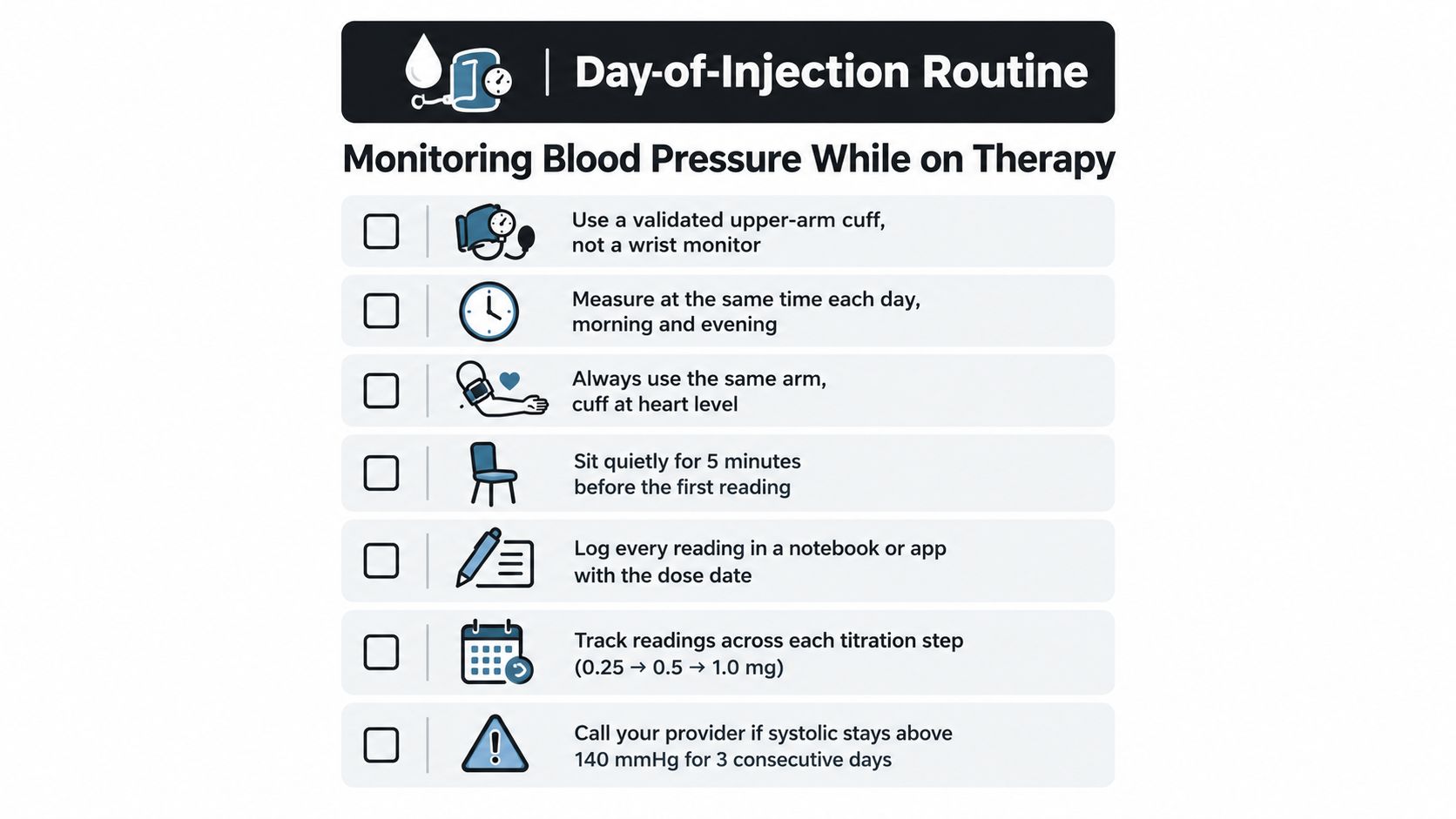
Home monitoring works best as a consistent routine, not as repeated checking whenever you feel anxious. Use a validated upper-arm cuff, measure on the same arm, and sit for 5 minutes before taking the first reading. Keep the cuff at heart level, avoid measuring immediately after exertion, and record the time, dose date, symptoms, and any missed medicines.
A simple schedule can follow dose changes:
- At treatment initiation: Establish a baseline with readings taken under consistent conditions.
- During each escalation: Compare the rolling pattern with the previous dose period, rather than reacting to one result.
- After gastrointestinal symptoms: Note fluid intake, vomiting, diarrhea, dizziness, and whether other medicines were delayed.
- At follow-up: Bring the log so the prescriber can reconcile every medicine and decide whether adjustments are needed.
If you're taking a diuretic or an ACE inhibitor, ask whether you should check orthostatic readings. That means measuring after resting, then checking again after standing, especially if you feel faint or unsteady.
What to record
Write down whether you had coffee, exercised, slept poorly, experienced nausea, or took an NSAID. Those details help a clinician distinguish a medication effect from a measurement circumstance.
Don't force fluids if you have a condition that limits fluid intake. Ask your care team how much to drink if you have kidney, heart, or liver disease. During nausea, focus on tolerable fluids and contact your prescriber if you can't keep them down.
Call the same day: Seek urgent clinical guidance for sustained readings above 180/120 mmHg, symptomatic dizziness that may indicate low pressure, palpitations, or chest discomfort.
Patients who want a structured explanation of GLP-1 treatment in the context of hypertension can review this GLP-1 guide for high blood pressure. Supplements shouldn't replace prescribed therapy, and any product marketed for blood-pressure support should be reviewed with a pharmacist or clinician, including information about science-backed blood pressure supplements.
Key Takeaways and When to Call a Provider
Three conclusions matter most.
- Semaglutide hasn't shown a sustained blood-pressure-raising pattern in clinical trials. The overall evidence is neutral to lowering.
- Average systolic pressure generally moves downward, often by roughly 2 to 5 mmHg, although an individual response can differ.
- Short-term readings can still rise when dehydration, stress, poor sleep, missed antihypertensive doses, NSAID use, caffeine, or measurement errors enter the picture.
A repeated increase over several days deserves a clinician's review, particularly if you already take blood-pressure medicine. Your prescriber may need to assess hydration, kidney function, medication timing, and whether another treatment should be adjusted. Don't discontinue semaglutide or your antihypertensive without medical advice.
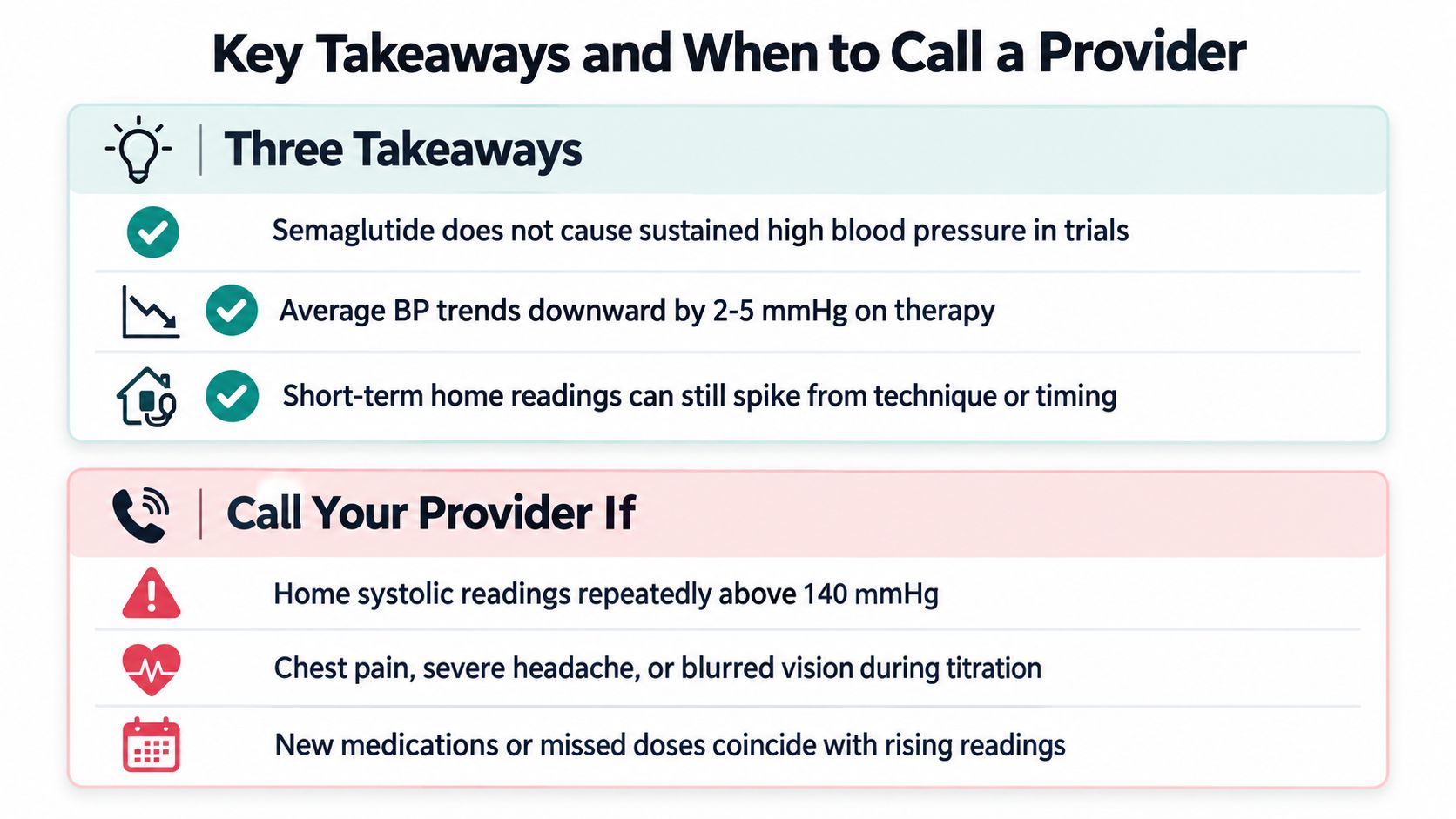
Call for urgent help if blood pressure reaches 180/120 mmHg or higher, especially with chest pain, severe headache, vision changes, shortness of breath, weakness, or confusion. Even without those symptoms, sustained elevation should be discussed rather than explained away as an Ozempic side effect.
Bring a two-week home log to your next appointment if possible. Include readings, dose dates, symptoms, missed doses, caffeine, illness, and other medicines. That record gives your clinician a far clearer basis for action than the highest number on a single morning.
If you want medically supervised guidance while considering semaglutide or tirzepatide, Weight Method connects eligible adults with licensed providers, ongoing messaging, progress tracking, and dose adjustments. Use your blood-pressure log during the consultation so the care team can consider your weight-management plan alongside your existing cardiovascular medicines.