You take your first tirzepatide injection on Monday morning and expect appetite changes, but not quite this. By lunch, half a meal feels like enough. That afternoon, food seems less appealing and a mild wave of nausea arrives. By day three, constipation joins the list, leaving you wondering whether these tirzepatide weight loss side effects will last for days, months, or the entire treatment.
That experience can feel unpredictable until you understand what the medicine is doing. Tirzepatide activates both GIP and GLP-1 receptors, changing appetite signaling, blood-sugar regulation, and the speed at which food leaves the stomach. The same actions that help you feel full can also produce gastrointestinal symptoms.
The useful question isn't only, “What side effects does tirzepatide cause?” It's also, “Why is this happening, when is it most likely to happen, and what should I do next?” The answers below connect the mechanism to clinical-trial rates, explain the dose-escalation pattern, outline practical steps, and distinguish uncomfortable symptoms from warning signs that need medical attention.
Starting Tirzepatide and Wondering What Comes Next
The first week often feels like a change in appetite before it feels like weight loss. You may serve your usual portion, eat several bites, and notice that the internal signal to continue has quieted. A few hours later, you might feel overly full, mildly queasy, or less interested in food than expected.
That doesn't necessarily mean something has gone wrong. Tirzepatide is designed to influence the systems that regulate hunger and digestion. It can make meals feel more satisfying while also slowing the movement of food through the stomach. When those effects arrive together, early fullness, nausea, belching, reflux, constipation, or vomiting can appear.
Why the first dose can feel unfamiliar
Your body has to adjust to a new signal. Tirzepatide is a weekly dual GIP and GLP-1 receptor agonist, so it acts on two hormone pathways involved in the response to eating. The medication supports glucose-dependent insulin release and reduces appetite signaling, while its gastrointestinal effects can make a normal meal feel larger or longer-lasting.
A common mistake is to interpret reduced appetite as a reason to stop eating altogether. Even when hunger is low, your body still needs fluids, protein, and sufficient nutrition. Smaller meals are often easier to tolerate than trying to finish a familiar portion.
Practical rule: Treat fullness as a portion signal, not as a challenge to complete the plate.
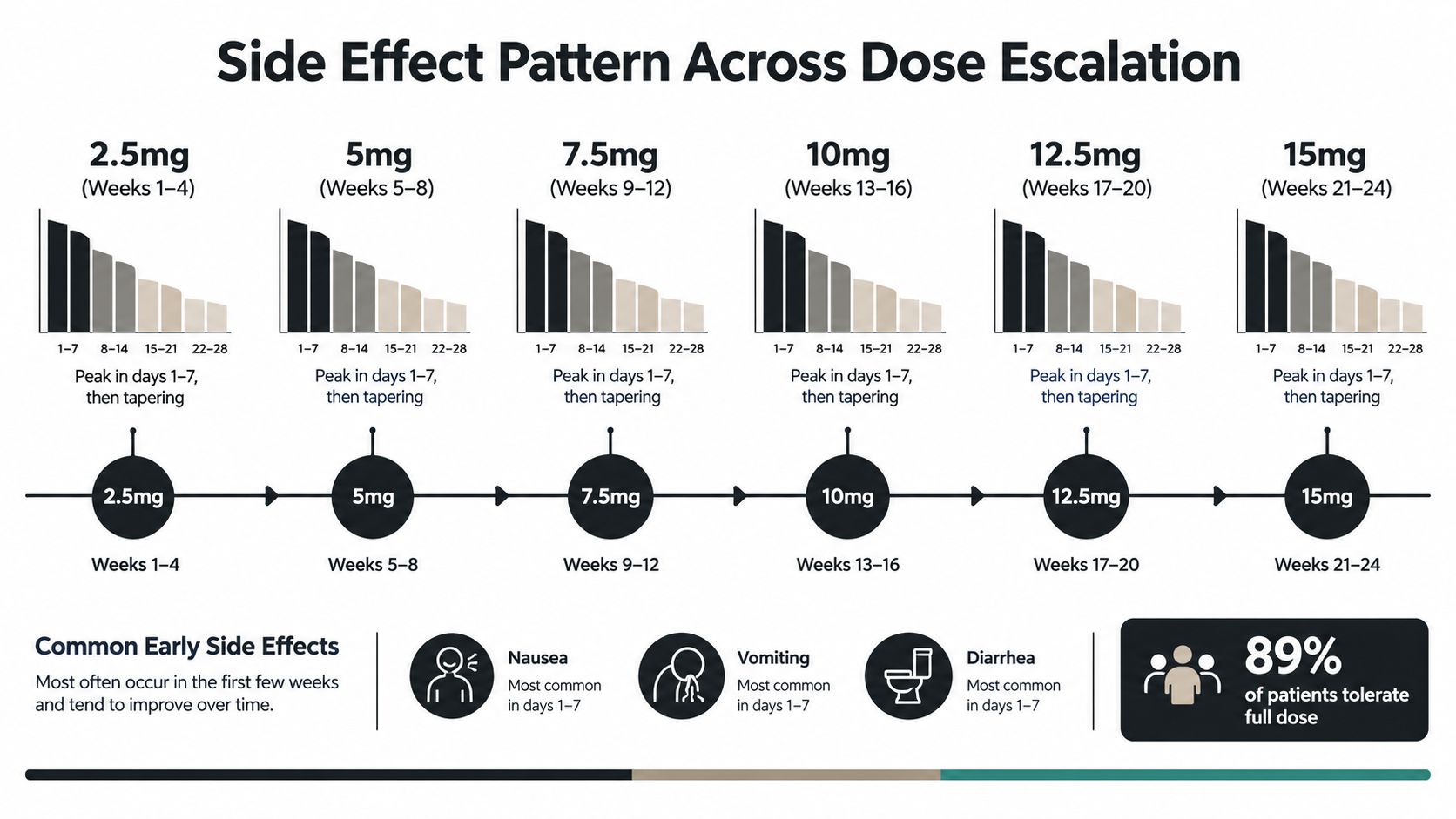
The timing also varies. Some people notice symptoms shortly after an injection, while others feel them later in the week. Dose increases can bring back symptoms that had settled at the previous dose, because the body is adapting to a stronger exposure.
What “normal adjustment” means
Mild nausea, early satiety, temporary constipation, and reduced appetite are common adjustment experiences. They're more reassuring when you can drink, urinate normally, perform daily activities, and notice gradual improvement rather than steady deterioration.
Tolerability is often dose-dependent and temporary, but “temporary” doesn't mean you should silently endure severe symptoms. If vomiting persists, fluids won't stay down, abdominal pain becomes intense, or symptoms worsen after an increase, contact the prescribing clinician. A slower increase or a dose hold may be more appropriate than pushing toward a target dose quickly.
The rest of this guide gives those symptoms context. This explanation of how GLP-1 medicines work can also help you connect appetite changes with the underlying biology.
How Tirzepatide Works and Why Side Effects Happen
Tirzepatide's effects make more sense when you follow the process in order.
First, it activates two gut-hormone pathways
After eating, the body releases hormones that help coordinate digestion, insulin activity, and appetite. Tirzepatide activates receptors for GIP, or glucose-dependent insulinotropic polypeptide, and GLP-1, or glucagon-like peptide-1.
That dual activity helps the pancreas release more insulin when glucose is present and suppresses glucagon, a hormone that raises blood glucose. It also affects appetite circuits in the brain, including areas involved in satiety and food intake.
Next, food moves more slowly
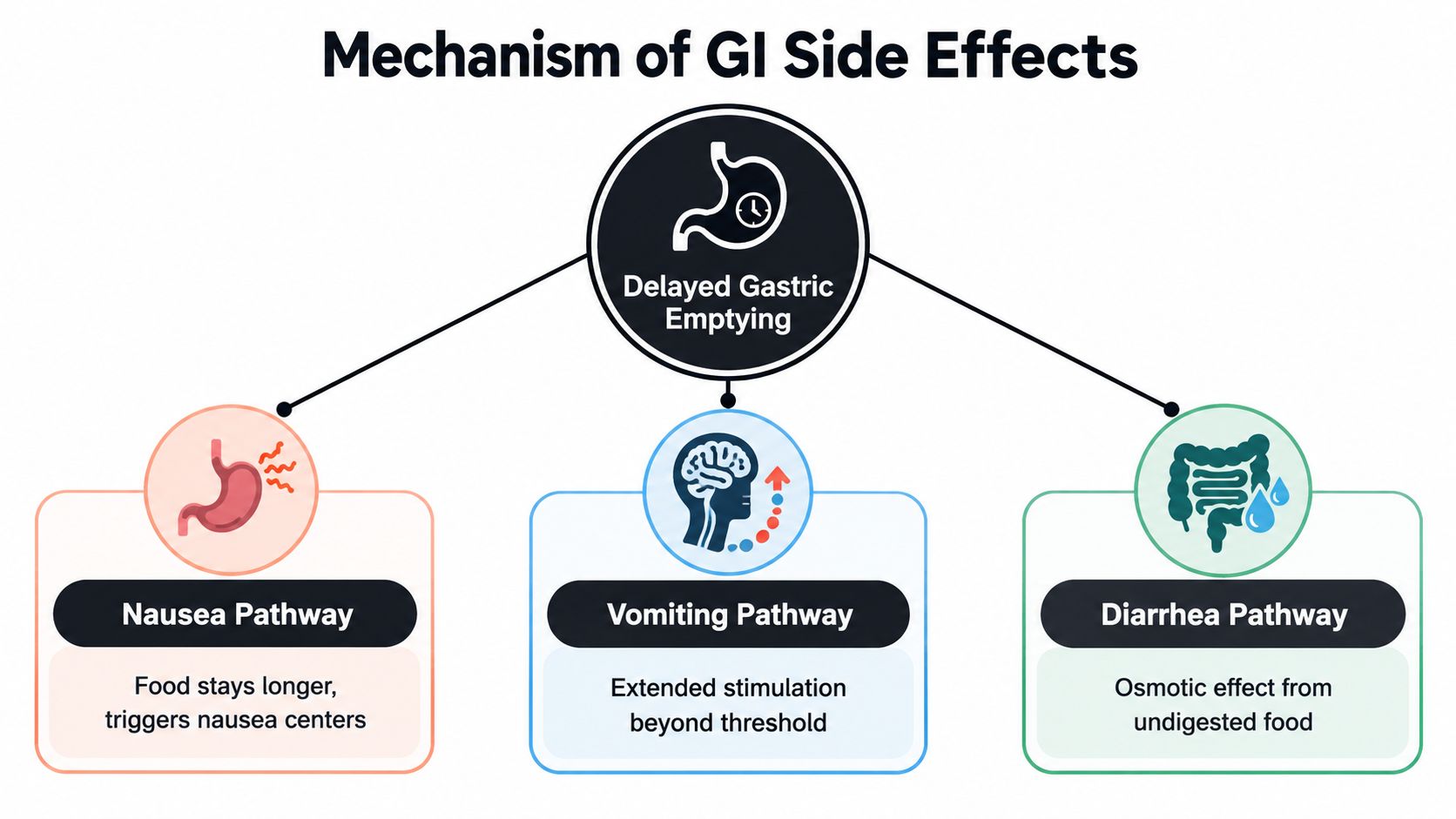
Think of the stomach as a conveyor belt. Normally, food moves onward at a pace that lets you eat another meal later. Tirzepatide can slow that belt, so food remains in the stomach longer and the next meal feels less urgent.
That slower gastric emptying helps explain why a person may feel full after a small amount of food. It also explains why eating a large, rich meal can trigger discomfort, nausea, reflux, or vomiting. If the stomach is already moving slowly, adding more food can exceed what feels comfortable.
Appetite changes can affect the rest of digestion
Lower appetite often means lower food intake. If a person also drinks less, eats very little fiber, or becomes less active because of fatigue, stool can move more slowly and constipation can follow.
Diarrhea has a different pattern and can arise from changes in how nutrients and fluid move through the gut. These mechanisms can overlap, which is why one person may experience constipation while another develops loose stools.
The less common concerns require more caution. Abdominal pain, gallbladder problems, or pancreatic symptoms shouldn't be dismissed as ordinary nausea. A suspected medication reaction isn't the same as a confirmed cause, and symptoms need clinical assessment rather than online diagnosis.
Weekly dosing and gradual escalation give the body time to adapt. If symptoms become difficult, a prescriber may keep you at the current dose, delay an increase, or adjust the treatment plan instead of treating the highest dose as an automatic destination.
The Most Common Side Effects With Real Numbers
The clearest dose-specific picture comes from the SURMOUNT-1 obesity trial. Gastrointestinal effects were the main tolerability issue, and the rates varied by tirzepatide dose.
| Adverse event | Placebo | 5 mg | 10 mg | 15 mg |
|---|---|---|---|---|
| Nausea | Not specified in the verified trial summary | 24.6% | 33.3% | 31.0% |
| Diarrhea | Not specified in the verified trial summary | 18.7% | 21.2% | 23.0% |
| Constipation | Not specified in the verified trial summary | 16.8% | 17.1% | 11.7% |
| Vomiting | Not specified in the verified trial summary | 8.3% | 10.7% | 12.2% |
| Discontinuation due to adverse events | 2.6% | 4.3% | 7.1% | 6.2% |
The figures come from the SURMOUNT-1 trial results published by Eli Lilly. They show why a dose increase can matter. Nausea was reported by 24.6% at 5 mg, 33.3% at 10 mg, and 31.0% at 15 mg. Diarrhea rose from 18.7% to 23.0% across those doses, while vomiting was reported by 8.3% at 5 mg and 12.2% at 15 mg.
Constipation didn't increase in a straight line in this trial. It affected 16.8% at 5 mg, 17.1% at 10 mg, and 11.7% at 15 mg. That's a useful reminder that trial averages don't predict an individual's experience. Your symptoms may reflect meal size, hydration, activity, other medicines, and personal sensitivity as well as dose.
What the stopping numbers tell you
Side effects were common, but stopping treatment because of them remained a minority outcome. Discontinuation occurred in 4.3% at 5 mg, 7.1% at 10 mg, and 6.2% at 15 mg, compared with 2.6% on placebo, according to the same trial report.
A broader review of SURMOUNT-1 through SURMOUNT-4 found that at least one gastrointestinal adverse event was reported by 27.8% to 72.8% of tirzepatide-treated participants, compared with 12.2% to 32.5% with placebo. The review reported serious adverse events in 5% to 9% of tirzepatide users versus 3% to 7% with placebo, while discontinuation due to adverse events ranged from 4% to 10.5% with tirzepatide versus 2.1% to 4% with placebo. These ranges are summarized in the broader SURMOUNT safety review.
Reading the numbers as a patient
Most gastrointestinal events in these trials were mild to moderate and clustered around dose escalation. That doesn't make them irrelevant. Nausea can reduce intake, diarrhea can contribute to fluid loss, and constipation can become painful if ignored.
You may also hear about fatigue, abdominal discomfort, belching, reduced appetite, injection-site reactions, or hair shedding. Unless a verified rate is available for a particular symptom, the safest conclusion is qualitative: these experiences can occur, but they aren't interchangeable with the dose-specific figures above. For a plain-language overview of this broader symptom group, see Weight Method's guide to GLP-1 medication side effects.
When Side Effects Show Up and How to Manage Them
Symptoms often cluster after a dose increase rather than remaining equally intense throughout treatment. The first several days after a new dose can bring more fullness or nausea, followed by improvement as your body adapts. Some people settle quickly, while others need a longer period at the same dose.
That pattern is why a calendar can be more useful than memory. Record the injection date, dose, meals that seemed difficult, bowel movements, vomiting, fluid intake, and whether symptoms improved by the next day.
Make meals easier during an escalation window
Start with smaller portions and eat slowly. High-fat meals can feel especially difficult when stomach emptying is slower, so choose simpler foods during periods when nausea is active. If raw vegetables, legumes, or other high-fiber foods worsen bloating, reduce them temporarily rather than forcing a large fiber load.
Separate liquids from solid meals if drinking with food increases fullness. Keep fluids available throughout the day, and ask your clinician how to handle hydration if diarrhea or vomiting develops.
Constipation usually responds better to a combination of movement, adequate fluid, and a gradual approach to fiber than to a sudden increase in bran or supplements. Over-the-counter nausea, reflux, or constipation medicines may be appropriate for some people, but check with a pharmacist or prescriber first, especially if you take diabetes, blood-pressure, kidney, or bowel medicines.
Track the trend, not just the symptom: A symptom that is mild and improving needs a different response from one that is mild today and steadily worsening.
Adjust the schedule with your prescriber
Don't increase the dose because the calendar says it's time. If symptoms remain troublesome, ask whether you should stay at the current dose, hold an increase, or use a slower titration plan. The titration schedule guide provides useful background, but your prescriber should make changes based on your health history and response.
Injection-site redness or tenderness is usually handled by observing it and avoiding repeated injections into the same spot. Worsening redness, heat, swelling, drainage, or a reaction that doesn't heal deserves medical advice.
Fatigue and reduced appetite may improve as eating becomes more consistent. They can also signal that you're not getting enough fluids, calories, or protein, so persistent fatigue shouldn't be treated as proof that the medication is “working.”
Rare and Less Discussed Risks Worth Knowing
The most overlooked issue may happen after treatment stops. In a post hoc SURMOUNT-4 analysis, 82% of participants who had lost at least 10% of their body weight regained more than 25% of that loss within one year after withdrawal, and many also lost improvements in blood pressure, lipids, and glycemic measures, as reported in The Guardian's coverage of the withdrawal analysis.
That finding doesn't mean everyone regains the same amount. It does mean maintenance deserves discussion before the first injection. Appetite biology can return as treatment is withdrawn, and stopping without a weight-maintenance strategy may produce a difficult transition.
Emerging signals need context
A pharmacovigilance analysis of FAERS data from 2022 Q1 to 2025 identified 14 new safety signals warranting further investigation. The signals included menstrual disorder, postmenopausal hemorrhage, sleep disorder, Wernicke's encephalopathy, muscle atrophy, neck mass, and lymph node pain, according to the published pharmacovigilance analysis.
FAERS reports can identify patterns for study, but they don't prove that tirzepatide caused every reported event. That evidence belongs in an informed conversation, not a panic list.
| Risk or signal | Evidence level | Populations to discuss with a provider |
|---|---|---|
| Gastrointestinal intolerance | Consistent clinical-trial finding | Anyone with severe or persistent symptoms |
| Withdrawal-related regain and metabolic reversal | Post hoc trial evidence | Anyone considering short-term treatment |
| Emerging real-world safety signals | Pharmacovigilance signal requiring investigation | People with new, unusual, or unexplained symptoms |
| Pancreatic or biliary concerns | Requires clinical assessment when symptoms appear | People with relevant prior disease or severe abdominal pain |
| Thyroid C-cell tumor warning | Boxed-warning context based on rodent findings | Anyone with personal or family history of medullary thyroid carcinoma or MEN2 |
Prescribers also ask about diabetic retinopathy, eating-disorder history, pregnancy planning, and significant kidney, liver, or pancreatic disease. These factors don't automatically decide treatment, but they change the safety conversation and monitoring plan.
Red Flags, Serious Reactions, and When to Seek Care
Use symptoms and severity to decide what happens next.
Usually appropriate for routine management
Mild nausea, early fullness, mild constipation, and short-lived fatigue can often be managed with smaller meals, fluids, gentle activity, and observation. Keep a record of the dose and symptom pattern so your prescriber can see whether the problem is settling.
Contact your prescriber soon
Call within 24 to 48 hours if vomiting persists beyond a day, you can't keep fluids down, heartburn continues, abdominal pain is new or worsening, or an injection-site reaction becomes more painful, red, swollen, or slow to heal. Bring an updated medication list and note any recent dose change.
Seek urgent or emergency care now
Get urgent assessment for severe upper-abdominal pain that radiates to the back, right-sided abdominal pain with fever or jaundice, dizziness with markedly reduced urination, abdominal distension with inability to pass gas or stool, or symptoms suggesting severe hypoglycemia when tirzepatide is combined with insulin or a sulfonylurea.
Don't wait for the next scheduled injection if these symptoms appear. Severe dehydration, suspected pancreatitis, gallbladder disease, bowel obstruction, or hypoglycemia can require treatment beyond a dose adjustment.
The Honest Bottom Line on Tirzepatide Safety
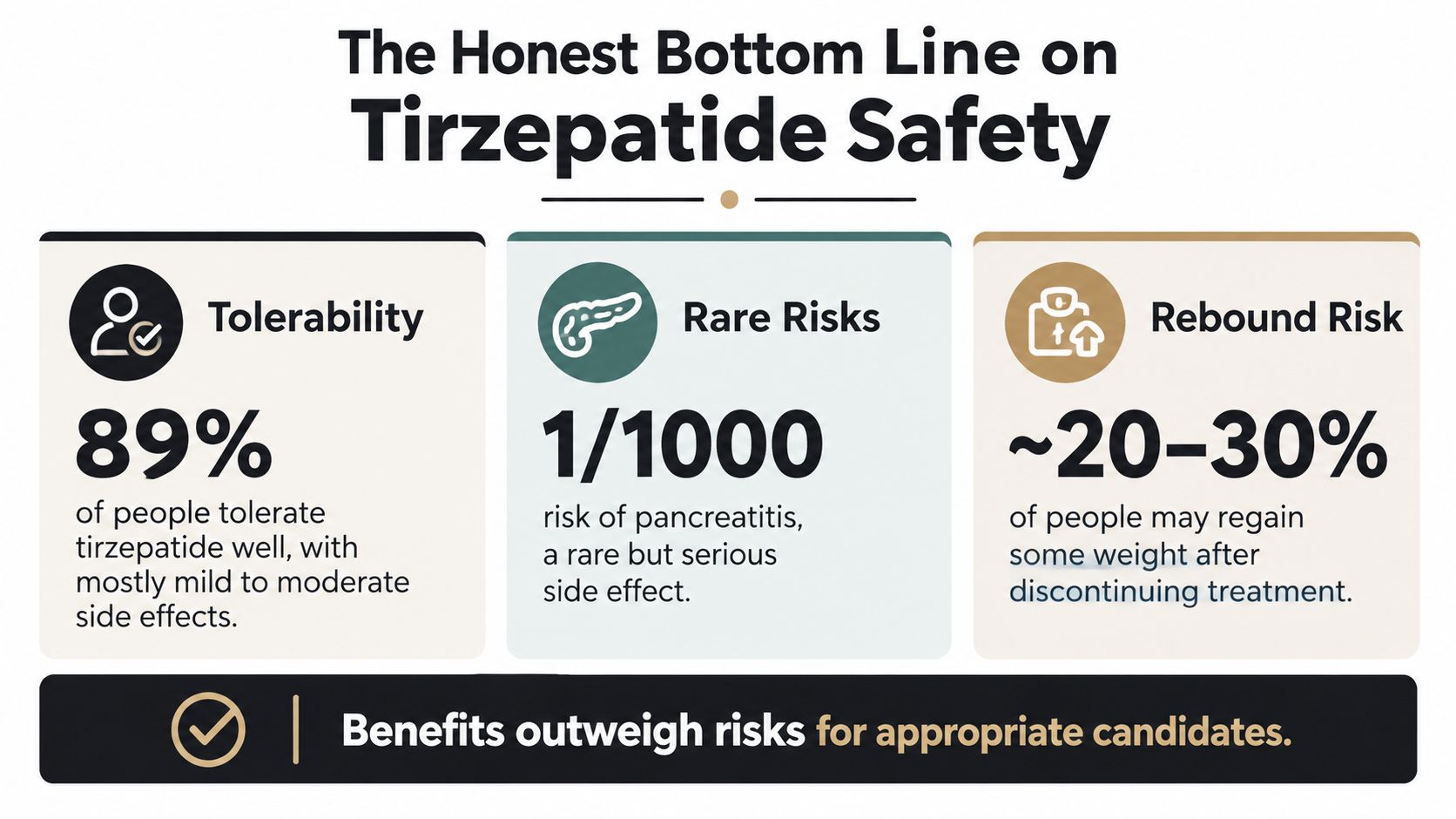
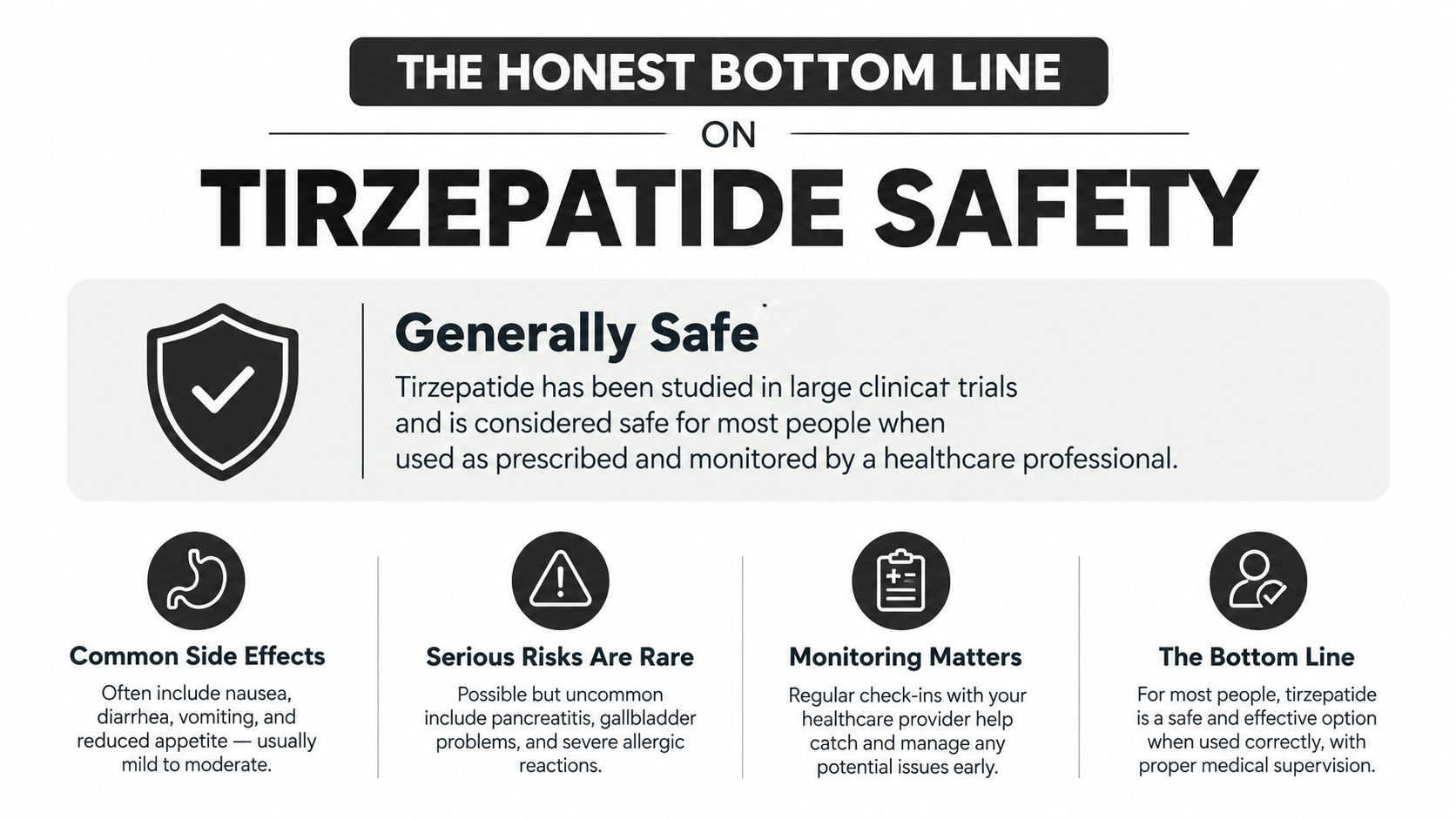
Tirzepatide can be a powerful weight-management tool, but its value depends on whether you can tolerate it and maintain the benefits over time. The common problem is gastrointestinal, especially around dose escalation. The less visible issue is long-term planning, because stopping treatment may reverse some weight, appetite, and metabolic improvements.
The right decision isn't automatically the highest dose or the fastest weight loss. It's a plan that matches your health history, symptom tolerance, nutrition, monitoring needs, and expectations about maintenance. A clinician should review unusual symptoms and relevant risks rather than dismissing everything as an ordinary side effect.
For another perspective on using GLP-1 medication thoughtfully, Podcast 254 peak performance weight loss discusses potential benefits, drawbacks, and the importance of taking these medicines appropriately.
Weight Method offers online clinician consultations, ongoing messaging, progress tracking, and individualized dose adjustments for adults considering FDA-approved weight-loss medications such as tirzepatide. If you want supervised help interpreting symptoms and planning dose increases, visit Weight Method to begin the evaluation.