Semaglutide is a synthetic version of GLP-1, a gut hormone that signals fullness to the brain and slows stomach emptying. By keeping that signal active for days instead of minutes, it reduces hunger, calorie intake, and blood sugar rises after meals.
If semaglutide only slowed digestion, why would a smaller portion feel satisfying and a high-fat snack lose its pull? That question exposes the gap in most explanations. Digestion is part of the story, but appetite signals in the brain, insulin release, and food choices matter just as much, and those effects continue only while treatment is active.
How Semaglutide Works in the Body
How can a medicine affect both fullness after a meal and the urge to eat again later? Semaglutide activates GLP-1 receptors, which are involved in appetite and fullness. It also affects how the body responds to blood sugar and how quickly food leaves the stomach.
The FDA prescribing information for semaglutide describes semaglutide as a GLP-1 analogue with 94% sequence homology to naturally occurring human GLP-1. Unlike the natural hormone, which is cleared within minutes, semaglutide stays active long enough for once-weekly dosing.
Natural GLP-1 is like a brief message after eating. Semaglutide keeps a similar message active for longer, so appetite signals can continue between meals, not only while food is being digested.
The Four Effects at a Glance
| Effect | What Happens in the Body | What You Might Notice |
|---|---|---|
| Appetite signalling | GLP-1 receptors in brain regions tied to hunger are activated | Less hunger between meals |
| Gastric emptying | Food leaves the stomach more slowly | Fullness lasts longer after eating |
| Insulin release | Insulin rises mainly when blood glucose is high | The body responds to elevated blood sugar after meals |
| Glucagon suppression | Glucagon, which raises blood glucose, is reduced | The body has less of this blood-sugar-raising signal |
The Pathway in Order
- Food reaches the gut. Eating normally triggers the release of GLP-1. Semaglutide can activate GLP-1 receptors independently of that brief post-meal signal.
- Receptors switch on. Semaglutide binds to GLP-1 receptors, including receptors in brain regions involved in appetite. These signals affect hunger, fullness, and how rewarding food feels.
- The brain registers fullness. You may feel satisfied with less food or think about eating less often. The signal changes how strongly hunger calls for a response.
- The stomach empties more slowly. Food stays in the stomach longer, extending physical fullness after a meal. Large or rich meals may feel uncomfortable for some people, so mention that to your prescriber.
- The pancreas responds to glucose. Semaglutide stimulates insulin secretion when blood glucose is elevated and suppresses glucagon, a hormone that raises blood glucose.
Slower digestion is only part of the effect. It can extend fullness after a meal, while appetite signalling can reduce the drive to begin eating again. Both relate to how much and how often you want to eat.
Slower stomach emptying can make fullness last longer. Appetite signalling can change whether you want another meal, snack, or helping in the first place.
Nausea, vomiting, diarrhea, and constipation can occur as semaglutide affects gastrointestinal and appetite-related pathways, particularly as the dose increases. Hormonal changes and life stage can shape how side effects feel. You can use information about GLP-1 side effects for perimenopausal women to help identify questions to raise with your prescriber.
Dose increases are gradual to help improve tolerability. A low starting dose introduces the treatment; it does not represent the full effect you may experience later. Semaglutide's appetite and fullness effects depend on continued treatment, so discuss the dose plan and what to expect if treatment stops with your prescriber.
Why Hunger and Food Choices Shift Day to Day
Say lunch is at 1 p.m. You serve the amount you'd normally eat, then find yourself comfortably done at two-thirds of the plate. It isn't that you're distracted or trying harder. The portion stops calling for a finish. Later, the mid-afternoon walk past the kitchen happens without the usual negotiation over crisps, biscuits, or something sweet.

Dinner shows another change. Foods that once felt hard to refuse, especially rich and high-fat options, may seem easier to leave or less appealing in the first place. You might choose the lighter option because it sounds better, not because you've imposed a rule. That shift in preference is a clue that more than stomach speed is involved.
What the Crossover Study Found
In a randomized crossover study summarized in a DrugBank article on semaglutide and energy intake, semaglutide reduced ad-libitum energy intake by 24% versus placebo after 12 weeks in adults with obesity. Participants reported less hunger, fewer cravings, and better control over eating. Their preferences also shifted away from high-fat, energy-dense foods.
That pattern points to appetite and reward-related eating, not only delayed gastric emptying. A slower stomach can explain feeling full after lunch. It's less able to explain why a food looks less tempting hours later, or why you can walk away mid-portion without the usual sense of leaving something valuable behind. For people who've struggled with willpower-based dieting, that distinction matters. The medication lowers the volume of the urge rather than asking you to out-argue it all day.
Limits You Should Keep in View
The study was small, lasted only 12 weeks, and used a dose escalated to 1.0 mg, so you shouldn't treat 24% as a guaranteed reduction for every patient. Some days will still feel hard, particularly around dose increases, poor sleep, celebrations, or familiar routines built around food. Appetite can shift unevenly, and that's normal rather than proof the medicine has stopped working.
Food planning still matters because a quieter signal makes good choices easier, it doesn't make them for you. Protein at meals, regular eating times, and keeping highly tempting foods less visible all support the effect. When sweet cravings do show up, practical strategies for natural ways to curb sugar cravings can complement treatment without relying on restriction alone. Set this expectation early: semaglutide changes the signal, and your habits decide what you do with the extra room it creates.
Weight Loss Results From the STEP 1 Trial
The clearest answer to whether those appetite changes add up comes from STEP 1. The 2021 STEP 1 trial in the New England Journal of Medicine enrolled 1,961 adults with overweight or obesity who did not have diabetes. After 68 weeks, average body weight fell 14.9% with once-weekly semaglutide 2.4 mg plus lifestyle intervention, compared with 2.4% with placebo plus lifestyle intervention, an estimated difference of 12.4 percentage points at P<0.001.
Averages hide the spread, so read the thresholds row by row. They show how many people reached losses that clinicians consider meaningful, not just whether the group average moved.
| Outcome | Semaglutide 2.4 mg | Placebo |
|---|---|---|
| Average body weight change | -14.9% | -2.4% |
| Participants losing at least 5% | 86.4% | 31.5% |
| Participants losing at least 10% | 69.1% | 12.0% |
| Participants losing at least 15% | 50.5% | 4.9% |
The first threshold, at least 5%, was reached by the majority of participants on semaglutide and by about a third on placebo. At at least 10%, the gap widens sharply. At at least 15%, about half of semaglutide participants got there, compared with fewer than 5% on placebo. That's the practical meaning of the appetite mechanism: it changed energy intake enough, for enough people, to produce substantially greater weight loss than lifestyle intervention alone over approximately 16 months.
How to Read the Average Honestly
An average near 15% doesn't mean everyone loses 15%. Individual outcomes varied, and some people lost far less despite taking the same dose. If you're comparing your own progress, use the thresholds as a range of plausible outcomes and review your trend with your prescriber at set intervals. Our guide to how much weight you can lose on semaglutide walks through that expectation-setting in more detail. In broader GLP-1 treatment, patients lose 15-25% of body weight, but your prescriber should anchor your goal to your starting point, health conditions, and response over time.
A realistic goal is a meaningful percentage of your starting weight reached over many months, not a fixed number of pounds by a fixed date.
Both groups received lifestyle intervention with reduced-calorie eating and increased physical activity. Semaglutide was studied alongside those habits, not as a replacement for them. It makes eating less feel more achievable, but the trial design assumes you're still building meals, movement, and routines that support a lower intake.
One distinction prevents confusion. These participants did not have diabetes, so STEP 1 is a weight-management result, not a diabetes glucose result. The same mechanism lowers blood glucose in people with type 2 diabetes, but those figures come from separate diabetes studies and the official prescribing information. Don't borrow the 14.9% figure to predict blood sugar change, and don't borrow diabetes outcomes to predict weight loss.
How Long the Effect Lasts and What Happens After Stopping
Many people start treatment imagining a finish line. You take semaglutide, lose the weight, stop, and your appetite stays reset at its new setting. The evidence doesn't support that picture, and it's better to know before your first dose than after your last one.
Semaglutide's weekly schedule works because the molecule stays in circulation for days, keeping GLP-1 receptor activation steadier than the body's own brief pulses after meals. As levels fall after the final dose, that added activation fades with them. Hunger signals, cravings, and the pull of energy-dense foods are no longer being dampened to the same degree. Nothing has gone wrong. The support has been removed.
What Happened When Participants Stopped
In the STEP 1 extension reported in a PubMed Central article on weight regain after semaglutide withdrawal, participants who stopped semaglutide regained an average 11.6 percentage points of body weight during the following year, approximately two-thirds of their prior loss. Several cardiometabolic improvements also moved back toward baseline.
Read that carefully. It doesn't mean everyone immediately returns to their starting weight, and regain isn't a personal failure. Withdrawal follow-up was about one year, and individual responses vary. Some people keep more off, especially with structured support. The consistent pattern is that appetite drivers reassert themselves once the drug is gone. Weight regain is expected after discontinuing any semaglutide formulation, including oral Wegovy.
Semaglutide manages appetite biology while it's active. It doesn't permanently rewrite that biology during a short course.
Plan for Maintenance Before You Need It
That evidence changes the conversation you should have at the start. Ask whether the plan assumes continued treatment, a clinician-supervised dose change, or a defined stopping point with extra monitoring. Nutrition, physical activity, regular weight checks, and early action if hunger surges all belong in that discussion. If cost, side effects, pregnancy plans, or simple preference might lead you to stop one day, say so early so the plan can account for it.
Stopping or changing the dose is a decision to make with your prescriber, never something to do alone because you've hit a target or had a rough week. If you're considering that step, our guide on what happens when you stop GLP-1 treatment explains the transition to discuss at that appointment. The final checklist below turns maintenance from an afterthought into part of the original prescription decision.
Forms, Doses and Side Effects Compared
Different brand names cause unnecessary confusion at the pharmacy counter. The products below all contain semaglutide, so the core mechanism is the same. What changes is the approved use, whether you inject or swallow it, how often you take it, and the dose range your prescriber works within.
| Product | Approved Use | Form and Frequency | Dose Range |
|---|---|---|---|
| Ozempic | Type 2 diabetes | Weekly injection | 0.25 mg to 2 mg |
| Wegovy injection | Chronic weight management | Weekly injection | 0.25 mg to 2.4 mg |
| Wegovy tablet | Chronic weight management | Daily oral tablet | 25 mg |
| Rybelsus | Type 2 diabetes | Daily oral tablet | 3 mg to 14 mg |
Those milligram numbers aren't interchangeable across forms. A daily tablet dose looks large beside a weekly injection dose because the delivery route is different, not because one is automatically stronger in a simple head-to-head sense. Compare products only after you've confirmed the exact name on your prescription. Comparing your dose with someone else's online, without matching the product and approved use, leads to false alarms and bad decisions.
Common Side Effects and Practical Responses
- Nausea: Eat smaller meals, stop at comfortable fullness, and avoid forcing food when the signal says you're done. Call your prescriber if nausea persists, limits fluids, or gets severe.
- Diarrhea: Sip fluids steadily rather than drinking large amounts at once, and keep meals simple while symptoms settle. Report ongoing episodes, dizziness, or signs you're not keeping up with fluid losses.
- Constipation: Steady fluids, fibre-containing foods as tolerated, and regular movement can help, but don't add new remedies blindly if symptoms continue. Tell your prescriber if it's persistent or painful.
- Vomiting: Pause and rehydrate in small sips once you're able, then contact your prescriber if vomiting repeats or you can't keep fluids down. Repeated vomiting is a reason to seek advice promptly, not something to push through.
Side effects of oral Wegovy are similar to injectable semaglutide, primarily gastrointestinal symptoms like nausea, diarrhea, and constipation during dose escalation. Choosing a tablet changes convenience and routine, not the underlying gastrointestinal pattern. If injections suit your week better than a daily tablet, or the reverse, that's a practical preference worth stating plainly during your consultation.
Why Doses Rise Gradually
Dose increases are gradual to improve tolerability, giving your stomach and appetite system time to adjust before the effect strengthens. Skipping ahead doesn't create a shortcut. It raises the chance that nausea or vomiting derails treatment altogether. Dosing decisions belong to a licensed prescriber who can weigh your response, symptoms, and medical history together.
For a more complete symptom-by-symptom reference to check during dose changes, see our semaglutide side effects guide. Keep one habit from this comparison: read the product name, form, and dose on your prescription as a single unit. Those three details together tell you exactly what you're taking.
Confirm the Dose Plan With a Licensed Prescriber
Before your first dose, you should be able to explain your own plan back in plain language. Which product, which dose, when it changes, what symptoms to report, and what maintaining the result will involve. If any of those answers are fuzzy, the consultation isn't finished yet.
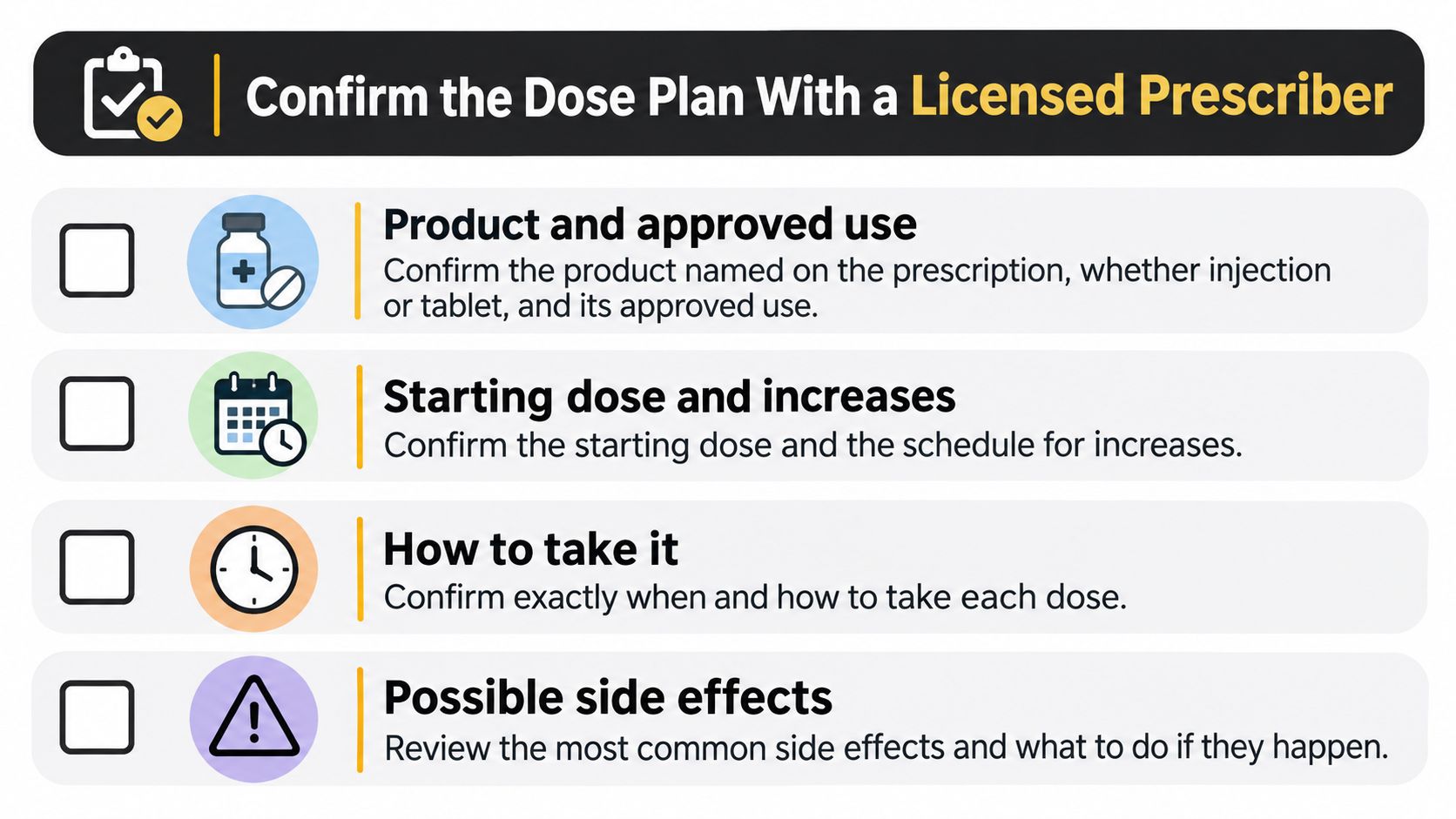
Your Pre-Dose Checklist
- Confirm the product and approved use. Ask whether you're being prescribed an injection or a tablet, the exact brand or formulation name, and whether the goal is chronic weight management or type 2 diabetes. That determines which dose range applies to you.
- Confirm the starting dose and increase schedule. Write down your first dose, when increases are expected, and what would make your prescriber hold or slow the schedule. Semaglutide or tirzepatide is selected based on BMI, medical history, and expected response, with gradual escalation dosing.
- Confirm exactly how and when to take it. Get the day, timing, and administration steps for your specific form, plus what to do if you miss a dose. Don't assume instructions for one form transfer to another.
- Confirm which symptoms need a call. Persistent or severe nausea, repeated vomiting, dehydration, or significant abdominal pain should never wait for a routine review. Ask who to contact, how quickly, and through which channel.
- Complete safety screening thoroughly. Disclose any personal or family history of medullary thyroid cancer or MEN 2, any history of pancreatitis, pregnancy plans, and every condition and medication your prescriber needs to weigh against the current prescribing information. Leaving something out because it feels minor is how preventable problems start.
- Agree on the maintenance plan now. Discuss continued treatment or a clinician-planned dose change, nutrition, physical activity, and regular weight checks before any stop is considered. A plan built at the start is calmer than one improvised after regain begins.
Semaglutide and tirzepatide are prescription medications, and the dose is selected and managed by a licensed provider. That isn't a formality. Your provider is the person who judges whether your BMI, history, and past response support this option, and who adjusts the plan when your body answers differently than expected.
Delivery method deserves the same individual attention. Our provider evaluates each patient's preferences, medical history, and lifestyle to recommend the semaglutide delivery method, because a weekly injection and a daily tablet fit different routines. Telehealth doesn't shorten that standard. An online consultation with a licensed provider should cover evaluation, prescription decisions, and follow-up with the same checklist you'd expect in person.
Take one concrete next step today. Write down your questions, gather your medical history and current medication list, and book the consultation with that information in front of you. You'll get clearer answers, and you'll leave knowing not just how semaglutide works, but how your own treatment is supposed to work.
If you're ready to discuss whether semaglutide fits your health history, appetite patterns, and long-term maintenance goals, Weight Method connects you with a licensed provider for an online evaluation, prescription decision, and ongoing dose support. Bring the checklist from this article to that conversation, compare injection and tablet routines against your actual week, and start by visiting Weight Method to complete your consultation.