Why does a medication that began as a gut hormone change hunger, cravings, digestion, and body weight so dramatically? The common answer, “It suppresses appetite,” is directionally right but biologically incomplete. GLP-1 therapy works through a conversation between the gut, brain, pancreas, stomach, and fat tissue, and that conversation helps explain why patients may feel full sooner, lose interest in certain foods, experience nausea, reach a plateau, or regain weight after stopping.
This guide breaks down how GLP-1 works for weight loss in plain language. It covers semaglutide and tirzepatide, the brain circuits involved, delayed gastric emptying, changes in food reward, lean mass, plateaus, and the questions worth asking before treatment.
Why a Gut Hormone Became the Hottest Weight Loss Drug
Why would an injectable medicine based on a gut hormone become central to modern weight management? Because GLP-1 drugs don't act like traditional stimulants, and they don't force the body to burn more fat. They amplify signals the body already uses after eating, then sustain those signals long enough to influence appetite, fullness, blood sugar, and food intake.
GLP-1 stands for glucagon-like peptide-1. Your intestine releases it after food arrives, and the hormone helps coordinate several responses at once. The pancreas receives stronger instructions to release insulin when needed. The stomach slows the movement of food. The brain receives signals that help reduce hunger and increase satiety.
That makes GLP-1 therapy a form of gut-brain-axis medicine. The treatment doesn't replace eating habits, sleep, movement, or medical care. Instead, it can change the biological conditions under which those habits happen. A person who previously felt hungry soon after a meal may feel satisfied for longer. Someone who experienced constant food thoughts may notice that cravings become quieter.
The four systems behind the effect
The weight-loss response makes more sense when you separate it into four connected systems:
- Brain hunger circuits: GLP-1 receptor activity influences neurons that increase or reduce hunger.
- Stomach emptying: Food can remain in the stomach longer, extending post-meal fullness.
- Incretin signaling: Semaglutide activates GLP-1 receptors, while tirzepatide activates both GLP-1 and GIP receptors.
- Body composition: Weight loss can include fat and lean tissue, so nutrition and strength training remain important.
In trials summarized in a major review, semaglutide 2.4 mg produced mean weight loss of 14.9% to 17.4% at 68 weeks in people with overweight or obesity without type 2 diabetes, with many participants reaching substantial weight-loss thresholds (review of semaglutide trial outcomes). For readers who want a practical overview of outcomes and treatment expectations, Lila's explanation of real results from GLP-1 drugs offers useful context.
The important point is that the medicine doesn't work because it acts as a direct fat-burning switch. It changes the signals that shape how much you want to eat, how quickly you feel full, and how rewarding food feels.
What GLP-1 Actually Is and How Receptor Agonists Copy It
A meal does more than stretch the stomach. It prompts specialized cells in the intestine to release GLP-1, a hormone that helps the body respond to nutrients arriving from food. GLP-1 belongs to the incretin family, which coordinates parts of digestion, blood-sugar control, and eating behavior. Natural GLP-1 disappears quickly, so it acts like a short meal-related message rather than a constant appetite regulator.
GLP-1 medicines copy that message by activating the same receptor. The word “agonist” describes a substance that binds to a receptor and triggers its response. The receptor works like a thermostat. Natural GLP-1 turns it up briefly after eating, while a medication keeps the signal active for much longer.
The drug class includes several different molecules. Semaglutide selectively activates the GLP-1 receptor. Liraglutide and exenatide act through the same broader pathway, but their structures, dosing schedules, and duration differ. Tirzepatide also activates the GIP receptor, creating a dual incretin mechanism that has a separate explanation later in the article.
A longer-lasting signal can coordinate several organs at once:
- The pancreas releases more insulin when blood glucose rises, helping the body handle incoming nutrients.
- Glucagon release decreases, reducing a hormonal signal that can raise blood glucose.
- The stomach empties more slowly, allowing food and nutrients to move onward at a steadier pace.
- The brain receives stronger satiety signals, which may reduce hunger and food-seeking.
- Reward responses to certain foods may become less intense, making cravings easier to manage for some people.
These medicines do not work like stimulants that broadly increase alertness, and they do not block dietary fat from being absorbed. Their effect comes from changing communication among the gut, pancreas, stomach, and brain. That gut-brain conversation helps explain why treatment can affect both eating patterns and digestive comfort.
The experience varies because these systems do not respond identically in every person. Hunger may fall while cravings remain. Early fullness may come with nausea. An initial response may later level off into a plateau. Those outcomes fit the biology: a medicine can alter several connected signals while each organ and neural pathway adapts at its own pace.
How the Brain's Hunger Circuitry Gets Recalibrated
Why can food feel less urgent on a GLP-1 medicine, even when the stomach is not empty? Hunger is not a simple alarm that switches on when the body needs fuel. The brain weighs signals from the stomach, circulating nutrients, past food experiences, expected rewards, and the hypothalamus before shaping the urge to eat.
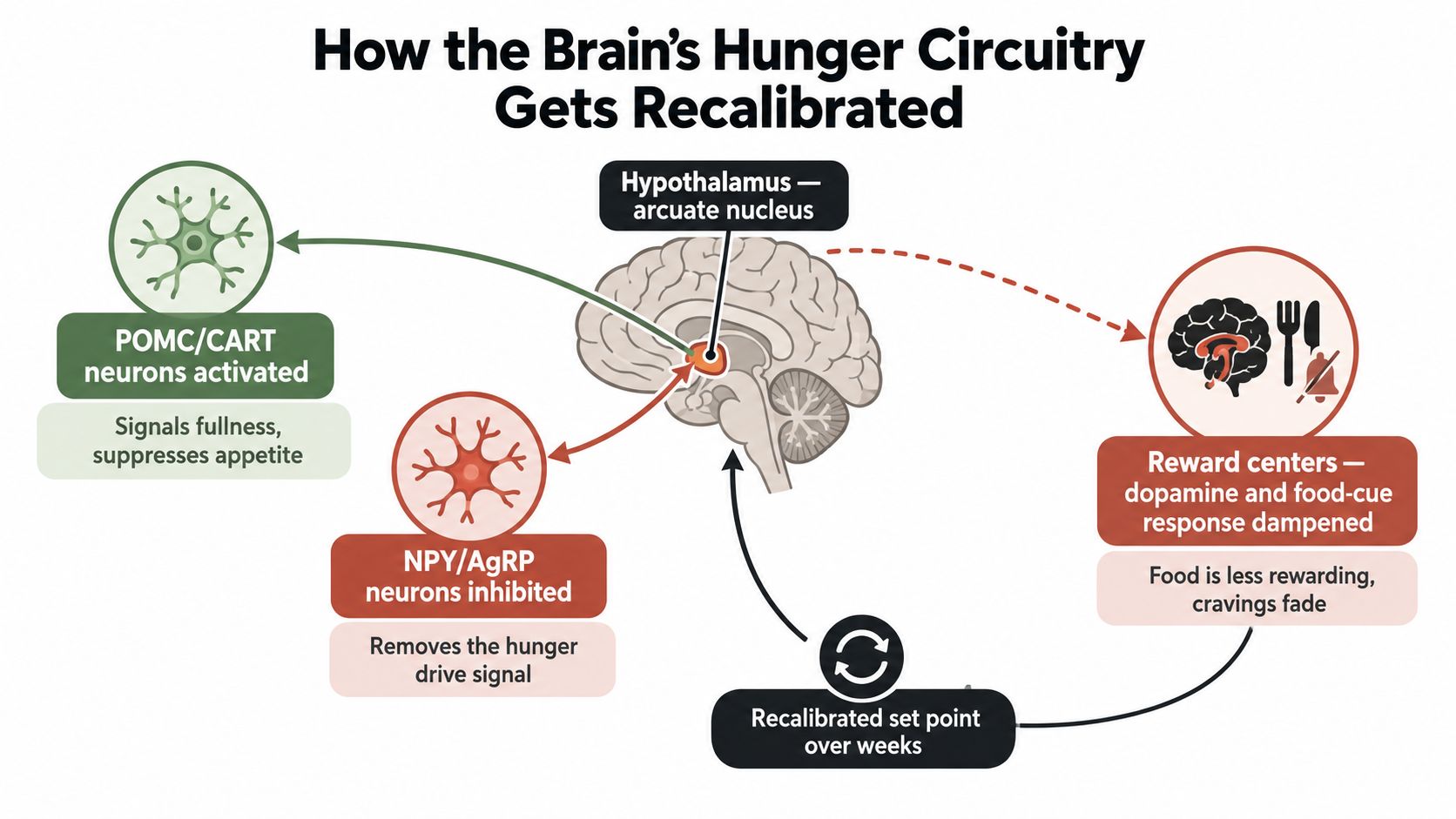
One important control point is the arcuate nucleus of the hypothalamus. It contains two groups of neurons that push eating behavior in different directions. POMC/CART neurons act like a brake, sending signals linked with fullness. NPY/AgRP neurons work more like an accelerator, increasing hunger and food-seeking when they become active.
GLP-1 signaling can strengthen the braking pathway while quieting the accelerating pathway. The practical result is a change in the balance of messages reaching the brain. “I have had enough” may become easier to register, while the more urgent “find food now” signal may lose some of its force.
That shift does not mean every person stops feeling hungry.
Hunger is only one part of the experience
GLP-1 receptors also occur in brain regions involved in nausea and reward. Brainstem areas that detect nausea-related signals help explain why discomfort can appear during treatment or after a dose increase. Other pathways connect with the mesolimbic reward system, which influences motivation and the pleasure associated with food.
For some patients, a favorite highly processed food seems less compelling. Food thoughts may take up less space between meals, a smaller serving may feel satisfying, or the urge to keep eating after fullness may weaken. Cravings can become less frequent or less urgent. These effects describe a changed eating experience, not just a smaller appetite.
The change can feel unfamiliar. One patient may experience quieter food thoughts as relief, while another may interpret reduced interest in eating as a loss of pleasure. The medicine does not erase every craving or guarantee different food preferences. It shifts the signals that influence eating, and those signals still respond to context, habits, and individual biology.
Practical rule: Reduced hunger can make a calorie deficit easier, but it does not remove the need to choose nourishing foods or monitor symptoms.
The brain may also adjust during chronic treatment. Recent work describes GLP-1 biology as more complex than a permanent “hunger off” switch, with neural and metabolic adaptations that may influence weight changes over time (research on GLP-1 mechanisms and weight regain). That complexity helps explain why appetite changes may feel strongest early on, why a plateau can appear, and why hunger may return after treatment stops.
The Stomach Slowdown and Why Food Stays With You Longer
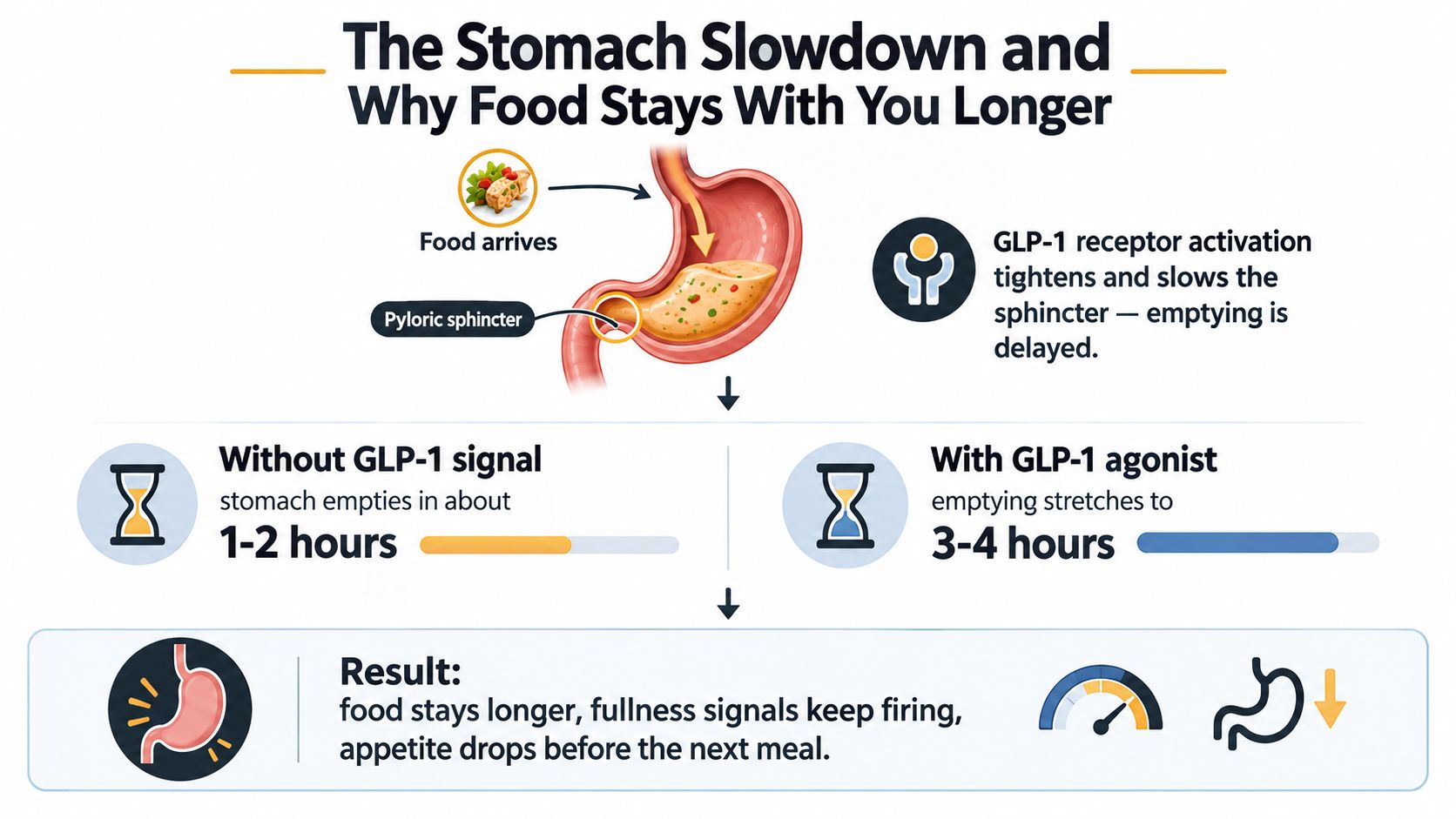
Gastric emptying is the process that moves food from the stomach into the small intestine. GLP-1 receptor activation can slow that process by influencing the coordinated movement of the stomach and the pyloric sphincter, the muscular gateway at the stomach's exit.
The result isn't that digestion stops. Food still moves through the gastrointestinal tract, but the delivery can become slower and more controlled. A meal may occupy the stomach longer, and fullness signals may continue after the person would previously have started thinking about another snack.
A review of GLP-1 analogues reported that semaglutide produced 27% lower gastric emptying in the first hour versus placebo, supporting the idea that delayed stomach emptying contributes to satiety (review of GLP-1 effects on gastric motility). That figure describes a measured physiological effect, not a guarantee that every patient will experience the same duration of fullness.
Why nausea can appear
The same mechanism that helps a person feel satisfied can become uncomfortable if the stomach feels overly full. Nausea, bloating, reflux, constipation, or vomiting may occur, particularly when the dose rises faster than the body can tolerate. Eating large, rich meals can make that sensation worse because the stomach is already handling food more slowly.
A patient may describe the early experience this way: “I ate my usual portion, but it felt as though the meal was still sitting there.” That doesn't automatically mean the treatment is intolerable, but persistent vomiting, severe abdominal pain, or inability to maintain hydration requires prompt medical advice.
The gastric effect is only one piece of the treatment. The stomach may adapt over time, while appetite and reward signaling continue to contribute to lower food intake. That distinction matters. If fullness feels less dramatic after several weeks, the medicine may still be influencing hunger circuits and eating behavior.
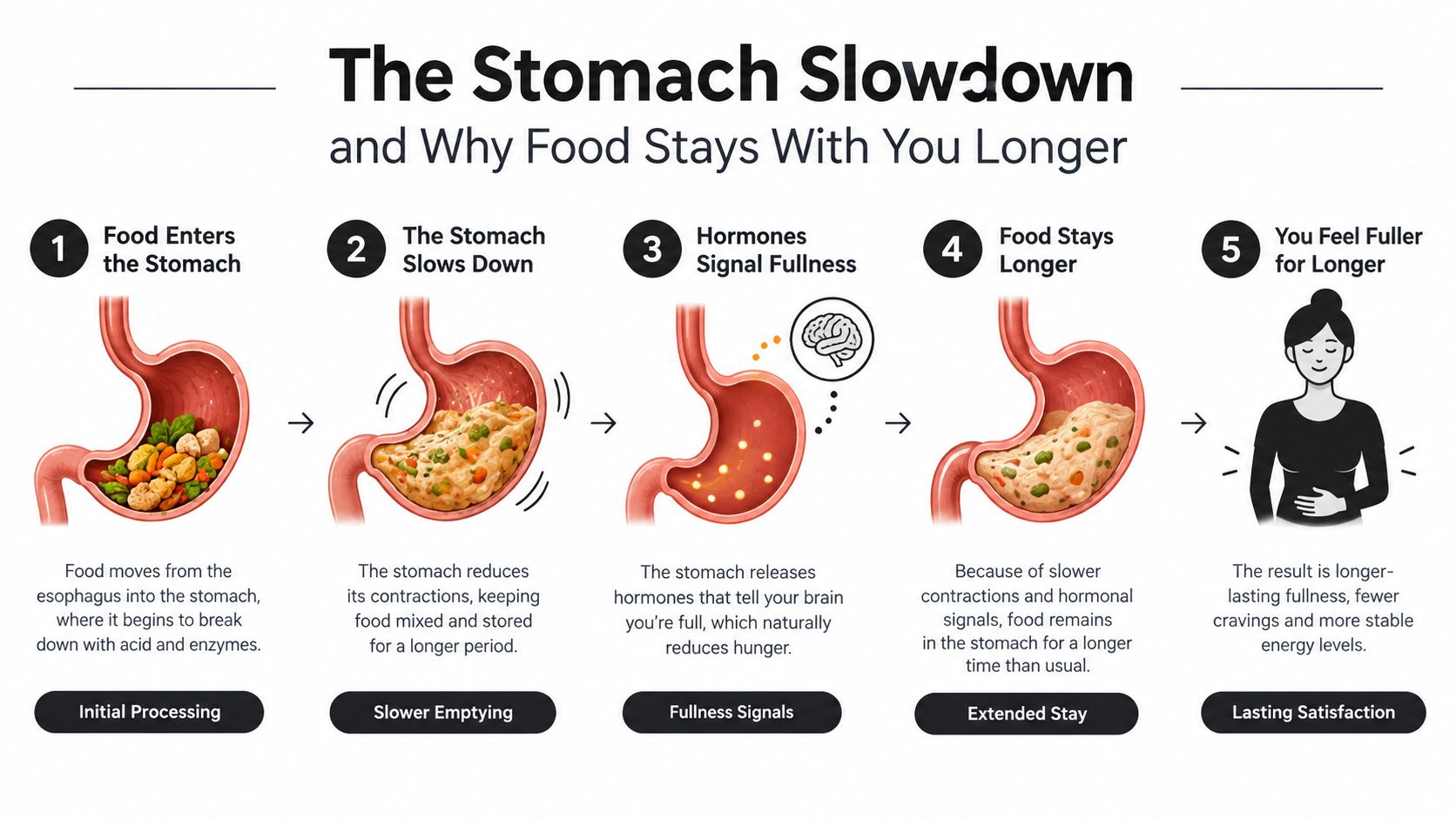
Slower delivery of nutrients can also produce a steadier post-meal glucose response. For someone who previously experienced a sharp rise and fall in energy after eating, that steadier pattern may reduce the impulse to seek another quick snack. The overall effect comes from brain signaling plus gastrointestinal signaling, not from the stomach alone.
Semaglutide vs Tirzepatide and the Case for Dual Incretin Action
Semaglutide and tirzepatide overlap in their effects, but they aren't identical medicines. Semaglutide activates the GLP-1 receptor. Tirzepatide activates both the GLP-1 receptor and the GIP receptor, so it is often described as a dual incretin agonist.
GIP, or glucose-dependent insulinotropic polypeptide, is another hormone released after eating. Its activity may improve insulin sensitivity and influence how the body handles energy in fat tissue. Tirzepatide's combined action may also strengthen satiety signaling and reduce energy intake through overlapping central and peripheral pathways.
Comparative literature reports dose-dependent tirzepatide weight loss that exceeded semaglutide 1 mg in one analysis, with reported differences of 7.6 kg, 9.3 kg, and 11.2 kg versus 5.7 kg, respectively, across the compared doses (review of tirzepatide mechanisms and comparative outcomes). Those results shouldn't be used to predict an individual outcome, especially because the comparison involved a specific dose and study design.
| Feature | Semaglutide (2.4 mg) | Tirzepatide (15 mg) |
|---|---|---|
| Main receptor action | GLP-1 receptor agonism | GIP and GLP-1 receptor agonism |
| Appetite effect | Reduces hunger and can increase satiety | Reduces energy intake and can amplify satiety signaling |
| Digestive effect | Can slow gastric emptying | Can slow gastric emptying through combined incretin activity |
| Weight-loss evidence | Mean loss of 14.9% at 68 weeks in STEP 1 | Comparative literature supports greater average loss at some doses, but outcomes vary by study |
| Common tolerability concerns | Nausea, vomiting, constipation, and other gastrointestinal symptoms | Similar gastrointestinal symptoms, with tolerability varying by dose and patient |
The practical decision isn't only about which drug produced the larger average result in a trial. A provider also needs to consider medical history, blood glucose treatment, side-effect tolerance, availability, coverage, and whether the patient can follow the dosing plan. A more potent average effect is not useful if the medication causes symptoms that lead someone to stop.
For a patient-focused comparison of the two therapies, semaglutide vs tirzepatide can help organize the questions to bring to a medical consultation.
What the Scale Shows Week by Week
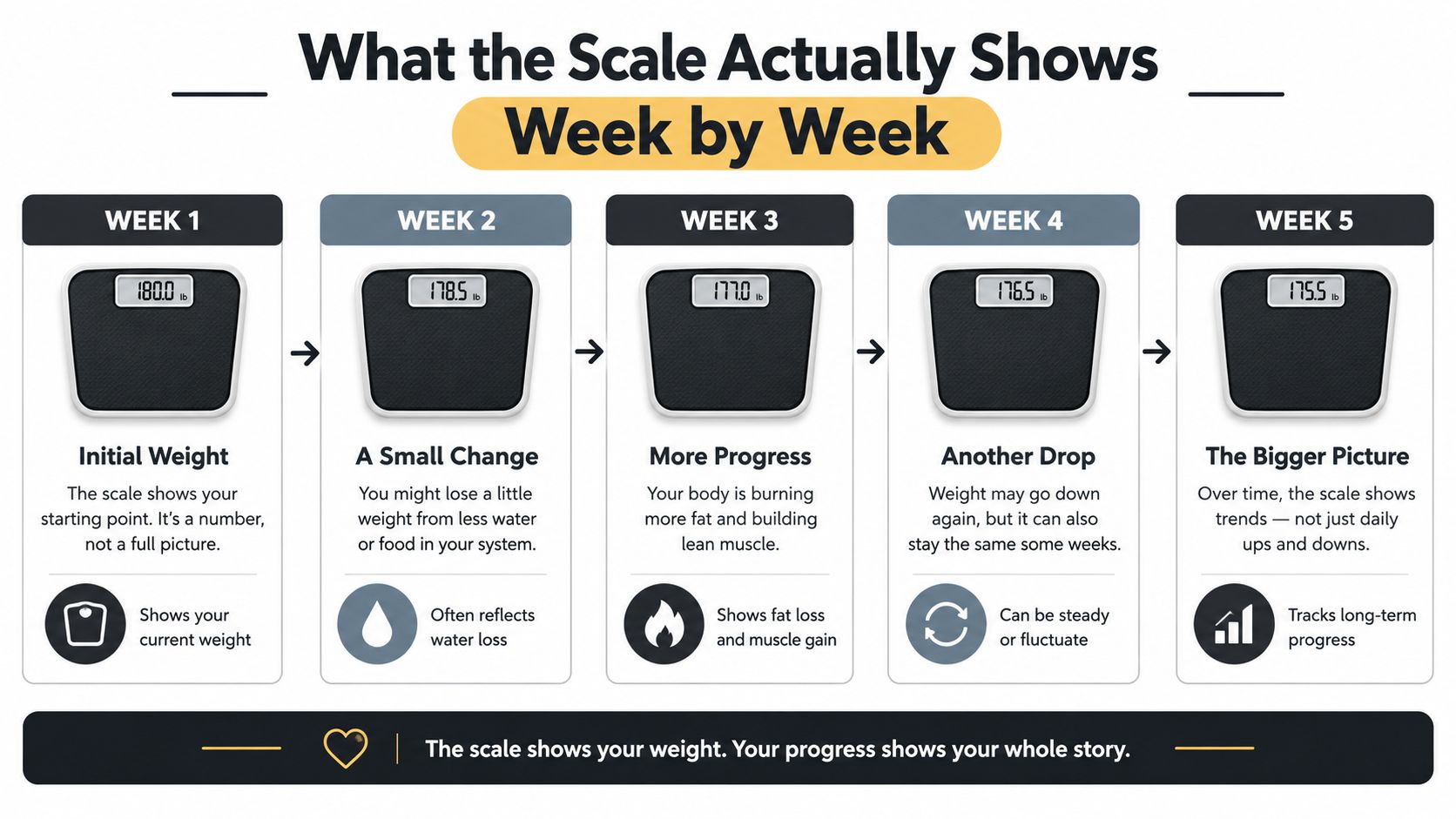
Could a medication be working even when the number on the scale barely changes? Yes. Weight often moves in uneven steps rather than along a smooth downward line. Early changes may be modest while a clinician adjusts the dose for tolerability. Later, weight can pause and then decline again.
Daily readings are noisy measurements. Hydration, bowel movements, sodium intake, menstrual cycles, and meal timing can all shift the number without representing a meaningful change in body fat. A better method is to look at the direction across several weeks, not to treat one weigh-in as a verdict.
Clinical trials offer reference points, not personal deadlines. In STEP 1, adults with overweight or obesity lost an average of 14.9% of baseline body weight at 68 weeks, compared with 2.4% with placebo (STEP 1 trial data). Another randomized trial also reported greater average loss with semaglutide than with placebo at the same time point. These averages describe groups receiving a defined treatment plan. They do not predict the exact pace for one person.
Why plateaus can happen
A plateau does not automatically mean the medication has stopped working. As body weight decreases, the body uses fewer calories to maintain itself. Hunger signals may also change, daily movement can decline without notice, and the same dose may no longer produce the striking early sensation of fullness.
The experience often changes in stages. At the beginning, nausea or a sharp appetite reduction may dominate. With continued treatment, eating patterns may become more predictable while weight loss slows. During a plateau, the useful question shifts from “How can I lose faster?” to whether nutrition, muscle preservation, activity, and the treatment plan still fit the person's needs.
Stopping creates another transition. GLP-1 receptor agonists influence the gut-brain conversation that helps regulate hunger, fullness, and food reward. Once treatment ends, those signals can become stronger again, and weight regain may occur. Longer-term results support continued weight reduction while treatment continues, while discontinuation findings show why stopping should be planned with a provider rather than treated as the final step of a short diet.
Patients exploring how gut microbes and fermentable fibers may fit alongside medication can review prebiotics weight loss research. A GLP-1 weight loss timeline can provide context without turning a trial average into a promise.
Beyond Appetite What GLP-1 Does to Muscle Cravings and Body Composition
If the scale is falling, how can someone still lose muscle? A GLP-1 medication can reduce food intake, but the weight lost does not come exclusively from body fat. The body can draw on stored fat while also breaking down lean tissue. The balance depends on the pace of weight loss, starting body composition, protein intake, physical activity, age, illness, and other factors.
That is why “it just suppresses appetite” misses part of the biology. GLP-1 treatment can affect food reward and cravings, not only the amount placed on a plate. A quieter appetite may make weight loss easier, yet the resulting reduction in intake can make it harder to consume enough protein, vitamins, minerals, and total energy to support muscle.
Food reward can change
Some patients notice less interest in highly palatable foods or less persistent food noise. Reward pathways help determine how strongly the brain reacts to food cues. A dessert may still taste enjoyable, while the sight or availability of it creates less automatic pressure to continue eating. The change concerns the pull of the cue, not the removal of pleasure or personal choice.
A smaller appetite works best when meals carry enough nutritional value. Protein first: Include a meaningful protein source at meals, with individualized targets discussed with a clinician or dietitian. Strength work: Resistance exercise gives muscles a reason to remain useful while body weight decreases. Food quality: Choose nutrient-dense foods when appetite is limited. Monitoring: Follow strength, physical function, clothing fit, and body composition when appropriate, rather than relying on total weight alone.
The goal is not to eat as little as possible. It is to make the available appetite support health and strength.
Evidence indicates that GLP-1 weight loss generally comes mainly from reduced energy intake, while increases in resting energy expenditure are modest or absent. These medicines can make eating less feasible, but they do not remove the need to protect muscle and nutrition. The body still responds to what a person eats, how often muscles are challenged, and whether illness or inadequate intake is present.
Muscle is part of the treatment outcome. A lower number on the scale does not describe the whole result if strength, mobility, or daily function declines.
A metabolic assessment may identify glucose-related issues and other factors to discuss with a provider. A metabolic health testing panel can show what may be worth reviewing, but results still need clinical interpretation. For practical guidance on preserving strength and nutrition, see preventing muscle loss with GLP-1 treatment.
Who Benefits Most and How to Talk to a Provider About Starting
GLP-1 medication makes the most sense when a person's weight, metabolic health, or related conditions justify medical treatment and when the potential benefits outweigh the risks. A provider should evaluate the full picture, including medical history, current medications, eating patterns, previous treatment attempts, mental health, sleep, and physical limitations.
Eligibility rules depend on the specific medication, indication, and country. In general, clinicians look for overweight or obesity alongside health risk, rather than treating GLP-1 therapy as a casual solution for a small cosmetic change. The decision should also account for whether a person can tolerate gastrointestinal effects and maintain adequate hydration and nutrition.
Questions to bring to the consultation
Ask the provider to explain the treatment as a plan, not just a prescription:
- Medical fit: Do my weight-related health risks support medication, and are there safer alternatives?
- Baseline information: Which blood tests, medication reviews, or body-composition measures are useful before starting?
- Titration: How slowly will the dose increase, and what symptoms mean I should pause or call?
- Side-effect response: What should I do about nausea, constipation, vomiting, reflux, or reduced food intake?
- Muscle protection: How will we monitor protein intake, strength, physical function, and lean mass?
- Long-term planning: What happens if the medication works, reaches a plateau, becomes unavailable, or needs to be stopped?
- Affordability: What will the treatment cost over time, and what happens if coverage changes?
Some people require particular caution or may not be appropriate candidates. Discuss any personal or family history of medullary thyroid carcinoma, MEN 2 syndrome, pancreatitis, pregnancy, or concurrent medicines that can increase the risk of low blood glucose. People using insulin or sulfonylureas need coordinated medical management because changing food intake and adding incretin therapy can affect glucose levels.
| Criterion | Semaglutide 2.4 mg | Tirzepatide 5-15 mg |
|---|---|---|
| Core action | GLP-1 receptor agonist | GIP and GLP-1 receptor agonist |
| Main potential benefit | Reduced hunger, greater satiety, slower gastric emptying | Reduced energy intake, stronger combined incretin signaling, and satiety support |
| Common caution | Gastrointestinal symptoms and relevant personal medical history | Gastrointestinal symptoms and relevant personal medical history |
| Starting decision | Depends on indication, health history, response, and tolerability | Depends on indication, health history, response, and tolerability |
| Ongoing need | Regular provider monitoring and nutrition support | Regular provider monitoring and nutrition support |
Dose escalation allows the gastrointestinal system time to adjust, but the exact schedule belongs to the prescribing clinician. Never increase, combine, or stop these medicines based only on a social media schedule or another patient's experience. GLP-1 therapy is best understood as ongoing care for a chronic condition, with periodic decisions about effectiveness, safety, nutrition, and quality of life.
Weight Method offers medically supervised access to semaglutide or tirzepatide through online provider consultations, dose monitoring, ongoing messaging, and home delivery. If you're considering GLP-1 treatment, visit Weight Method to learn how its evaluation and support process may fit your health goals.