You've just received your first semaglutide pen. The prescription says 0.25 mg once a week, but you're wondering when the dose will increase, whether you'll feel different after the first injection, and whether 2.4 mg is a mandatory destination or a target.
The semaglutide weight loss dose is best understood as a gradual treatment journey, not a single number. The starting dose helps your body adjust, later doses provide stronger appetite effects, and the maintenance dose is selected by balancing weight-loss response with tolerability. The schedule below is based on the FDA-labeled Wegovy regimen, but your prescribing clinician may slow, pause, or modify it for medical reasons.
Starting Semaglutide and What to Expect
At your first appointment, your clinician reviews your medical history, current medicines, weight-related conditions, and reasons semaglutide may or may not be appropriate. Once prescribed, you'll receive instructions for storing the pen, checking the medication, choosing an injection site, and disposing of the device. Wegovy is injected under the skin, usually in the abdomen, thigh, or upper arm. Rotate locations rather than using the exact same spot every week.
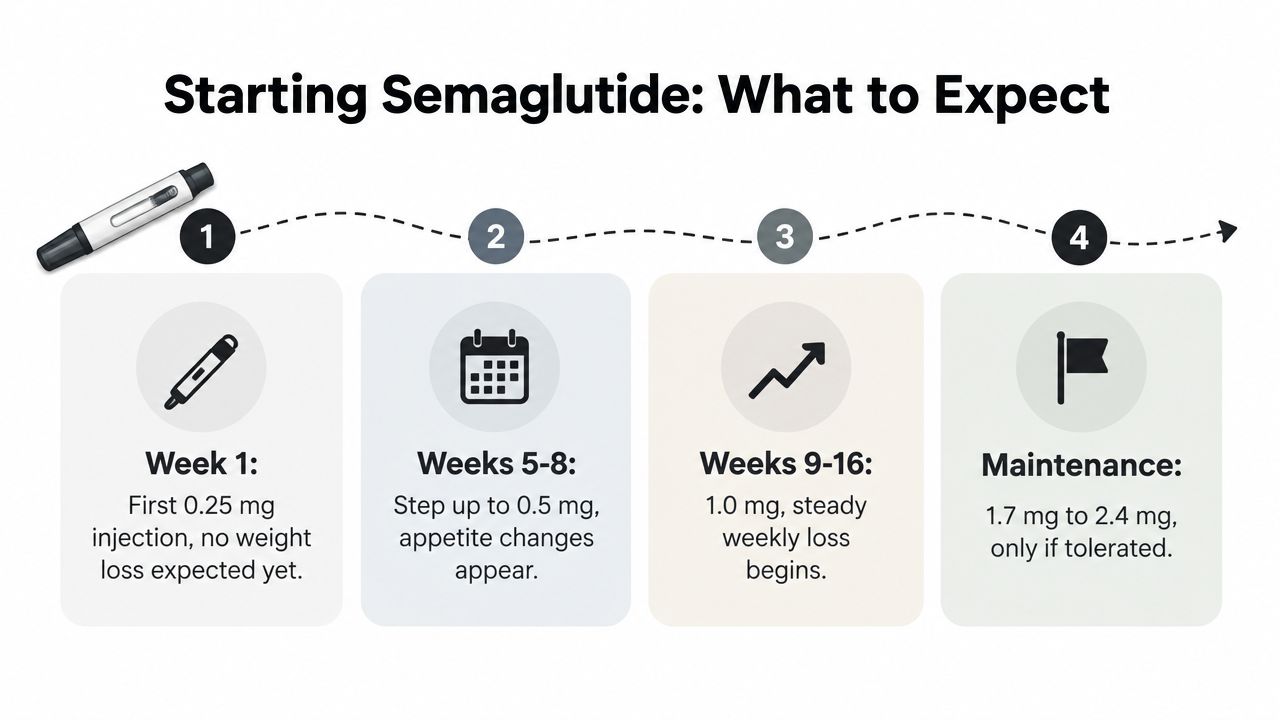
Your first injection is deliberately modest. The FDA-labeled Wegovy schedule begins with 0.25 mg once weekly for 4 weeks, then increases in steps every 4 weeks until the maintenance dose is reached by week 17, as described in the FDA Wegovy prescribing information. That first dose is an escalation dose, not the long-term dose used in the key obesity trials.
Why the first month feels different
Some people notice less snacking, earlier fullness, or fewer cravings during the opening weeks. Others notice little change at first. Both experiences can be normal because the starter dose is designed primarily to improve gastrointestinal tolerance rather than deliver the strongest possible appetite suppression.
Nausea, constipation, diarrhea, vomiting, or fatigue may appear around an injection or after an increase. Smaller meals, slower eating, adequate fluids, and avoiding very rich foods can make the adjustment period easier. Tell your clinician if symptoms interfere with drinking, eating, work, sleep, or daily activities.
Practical rule: A quiet first month doesn't mean semaglutide has failed. It means the medication is being introduced cautiously.
Follow-up commonly occurs around dose changes, either in person or through a regulated telehealth service. Your clinician uses these visits to review appetite, weight trend, side effects, blood pressure, glucose-related measures when relevant, and whether the next increase makes sense.
How Semaglutide Works in the Body
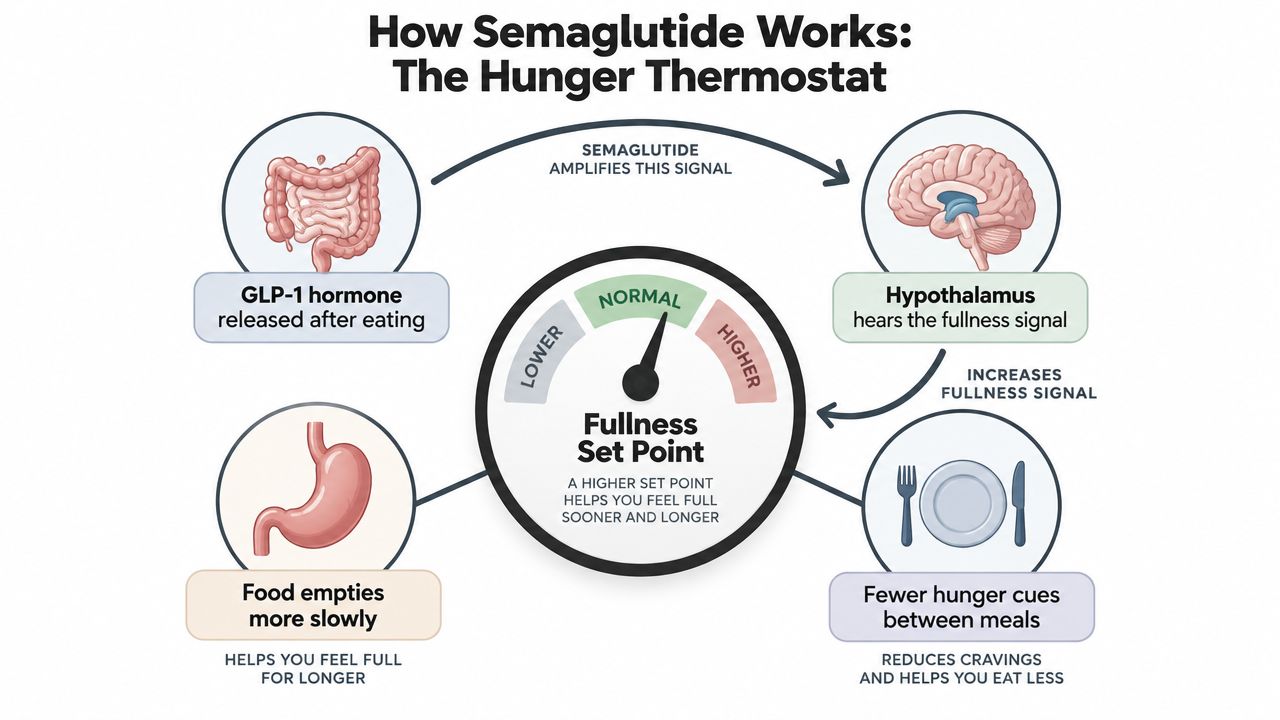
Think of appetite as a thermostat. Your body receives signals from the stomach, gut, brain, sleep, stress, and food availability, then adjusts hunger and fullness. Semaglutide acts like a longer-lasting version of a natural gut hormone signal, helping move that thermostat toward fullness.
After eating, the body normally sends messages that say food has arrived. Semaglutide strengthens the message. The brain receives a clearer fullness signal, the stomach can empty more slowly, and food may feel satisfying for longer. Many patients also describe less persistent interest in food between meals.
Why dose changes the experience
A lower dose may produce a gentle signal. A higher tolerated dose generally creates a stronger and more sustained signal, which is why the medication is increased in planned steps rather than started at the final dose. The gradual approach gives the digestive system time to adapt while the appetite effect builds.
This doesn't mean every person experiences a perfectly predictable dose response. One patient may feel a meaningful reduction in cravings at a lower dose, while another may still experience frequent hunger until a later step. Sleep, eating patterns, other medicines, diabetes status, and gastrointestinal sensitivity all influence the result.
Semaglutide also isn't a substitute for nourishment. The goal isn't to eliminate appetite or make eating unpleasant. A useful response is often the ability to recognize fullness earlier, choose satisfying portions, and spend less mental energy managing hunger.
The Standard Titration Schedule Explained
Suppose your next injection is due, but nausea has made eating and drinking difficult. The calendar may say it is time to increase. Your symptoms may say your body needs more time. The standard schedule provides a framework, while tolerability guides the pace.
| Week range | Weekly dose | Duration | Purpose |
|---|---|---|---|
| Weeks 1 to 4 | 0.25 mg | 4 weeks | Starter dose and initial tolerance |
| Weeks 5 to 8 | 0.5 mg | 4 weeks | Early escalation |
| Weeks 9 to 12 | 1.0 mg | 4 weeks | Continued appetite and exposure increase |
| Weeks 13 to 16 | 1.7 mg | 4 weeks | Final escalation step |
| Week 17 onward | 2.4 mg | Ongoing | Recommended maintenance dose |
Each four-week block works like a landing between flights of stairs. It gives you time to see how your body handles the current dose before the next increase. The 0.25 mg dose is deliberately low, and 0.25 mg, 0.5 mg, and 1.0 mg are initiation or escalation doses rather than maintenance doses for chronic weight management, as noted in the FDA-approved label.
A dose increase raises medication exposure. The goal at each step is the highest dose you can use consistently without disruptive nausea, vomiting, constipation, or diarrhea. If symptoms interfere with meals, fluids, or daily activities, a clinician may keep you at the current dose longer, repeat a step, or temporarily lower it.
The schedule answers how dosing usually progresses. It does not, by itself, answer the personal question, “What dose do I need to reach?” Some patients notice useful appetite control before the final step. Others need a later dose for a comparable effect. Your prescriber can weigh response, side effects, and treatment goals together. This semaglutide titration schedule guide offers a practical overview of the steps.
Keep injections on the same weekly day unless your clinician gives different instructions. Do not take extra medication after a missed dose. Ask what to do after a treatment interruption, because restarting may require a lower step.
Ozempic also contains semaglutide, but its FDA-approved role is type 2 diabetes management rather than chronic weight management. Its dosing pathway differs, and its maximum labeled dose is 2.0 mg once weekly, so Ozempic and Wegovy schedules are not interchangeable.
Why the 2.4 mg Maintenance Dose Matters
2.4 mg once weekly is the recommended Wegovy maintenance dose for chronic weight management. It's an endpoint because it was tested as the full obesity-treatment dose, not because a patient should begin there.
In the landmark STEP 1 trial, adults with overweight or obesity without diabetes started at 0.25 mg once weekly, increased the dose every 4 weeks, and reached 2.4 mg weekly by week 16. Over 68 weeks, average weight loss was 14.9% to 16.0% with semaglutide 2.4 mg, compared with 2.4% to 5.7% with placebo, depending on the trial report, as documented in the NEJM STEP 1 publication.
The same trial found that 86.6% of semaglutide-treated participants achieved at least 5% weight loss, compared with 47.6% of placebo participants. In a continued-treatment analysis, 64% reached at least 15% weight loss after 68 weeks. These findings make 2.4 mg the reference benchmark for judging lower-dose results.
| Maintenance dose | Average weight loss at 68 weeks | GI-related discontinuation rate |
|---|---|---|
| 1.0 mg | Not established as the primary STEP 1 maintenance comparison | Not established in the provided data |
| 1.7 mg | Not established as the primary STEP 1 maintenance comparison | Not established in the provided data |
| 2.4 mg | 14.9% to 16.0% in STEP 1 | Not specified in the provided data |
The dose comparison isn't "higher is better." The higher dose may offer greater appetite control, but gastrointestinal effects can make it harder to continue. A lower dose taken consistently can be more useful than a higher dose that causes a patient to stop treatment.
For a deeper discussion of the endpoint and individualized maintenance decisions, see this guide to the GLP-1 maintenance dose.
Monitoring, Side Effects, and Dose Adjustments
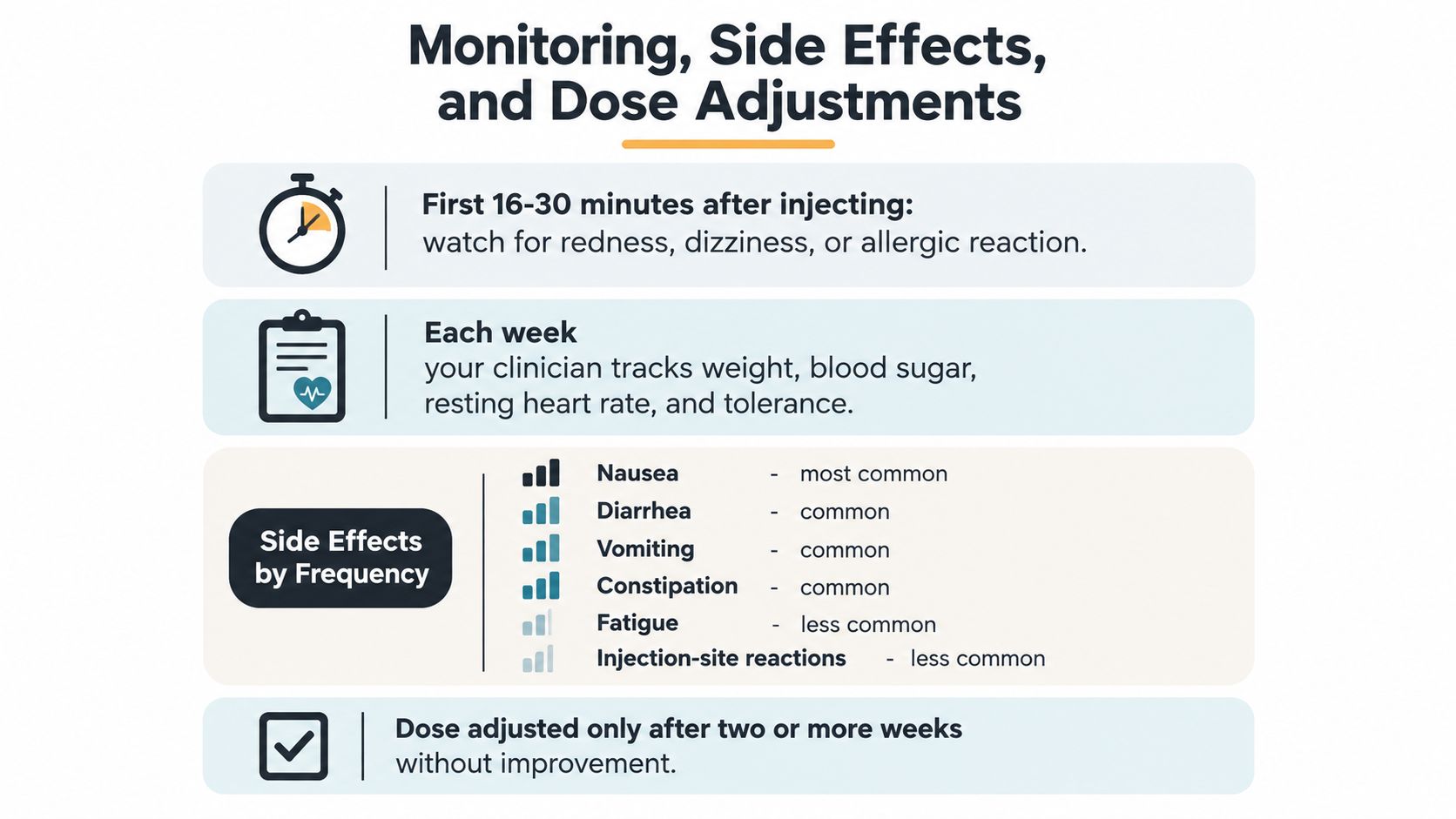
Individuals don't need to monitor every minute after an injection. Inject semaglutide exactly as instructed, then pay attention to how you feel. Redness, dizziness, breathing difficulty, facial swelling, or other signs of an allergic reaction require prompt medical attention.
The more important pattern develops over days and weeks. Gastrointestinal symptoms often become more noticeable when the dose increases because the appetite and stomach-emptying effects are changing at the same time.
What clinicians track
Your follow-up review may include:
- Weight trend: Look at the direction over time, not a single day affected by fluid, sodium, digestion, or menstrual-cycle changes.
- Appetite and eating: Record fullness, cravings, meal size, and whether you're able to eat enough protein and other nutritious foods.
- Tolerance: Report nausea, vomiting, diarrhea, constipation, fatigue, abdominal discomfort, and injection-site reactions.
- Metabolic measures: People with diabetes may need blood glucose or A1c monitoring, especially when other glucose-lowering medicines are involved.
- Safety symptoms: Tell your provider about persistent vomiting, dehydration, severe or persistent abdominal pain, or symptoms that could indicate gallbladder or pancreatic problems.
Hydration matters more when nausea, vomiting, diarrhea, or constipation affects intake. Try smaller meals, eat slowly, stop when comfortably full, and avoid compensating for a small meal by eating a large one later.
When the dose changes
A clinician may pause escalation when side effects are disruptive, repeat the same dose for longer, or step back to a previously tolerated dose. A plateau caused by reduced appetite but stable weight may call for a broader review of food intake, activity, sleep, adherence, and treatment duration. A plateau caused by persistent vomiting or inadequate hydration is a safety problem, not a signal to increase.
Severe abdominal pain or persistent vomiting isn't a routine adjustment issue. Contact your clinician promptly, and seek urgent care when symptoms are severe.
Do You Really Need the Full Dose
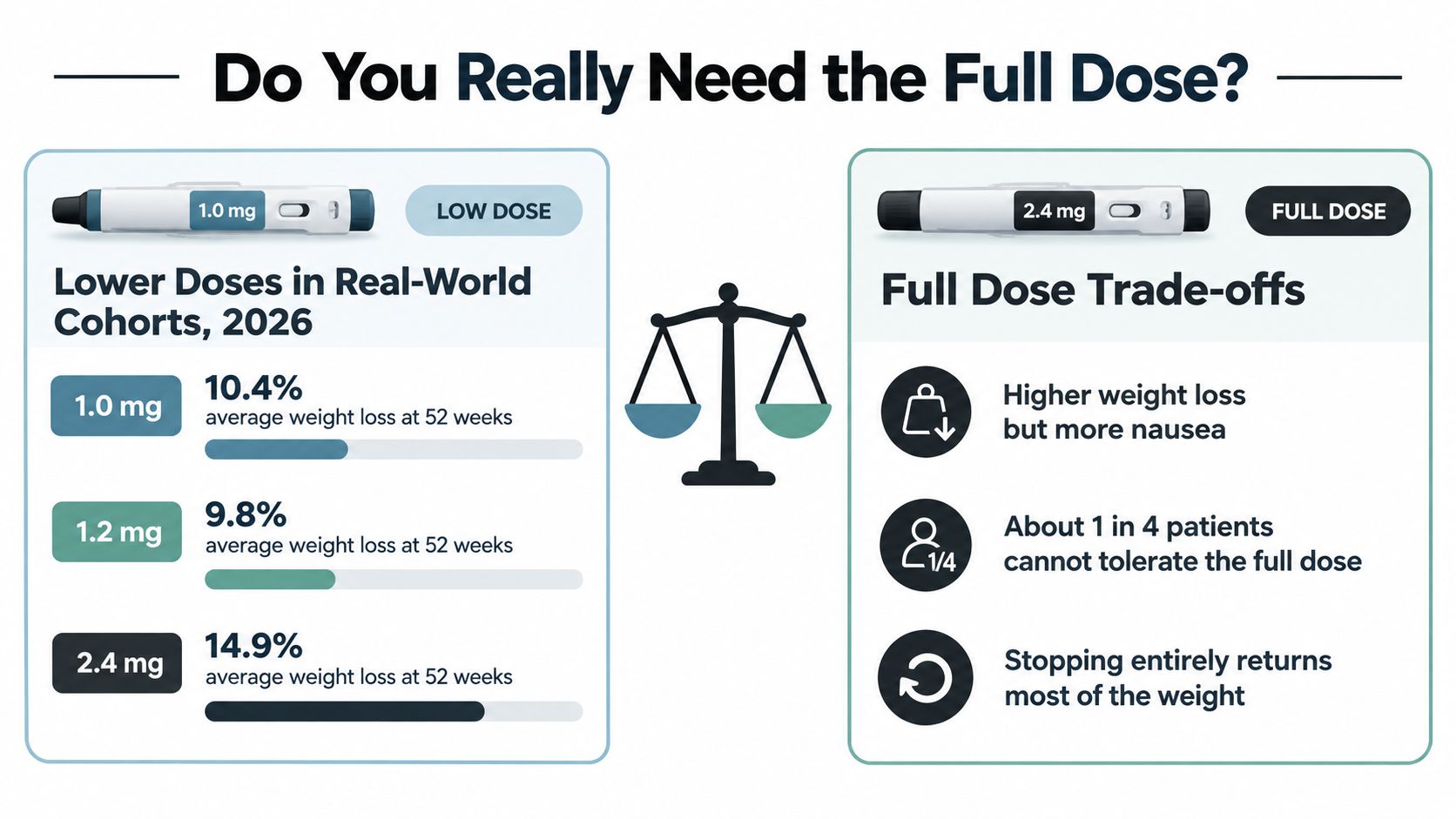
The standard target is important, but it isn't the only possible successful dose. A 2026 Frontiers cohort reported significant weight loss while the median semaglutide dose remained around 1.0 to 1.2 mg, suggesting that some patients can benefit without reaching 2.4 mg, according to the 2026 real-world cohort report.
That evidence changes the practical question. Instead of asking, “How quickly can I reach 2.4 mg?” ask, “Which dose gives me a useful response that I can tolerate and continue?” A steady hiking pace usually beats sprinting up a hill, becoming unwell, and abandoning the trail.
Three questions for a dose review
Stay may make sense when hunger is more manageable, weight is moving in the desired direction, and side effects are mild. A patient doesn't need to chase a higher dose just because the calendar allows it.
Step up may be reasonable when the current dose is well tolerated but appetite, cravings, or weight response remain insufficient. The decision depends on your health history and clinician's assessment, not on comparison with someone else's prescription.
Settle at a lower tolerated dose may be sensible when escalation repeatedly causes symptoms or threatens adherence. Real-world patients have different digestive sensitivity, treatment histories, and health priorities. Older adults, people with prior bariatric surgery, or those with pronounced gastrointestinal sensitivity may require especially individualized planning, but the provided evidence doesn't establish one universal lower-dose rule for these groups.
A lower dose isn't automatically equivalent to the FDA-recommended maintenance dose, and real-world findings don't replace randomized trial evidence. They do support a more balanced conversation about durability, quality of life, and whether the patient can remain on treatment.
Higher Doses and Oral Semaglutide in 2026
The 2.4 mg weekly dose remains the established reference point for Wegovy obesity treatment, but newer research is testing whether different dose strategies can help selected patients. In 2026 STEP UP analyses, early responders receiving 7.2 mg weekly experienced nearly 28% weight loss, compared with the standard 2.4 mg dose, according to the reported STEP UP findings.
That result is important, but it isn't a reason to self-adjust. Higher-dose evidence may apply to a selected study population, and approval, prescribing instructions, availability, and insurance coverage can change. Clinicians still need to weigh appetite response against nausea, vomiting, constipation, treatment persistence, and the patient's broader medical profile.
Oral semaglutide adds a different question: not only how much medication is used, but how the patient prefers to take it. Emerging obesity dosing discussions include daily strengths of 1.5 mg, 4 mg, 9 mg, and 25 mg, as described in the same 2026 research reporting. These daily amounts shouldn't be treated as direct milligram-for-milligram equivalents to a weekly injection.
A tablet may appeal to someone who strongly dislikes injections, while a weekly pen may fit someone who wants fewer dosing moments. Oral treatment also introduces administration routines that can affect absorption and adherence. For a practical comparison of route, routine, and dosing questions, see this oral versus injectable semaglutide guide.
The field is moving toward more options, not one universally superior dose. Prescribers are watching whether higher exposure produces worthwhile additional benefit without undermining long-term use, and whether oral treatment improves convenience without creating a new adherence burden.
Choosing the Right Dose Strategy for You
Your dose strategy should answer five practical questions:
- How well do you tolerate the current step? Persistent vomiting, severe abdominal pain, dehydration, or inability to eat normally should prompt medical review before any increase.
- What response are you getting? Track hunger, fullness, cravings, meal size, weight trend, and relevant glucose measures rather than relying on the scale alone.
- What health conditions affect the decision? Diabetes medicines, gastrointestinal history, gallbladder concerns, and other prescriptions can change monitoring needs.
- Can the routine fit your life? A weekly injection, daily tablet, storage requirements, appointment schedule, and access all matter.
- What does your clinician recommend after reviewing the pattern? Dose escalation should follow a shared decision, not an online chart alone.
Bring a short record to each appointment. Note the dose, injection date, side effects, appetite, hydration, and any missed doses. If your weight plateaus, ask whether the issue reflects insufficient exposure, a normal response pattern, reduced adherence, or side effects that make eating and drinking difficult.
The right semaglutide weight loss dose isn't necessarily the highest dose printed on the schedule. It's the dose that provides a meaningful clinical response, fits your medical situation, and remains tolerable enough for you to continue under supervision.
Weight Method connects adults with licensed providers through telehealth for medically supervised weight management, including personalized semaglutide or tirzepatide plans, ongoing messaging, progress tracking, and dose adjustments. If you want help discussing titration, side effects, or whether a lower tolerated dose may be appropriate, visit Weight Method to begin the clinical evaluation.