Roughly, you may encounter $149 to $499 per month for telehealth or compounded options, while brand GLP-1 list prices can range from about $936 to $1,349 per month. After discounts and payer adjustments, recent net annual prices sit around $6,800 to $9,000, although your personal cost can be much lower or higher depending on coverage, dose, and treatment length.
You may be comparing programs late at night, trying to answer a deceptively simple question: “What will this cost me over a year?” The first month's promotion looks manageable, but the prescription may require dose changes, follow-up visits, lab work, pharmacy charges, or ongoing maintenance.
That's why medical weight loss cost isn't one price tag. It's a stack of expenses that can change as your treatment changes. A low monthly fee may exclude clinical oversight, while a higher fee may include medication, consultations, shipping, and messaging.
Introduction What Medical Weight Loss Really Costs Today
Suppose you are planning a household budget for treatment that may continue for months. One program advertises a low introductory fee, another lists a brand-name injection at a higher retail price, and a clinic quotes a consultation charge before discussing medication. Those figures are difficult to compare because they may describe different amounts of care.
Start by asking what the quoted price includes. A medical weight loss plan can involve an evaluation, laboratory testing, provider visits, medication, dose changes, pharmacy dispensing, shipping, nutrition guidance, and follow-up support. Some programs combine these services in one subscription. Others charge separately, so the monthly price is only one piece of the calculation.
For a plain-language overview of the clinical process, what medical weight loss involves explains why treatment often includes more than the medication itself.
The price layers behind the headline
A cash-pay patient might see a direct-to-consumer manufacturer price of about $499 per month, or $5,988 per year. Commercial-market annual net prices for obesity-focused GLP-1 medications have been estimated at roughly $8,000 to $9,000, while earlier formal benchmarks cited $12,000 to $14,000. These figures show how pricing has shifted, but they do not predict what your insurer, pharmacy, or treatment plan will charge. The estimates come from a recent analysis of GLP-1 pricing in the United States (peer-reviewed pricing analysis).
Older medications add another comparison issue. A review reported annual costs of about $1,500 to $8,500 for older anti-obesity drugs such as phentermine-topiramate and orlistat, compared with more than $12,000 per year for newer-generation treatments (review of obesity medication costs).
The same monthly price can produce different value if one treatment achieves a result sooner, requires longer maintenance, or follows a different insurance pathway. Cost per result therefore matters alongside cost per month. A lower fee may lead to a higher yearly total if it excludes visits, dose adjustments, or support.
Budgeting rule: Estimate the full treatment year, not just the introductory month.
Ask, “What will I pay for the level of care and expected result I need?” That question makes in-office care, telehealth, and medication-only purchasing easier to compare without treating the lowest monthly fee as the lowest total cost.
How Medical Weight Loss Pricing Works
A medical weight loss quote can look like one monthly number, yet the treatment behind it may contain several separate costs. The clearest way to read that quote is to treat it like a care pathway, from evaluation to follow-up, medication, and delivery. The monthly price matters, but the yearly cost per result depends on what care is included, how long treatment continues, and how effectively the plan works for you.
The first cost category is medical evaluation and laboratory work. A provider may review your health history, current medications, weight-related conditions, possible contraindications, and treatment goals. Laboratory testing might be included in the program, billed by the clinic, or ordered through an outside service. Ask which arrangement applies before assuming the quoted price covers testing.
The second category is provider oversight and support. This may include the initial consultation, follow-up appointments, secure messages, progress reviews, side-effect checks, and dose adjustments. A higher fee can reflect more clinician time and monitoring, rather than a higher medication price. That support may also affect your total cost per result if it helps identify problems early or adjust treatment appropriately.
The third category is medication acquisition. The amount can vary with the medication molecule, brand or compounded preparation, dose, and pharmacy pathway. Brand medications generally come through a retail or manufacturer-linked pharmacy. Compounded products come through a licensed compounding pharmacy, so confirm the source, prescription process, storage instructions, and clinical supervision before comparing prices.
The fourth category is dispensing and delivery. Some clinics add pharmacy or shipping charges, while others include home delivery in the recurring fee. A low advertised price may not remain the lower yearly cost after these additions.
How to compare bundled and itemized pricing
An in-office clinic may charge separately for the evaluation, visits, laboratory work, medication, and supplies. This structure suits people who prefer in-person care, but you must add each line item before comparing it with a subscription.
A telehealth service may combine video visits, messaging, prescription management, medication fulfillment, and shipping in one recurring charge. That can make budgeting easier. Confirm whether the price applies across doses or only during an introductory period.
A medication-only route usually separates the clinical visit from the pharmacy purchase. You may pay one provider for the prescription and the pharmacy directly for medication. The price can be clear, but you remain responsible for coordinating refills, follow-up, and dose changes.
Before enrolling, request written answers to these questions:
- Included care: Are the initial evaluation and follow-up appointments included?
- Medication scope: Does the fee cover every dose, or can it rise during dose escalation?
- Testing: Are labs included, or will an outside laboratory bill you separately?
- Delivery: Is shipping included, and what happens if a shipment is delayed?
- Cancellation: Can you pause or cancel before the next billing cycle?
- Coverage: Will the program provide documentation for insurance, an FSA, or an HSA?
These details turn a monthly quote into a yearly cost model you can compare with greater confidence.
What Drives Your Total Cost Up or Down
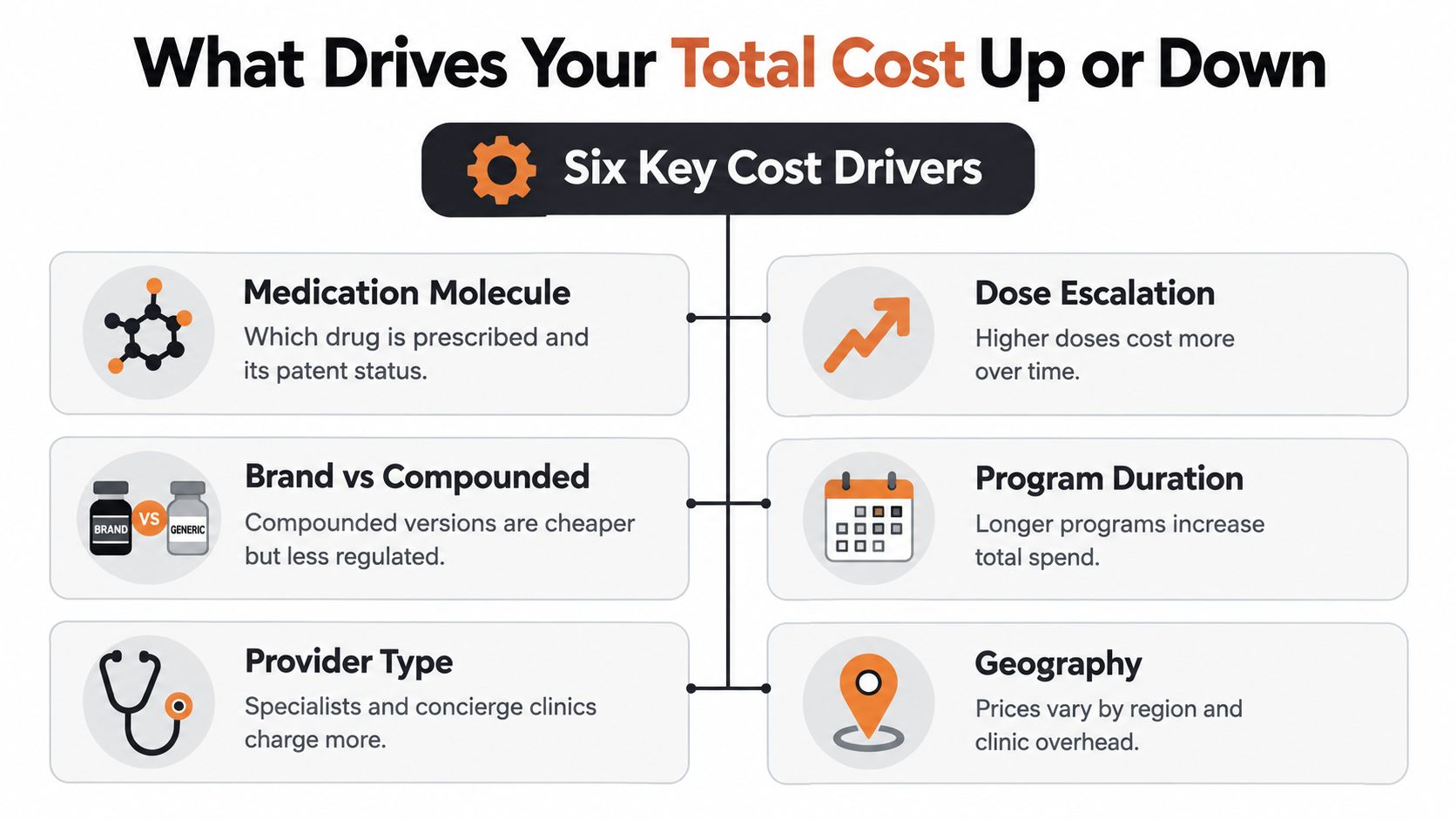
Two people may receive similar treatment yet face very different yearly bills. The difference usually comes from six factors. A useful estimate looks beyond the monthly charge and asks how much you pay for the result, how long treatment continues, and which payer pathway applies.
Medication molecule and dose
The prescribed molecule sets the starting point. Newer GLP-1 and related therapies have generally cost more than older obesity medications. Within one medication, dose escalation can also raise the monthly price when higher strengths are billed separately.
Someone who remains at a lower tolerated dose may spend less than someone who reaches a higher maintenance dose. Dose changes should follow response and tolerability, not price alone.
Brand versus compounded sourcing
Brand-name medication is a standardized commercial product with defined manufacturing and labeling. Compounded medication may cost less, but it is not the same as an FDA-approved branded product. If it is used, verify the pharmacy, prescription process, storage instructions, and follow-up plan with the clinician. A lower price does not replace those checks.
Program intensity
A concierge clinic with frequent in-person visits may cost more than a digital program using video appointments and secure messaging. The difference can make sense when you need physical examinations, complex medication management, or closer monitoring.
Geography and pharmacy choice
Location affects clinic overhead, staffing, and pharmacy access. International prices show how much the same branded treatment can vary. One comparison listed Wegovy at $1,349 per month in the United States, versus $328 in Germany and $296 in the Netherlands (international obesity-drug price comparison).
Treatment duration and maintenance
The early months may focus on finding a dose you can tolerate. After weight loss, you and your clinician may discuss maintenance instead of stopping immediately. Your annual estimate should include dose adjustment and possible maintenance, not only the starting phase. A lower monthly price can still produce a higher yearly total if treatment continues longer, while a higher price may offer better value if it leads to a durable result.
Payer rules
Insurance can change your out-of-pocket cost more than the clinic's posted price. A plan may require prior authorization, exclude weight-loss prescriptions, place the medication on a high coinsurance tier, or cover it only for another diagnosis.
ICER's 2025 assessment estimated current net prices of about $6,830 for injectable semaglutide and $7,973 for tirzepatide. It concluded that fewer than 1% of eligible U.S. adults could be treated before annual spending exceeded its $880 million budget-impact threshold (ICER obesity value assessment).
For an individual, the lesson is practical. Insurers assess the monthly price, expected treatment duration, and the cost of covering the medication across the eligible population.
Comparing In Office Telehealth and Medication Only Prices
The care model determines what your monthly payment buys. An in-office program may provide hands-on evaluation and a relationship with a local clinician, but separate billing can make the final total harder to predict. Telehealth usually emphasizes convenience and bundled pricing. Medication-only cash pay can reduce care-package fees, but it doesn't eliminate the need for a valid prescription and appropriate medical follow-up.
| Care Model | Typical Monthly Cost | What Is Included | Best For |
|---|---|---|---|
| In-office clinic | Varies by clinic and billed services | Visits, evaluation, possible labs, prescription management, and medication, often itemized | Patients who prefer face-to-face care or need complex oversight |
| Telehealth program | Roughly $149 to $499 for some cash-pay pathways | Often consultation, prescription management, messaging, medication fulfillment, and shipping | Busy adults who value convenience and predictable billing |
| Brand pharmacy cash pay | About $936 to $1,349 in listed monthly prices for examples in the U.S. | The branded medication through a pharmacy, with clinical care billed separately | Patients who specifically want a branded product and can manage separate clinical costs |
The telehealth range is broad because programs differ in medication source, dose, support, and promotions. A low price may apply only during an introductory period. Ask whether the rate changes when the dose rises or when the first-month promotion ends.
The brand pharmacy route can appear simple because the medication has a visible retail price. Yet you may still need to pay for the consultation, lab work, and follow-up separately. A pharmacy price also may not reflect your insurance copay or deductible.
Match the model to your priorities
Choose in-office care when physical access, local testing, or complex medical supervision matters most. Choose telehealth when you want remote visits, home delivery, and a single recurring bill. Choose medication-only purchasing when you already have an established prescriber and can coordinate pharmacy and follow-up needs yourself.
You may also encounter nonprescription products while researching weight loss. For a separate look at how a supplement is positioned, the Amplicell Keto Max Gobhb review offers context, but supplements shouldn't be treated as substitutes for prescribed medical therapy or clinician assessment.
For more detail about bundled virtual care and what a telehealth fee may include, review how much telehealth costs. The right comparison is not “clinic versus website.” It's oversight and inclusions versus total price.
Insurance FSA HSA and Medicare Coverage Explained
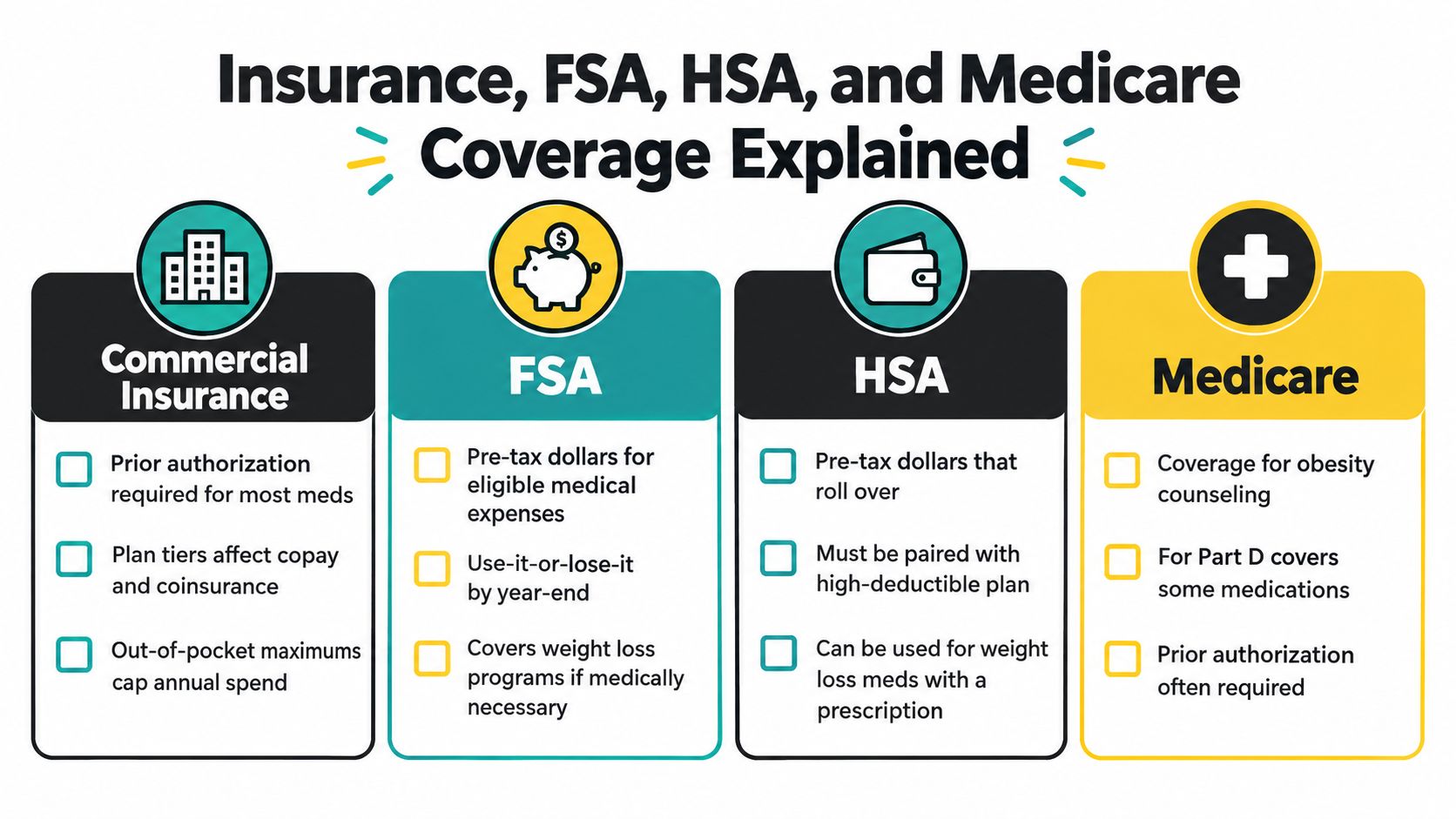
The amount charged to your card may have little relationship to the medication's list price. Commercial insurance, employer-plan exclusions, deductibles, prior authorization, manufacturer discounts, and public programs can all change the final bill.
Commercial plans often require prior authorization. Your clinician may need to document medical eligibility, previous treatment attempts, or relevant health conditions before the plan decides whether to cover the medication. Some large employer plans restrict obesity-drug coverage when the prescription is specifically for weight loss, so having insurance doesn't guarantee access.
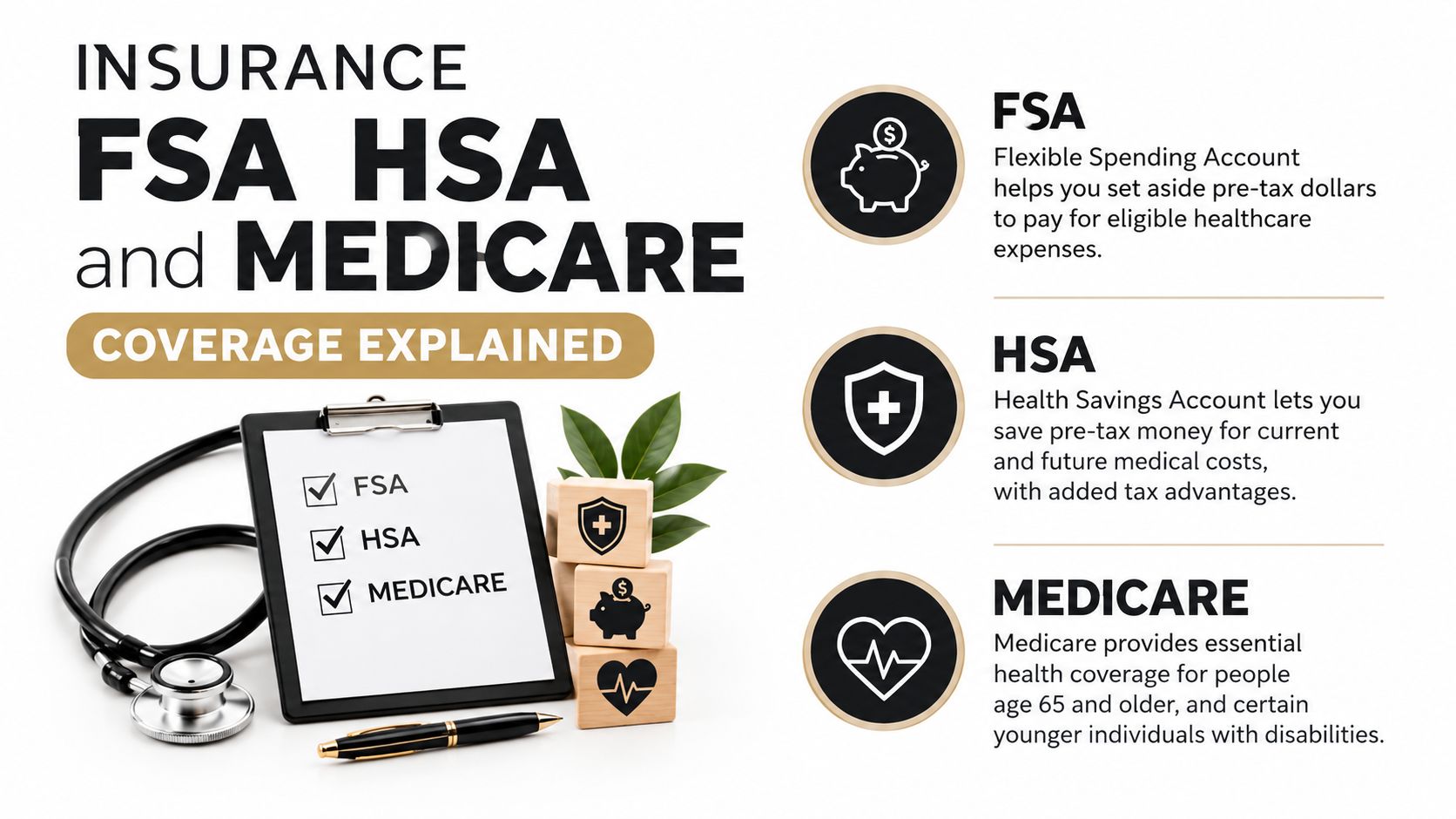
FSA and HSA funds may help with eligible medical expenses, but eligibility depends on the expense, the plan rules, and the documentation available. A prescription and a medical-necessity rationale may be important for weight loss programs, especially when the program includes telehealth services rather than only a pharmacy purchase.
Medicare can create a separate pathway
CMS has announced a Medicare pathway that will provide eligible beneficiaries access to GLP-1 medications at $50 per month starting July 1, 2026 (CMS announcement on Medicare GLP-1 access). This isn't a universal price for every Medicare patient. Eligibility, program rules, enrollment, and the prescribed medication still matter.
Recent reporting also describes a fragmented market, including new cash-price tiers of $149 and $299 per month for some Wegovy pill doses and insured prices as low as $25 monthly in certain situations (semaglutide cost overview). Those examples show why one average number can mislead.
Verify the net cost before you enroll
Use this checklist with your insurer, employer benefits team, prescriber, and pharmacy:
- Ask about the diagnosis: Is obesity treatment covered, or is coverage limited to diabetes or another indication?
- Confirm authorization: Who submits prior authorization, and what happens if the plan denies it?
- Check the pharmacy tier: Is the medication subject to a deductible, copay, or coinsurance?
- Ask about exclusions: Does the plan exclude weight-loss medications or telehealth programs?
- Clarify discount limits: Does a manufacturer or direct-pay discount count toward your deductible or out-of-pocket maximum?
- Request documentation: Can the provider supply receipts or medical-necessity records for FSA or HSA review?
A useful estimate has three numbers: the amount you pay now, the amount you pay after the introductory period, and the amount you may pay if coverage changes.
For a focused explanation of prescription access and insurance questions, see GLP-1 insurance coverage.
Sample Cost Scenarios and Cost Per Result
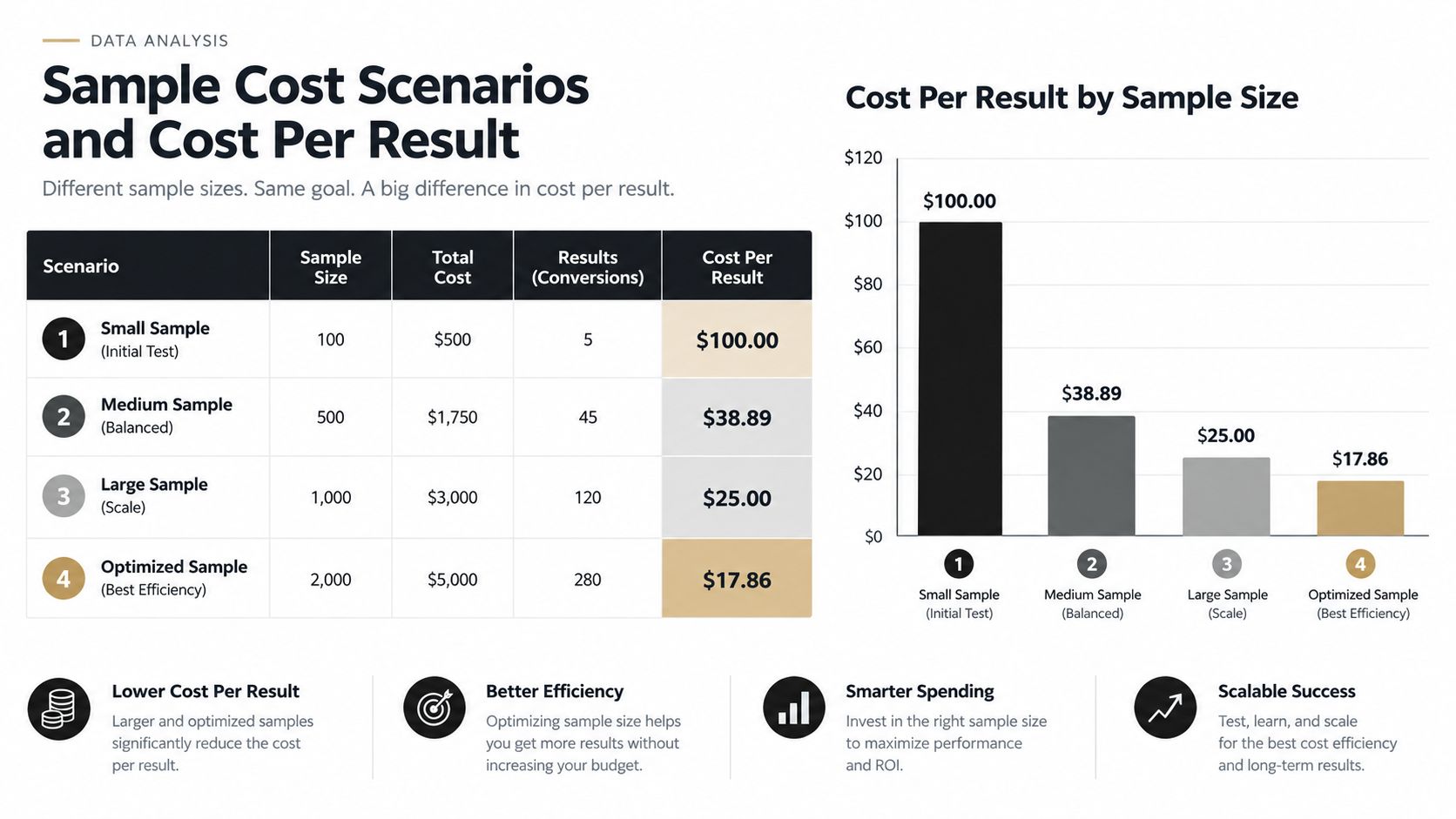
A yearly budget is easier to judge when you compare the result you hope to obtain with the amount you spend. These illustrative models are not promises or quotes. They show how treatment duration, dose changes, and the payer pathway can change the annual price.
Scenario one, a lower-cost telehealth pathway
A program priced at $149 per month would total $1,788 over a year if the rate stayed unchanged. If the introductory offer ends, dose-based pricing begins, or services are billed separately, the final total will rise.
To estimate cost per result, divide the annual total by the expected percentage of body-weight reduction. For example, an expected 10% reduction would place this pathway at about $179 per percentage point. That calculation is only a planning tool. Actual response, treatment duration, and tolerability vary, and the program should confirm its medication source and maintenance pricing.
Scenario two, a direct-to-consumer brand offer
A manufacturer direct-to-consumer price of $499 per month equals $5,988 over a year before coverage or discount changes. The same 10% expected reduction would produce a planning estimate of about $599 per percentage point. The higher annual payment may provide a clearer cash-pay route for a branded medication, but clinical visits, dose changes, and follow-up still need verification.
Scenario three, full retail brand pricing
A brand product listed at $1,349 per month would represent $16,188 over a year if the list price stayed constant. This is a list-price illustration, not a prediction of an insured patient's payment. Deductibles, copays, coinsurance, discounts, and plan exclusions can change the amount substantially.
Compare cost with expected benefit
Monthly price alone does not measure value. Independent analyses cited by Drugs.com estimated 72 weeks of tirzepatide at roughly $17,500 versus $22,800 for 68 weeks of semaglutide. The estimated cost per 1% of body-weight reduction was about $985 for tirzepatide and $1,845 for semaglutide (tirzepatide and semaglutide cost comparison).
The practical comparison is cost per result, not monthly price alone. Review expected response, tolerated dose, treatment duration, monitoring, and total annual spending together. A lower monthly fee may cost more overall if treatment lasts longer or produces less weight reduction.
How to Lower Your Medical Weight Loss Cost Safely
Start with a complete quote. Ask for the recurring price, medication source, dose-related changes, consultation fees, lab charges, shipping, refill policy, and cancellation terms in writing. A flat-fee program may be easier to budget, but only if the provider explains what happens after the first month.
Use available benefits carefully. If your plan allows eligible medical expenses through an FSA or HSA, ask the administrator what documentation is required. Confirm whether the expense must include a prescription, medical-necessity statement, or itemized receipt before you rely on those funds.
Discuss dose changes with the prescribing clinician rather than adjusting medication independently. A slower increase may help with tolerability and prevent wasted medication, but the correct schedule depends on your health history and response. Cutting doses or skipping follow-up without guidance can create safety problems and undermine the treatment plan.
Compare more than one legitimate cash-pay pathway. Manufacturer direct-to-consumer programs, pharmacy pricing, in-office care, and telehealth bundles may produce very different totals. Recheck the price after the introductory period and ask what your maintenance cost could be.
Avoid unverified online sellers and products that bypass a licensed prescriber or pharmacy. A lower price isn't useful if the product's identity, strength, storage, or handling can't be confirmed.
Weight Method is one telehealth option that bundles licensed-provider consultations, ongoing messaging, progress tracking, dose adjustments, medication fulfillment, and shipping into its program pricing, with FDA-registered pharmacy fulfillment described by the company. Use this as a comparison point, not a substitute for checking whether its current pricing, medication pathway, and eligibility match your needs.
Decision test: Choose the option that makes the full annual cost, clinical oversight, medication source, and likely maintenance plan clear before you pay.
Write down your expected monthly cost after promotions, your coverage status, and the questions your provider must answer. Then compare the total against the support you'll use and the result you reasonably expect, not against the cheapest number in an advertisement.
Visit Weight Method to review its telehealth approach, bundled care structure, and current pricing for medically supervised weight loss. Before enrolling, use the program details to request a personalized estimate that includes your medication pathway, dose changes, shipping, and ongoing provider support.