Peptide therapy runs roughly $149 to $2,083 per month in 2026, with a $350 median monthly price among clinics that publish recurring fees. That medication price is only one line item, because consultations, laboratory work, follow-ups, supplies, and shipping can change the budget.
A 2026 survey of 190 clinics across 79 metro areas found that only 36 clinics published any starting price, a sign that peptide therapy pricing remains unusually fragmented. The same survey found consultation and intake fees ranging from free to $1,500, so comparing medication prices alone can produce a badly distorted view of affordability. The published-price survey provides the clearest starting point for understanding the spread.
The practical question isn't, “What does the injection cost?” It's, “What will I spend each month at the dose I need, with the care I require?” This guide maps that all-in cost across compounded programs, branded medications, telehealth, clinics, insurance, and tax-advantaged accounts.
What Peptide Therapy Actually Costs in 2026
The headline range is wide because peptide therapy isn't one product or one business model. A general wellness peptide, a compounded GLP-1 program, and a branded prescription pen can sit in completely different pricing categories. The published 2026 clinic data found recurring monthly prices from $20 to $2,083, with a $350 median among clinics that disclosed recurring fees. That survey also found that only 36 of 190 surveyed clinics published any starting price.
For weight-loss care, advertised entry points often sit near the lower end of the market, while higher-dose protocols and branded products push much higher. A useful budget map looks like this:
| Program Type | Low End | Median | High End |
|---|---|---|---|
| Compounded peptide programs | About $149/month | Varies by dose and provider | About $600/month |
| Telehealth GLP-1 programs | About $149/month | Often near the broader $350 median | About $499/month |
| Branded GLP-1 treatment | About $900/month | Varies by product and coverage | Up to $2,083/month |
The ranges above should be treated as shopping landmarks, not guarantees. The 2026 pricing guide for major GLP-1 therapies listed compounded semaglutide at $200 to $500 per month, compared with $900 to $1,350 for Wegovy, while compounded tirzepatide appeared at $300 to $600, compared with $1,000 to $1,300 for Zepbound. The guide's comparison shows why the same active ingredient category can produce dramatically different bills.
The medication is only the first line
Your first invoice may include intake, clinical review, laboratory testing, supplies, and delivery. Follow-up care can be bundled into a subscription or billed separately. Dose escalation can also raise the monthly price, even when the provider advertises one attractive starting figure.
Budget rule: Compare the cost of the maintenance dose you may reach, not only the introductory dose.
The rest of this article separates peptides from GLP-1 medications, identifies the four biggest pricing levers, and shows where apparently cheap programs lose their advantage.
Peptides and GLP-1s Explained in Plain English
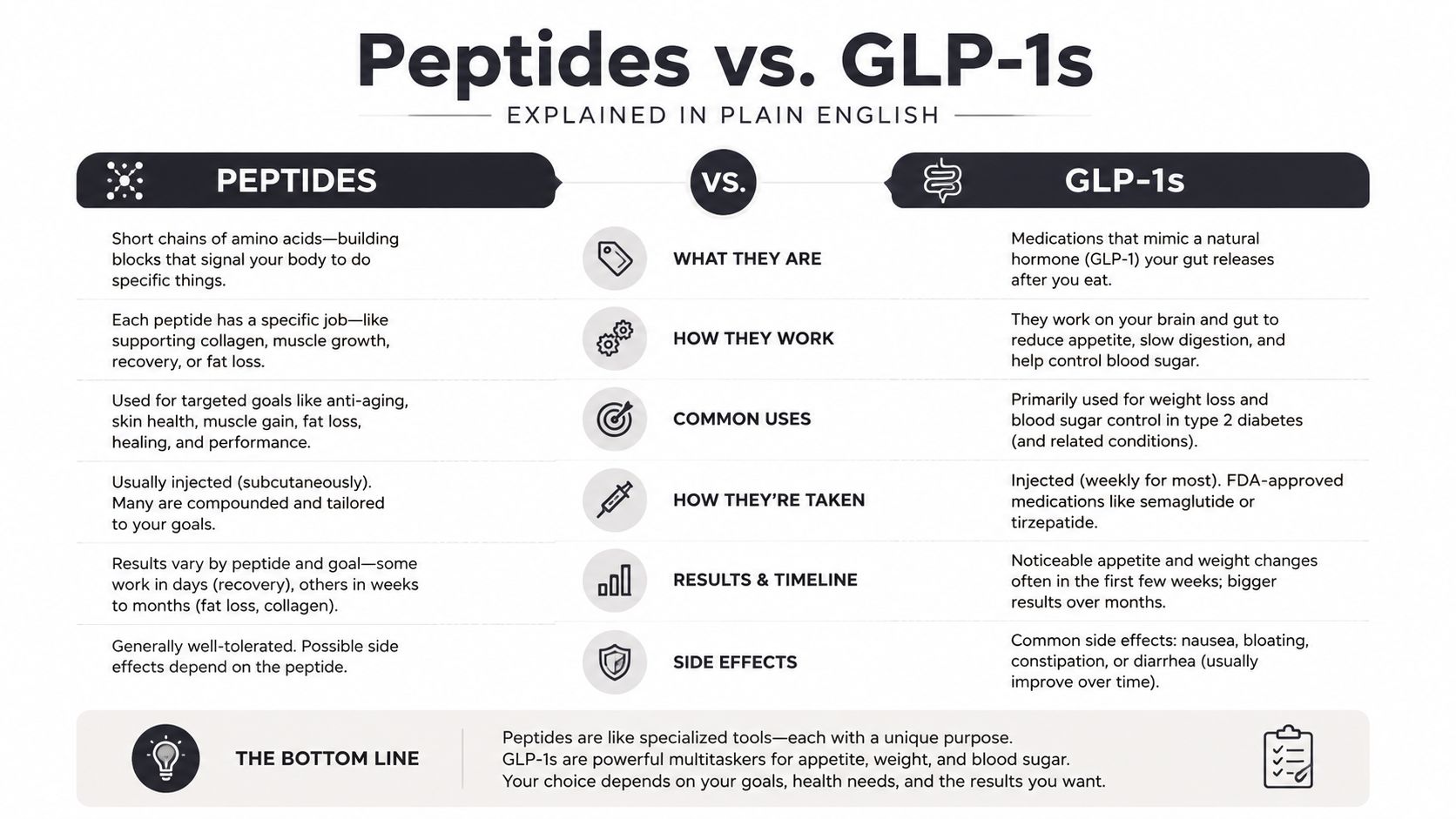
Peptides are short chains of amino acids that act as biological signals. In simple terms, they can imitate or trigger messages the body already uses. Providers may discuss peptides in connection with appetite regulation, recovery, hormone signaling, or other wellness goals, but the word “peptide” doesn't identify one standardized treatment.
That distinction matters for price. BPC-157, ipamorelin, and sermorelin are discussed in wellness and recovery settings, while semaglutide and tirzepatide belong to the GLP-1 treatment category that dominates medical weight-loss spending. These options shouldn't be compared as if they were interchangeable products.
GLP-1 medications work on appetite and metabolic signaling. They can slow gastric emptying and reduce appetite, which is why they're prescribed for specific medical indications under clinical supervision. Their pricing reflects not just the molecule, but also the extensive development, manufacturing, distribution, and brand infrastructure attached to approved products.
Semaglutide and tirzepatide aren't priced the same
Semaglutide is a GLP-1 receptor agonist. Tirzepatide acts on GLP-1 and GIP pathways, so it has a different mechanism and may occupy a different price tier. Both are commonly delivered as weekly injectables, but weekly dosing doesn't make their total cost identical.
The sticker price usually reflects four things: the medication's mechanism, demand, patent and exclusivity position, and the channel through which you receive it. Convenience is only a small part of the calculation. A vial, a prefilled pen, and a physician-managed subscription may contain related therapy but include very different services and safeguards.
Don't use “peptide” as a quality shortcut. Ask which medication or compound is being prescribed, who evaluates you, which pharmacy dispenses it, how dose changes are handled, and what happens if you need to pause or stop.
What Drives the Price You See on a Website
Four levers explain most of the price differences: dose, provider channel, brand versus compounded sourcing, and clinical infrastructure. If a website gives you one monthly number without explaining those variables, you don't yet have a useful quote.
Dose changes can change the bill
A starter dose may be priced attractively because the provider is selling an entry point, not the long-term protocol. As the prescribed dose rises, the amount of medication, pharmacy work, and clinical oversight may rise with it. Ask for the price at every anticipated dose level before enrolling.
The provider channel also matters. An in-person clinic may charge for an office evaluation, while a telehealth program may include the visit in a recurring fee. Neither model is automatically better. You're paying for different forms of access, monitoring, convenience, and overhead.
Sourcing changes both price and responsibility
Branded products generally arrive in standardized manufacturer packaging. Compounded products may cost less, but the quote can depend on the dispensing pharmacy, formulation, supply arrangement, and provider protocol. The lower price may also exclude supplies, shipping, or extra consultations.
Monitoring adds another layer. A program that includes laboratory review and dose management can cost more than a medication-only service, but the comparison isn't fair unless you account for what each program provides. For readers building a broader procurement budget, this strategic approach to lab supply costs offers useful context on why testing-related expenses need their own line item.
| Pricing Lever | Cost Impact | Example Range |
|---|---|---|
| Dose | Higher prescribed amounts can increase medication cost | Varies by product and protocol |
| Provider channel | Visits may be bundled or billed separately | Free to $1,500 intake fees |
| Brand or compound | Manufacturer pricing and pharmacy sourcing create large gaps | $200 to $1,350 for major GLP-1 examples |
| Monitoring | Labs, follow-ups, supplies, and shipping add to medication spend | Varies by program |
The right comparison is therefore not “Which website has the lowest number?” It's “Which quote includes the services I'd otherwise pay for separately?”
Branded Versus Compounded Pricing Compared
The headline medication price is only one part of the bill. Branded and compounded GLP-1 treatment use different supply and service models, so the gap depends on packaging, pharmacy operations, regulatory conditions, and what the program bundles.
Use the earlier pricing table as the reference point rather than repeating every range. In that guide's comparison, the compounded options work out to roughly 60% to 75% less per month than the corresponding branded products. Review the full pricing comparison for the underlying figures, then check whether a quoted price includes the same services.
| Cost factor | Branded treatment | Compounded treatment |
|---|---|---|
| Packaging | Standardized manufacturer pen | Vial or another pharmacy-dispensed format |
| Pharmacy operations | Manufacturer and retail distribution costs | Compounding, dispensing, and pharmacy oversight |
| Supplies | May be built into the pen format | Needles, syringes, or other supplies may be separate |
| Support | Manufacturer savings support may be available | Provider services and pharmacy support vary |
| Regulatory context | FDA-approved branded medication | Compounding rules and pharmacy oversight apply |
Where the apparent savings can disappear
A lower medication quote does not automatically produce a lower monthly bill. Ask whether the program includes administration supplies, shipping, dose titration, provider messaging, replacement support, and any required testing. A clinic or telehealth provider may also charge separately for intake, follow-up, or prescription management.
The cleanest comparison is an all-in recurring quote. Write down the medication, consultation fees, supplies, shipping, and monitoring before choosing. A flat-fee telehealth program can be easier to budget when those items are bundled, while a retail prescription or clinic quote may split them across separate charges.
Pharmacy availability and policy conditions can also change whether a compounded product remains available. Treat a low introductory price as a current quote, not a guaranteed long-term cost.
For a practical method to find true value in peptides, compare the headline discount with every included service. The comparison of compounded versus brand-name GLP-1 treatment can help clarify the trade-offs in product format and sourcing.
Choose branded treatment when insurance or eligible assistance makes the total manageable, or when standardized manufacturer packaging is your priority. Choose compounded treatment only through a legitimate, clinician-supervised channel that identifies the pharmacy, prescription process, monitoring plan, and complete recurring cost.
Insurance Savings Cards and FSA HSA Options
The advertised medication price is only one part of the bill. Insurance coverage, manufacturer assistance, and tax-advantaged accounts can change the true out-of-pocket cost, but each option has eligibility rules to verify before treatment starts.
Check the formulary first. An insurer may cover a branded GLP-1 for one indication and exclude it for another. Prior authorization may require proof of eligibility, previous treatment attempts, or related health conditions. Employer plan changes can alter coverage without changing the medication's list price.
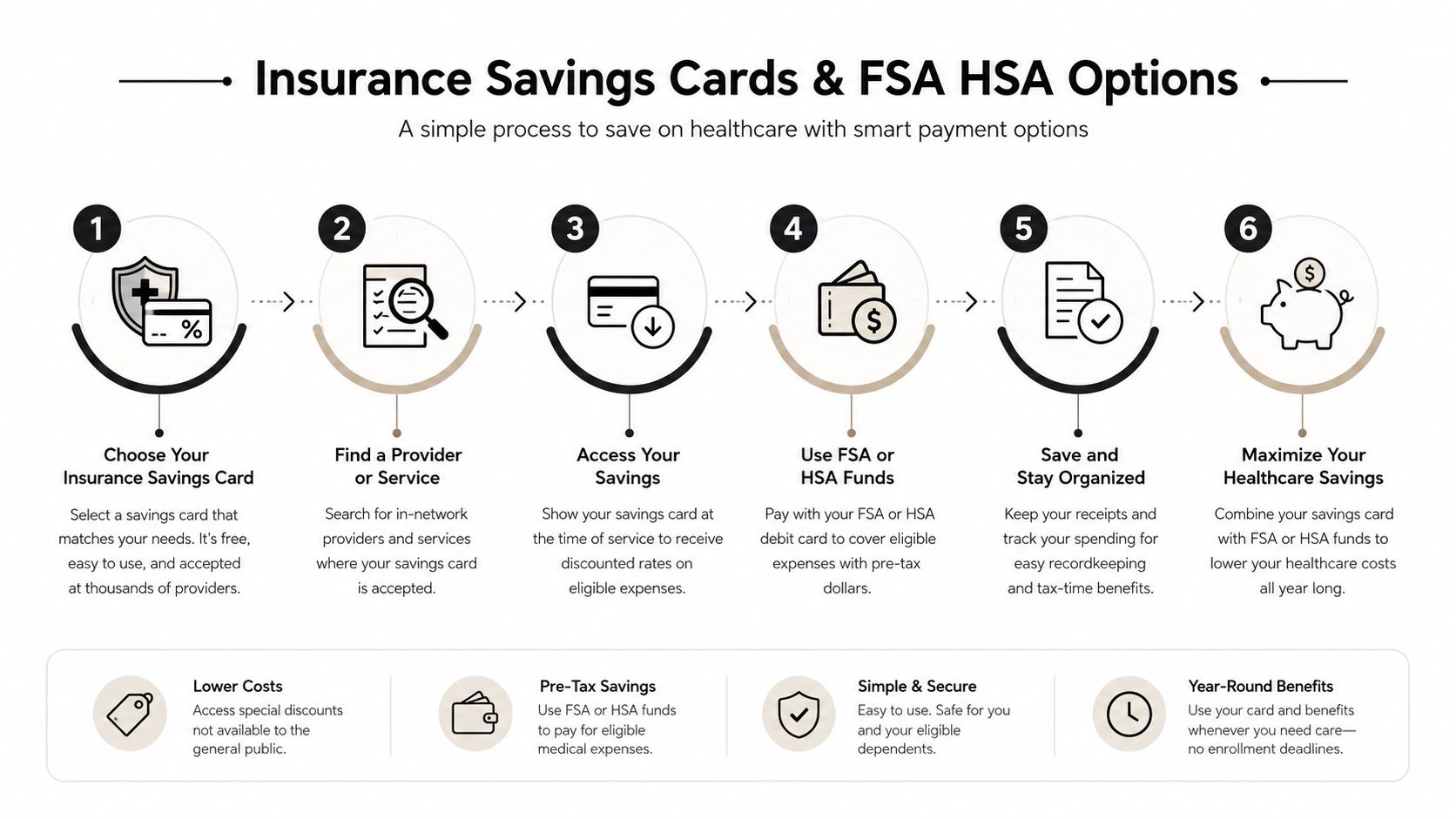
Manufacturer savings cards can reduce costs for eligible commercially insured patients. A pricing guide reports that some branded GLP-1 savings cards may bring the medication cost as low as $25 per month, depending on insurance and eligibility. Treat that figure as a conditional offer, not your all-in cost. Confirm whether visits, lab work, supplies, shipping, and dose changes remain separate charges.
FSA and HSA require documentation
FSA and HSA eligibility depends on account rules and the medical purpose of the expense. Ask the plan administrator whether the medication, consultation, lab work, or compounded prescription qualifies. A Letter of Medical Necessity may be required. Keep receipts, prescriptions, and provider records from the start.
A pricing index compiling ICER data estimates current annual net prices for GLP-1 obesity drugs in the U.S. commercial market at approximately $8,000 to $9,000. The same index lists manufacturer direct-to-consumer offerings outside insurance at about $499 per month, or $5,988 per year. ICER's pricing discussion illustrates why payer structure can matter as much as the medication selected.
Use the FSA and HSA eligibility guide to distinguish the accounts, then confirm your plan's rules. A savings card may exclude some insurance arrangements, and an FSA or HSA does not automatically cover every peptide-related service. Compare the final recurring total, not the discount headline.
Telehealth Versus In-Person Clinic Costs
Telehealth and in-person clinics charge for different care structures. A telehealth program may bundle provider evaluation, prescription management, messaging, and delivery into one recurring fee. An in-person clinic may charge separately for visits, testing, scans, and procedures while offering more physical access.
That difference makes the advertised price hard to compare. A low telehealth quote may exclude labs or supplies. A high clinic quote may include assessments that a remote program doesn't offer. The number matters only after you list the services attached to it.
What telehealth buys
Telehealth can reduce travel, waiting-room time, and repeated office visits. It may also make routine dose adjustments and messaging easier for busy adults. Those advantages are valuable if the program still requires appropriate clinical review and responds when your treatment changes.
Red flags include a service that ships medication without meaningful evaluation, refuses to explain its pharmacy relationship, or doesn't describe how titration and follow-up work. A very low monthly fee isn't a bargain if you later pay separately for every question, lab order, or dose change.
What an in-person clinic adds
An in-person clinic can provide physical examination, on-site blood collection, body composition assessment, and other services when clinically appropriate. Those features may matter more for patients with complex conditions, medication interactions, or a need for hands-on evaluation.
State licensure can restrict telehealth prescribing, and some treatment combinations may require in-person assessment. Ask whether the provider is licensed where you live and whether the program can continue if you move or travel.
| Cost Component | Telehealth | In-Person Clinic |
|---|---|---|
| Initial evaluation | Often remote and sometimes bundled | Office visit or intake fee |
| Medication access | May include home delivery | May require pharmacy pickup |
| Follow-up | Messaging, video, or scheduled remote visits | Office appointments |
| Laboratory work | Usually completed through an outside lab | May be available on-site |
| Physical assessment | Limited by remote format | Available when offered |
| Pricing clarity | Often easier when flat-fee | Can involve several separate charges |
Choose telehealth when predictable access and remote support meet your clinical needs. Choose an in-person model when physical assessment, on-site testing, or more complex supervision justifies the extra overhead.
Smart Ways to Lower Your Out-of-Pocket Cost
Lowering peptide therapy cost starts with paperwork, not coupon hunting. Before you compare providers, ask your insurer whether semaglutide or tirzepatide is covered for your diagnosis, whether prior authorization applies, and whether the plan requires step therapy.
Then request the full cash price from the provider. Ask for medication, consultation, labs, supplies, shipping, dose changes, and cancellation terms in writing. A program that refuses to provide that breakdown isn't giving you enough information to budget responsibly.
Use the right savings lever
Work through the options in this order:
-
Check coverage first. Insurance can change the price more dramatically than switching between providers. Confirm the formulary, deductible position, authorization requirements, and refill rules.
-
Compare manufacturer assistance. Savings cards may help eligible commercially insured patients, but they can have restrictions and may not apply to every coverage type.
-
Compare the maintenance-dose quote. Don't choose a program based only on a starter dose. Ask how the price changes as the prescribed dose increases.
-
Separate required care from optional extras. Lab review and provider access may be clinically important. Membership perks, scans, or add-on wellness services may not be necessary for your treatment plan.
-
Use tax-advantaged funds correctly. Ask your FSA or HSA administrator whether the medication and related services qualify, and retain the documentation they request.
A 2026 cost breakdown noted that hidden expenses can add $200 to $500 to the first month, while another guide put a typical first-year protocol at $2,000 to $2,800 once related costs are considered. That all-in cost analysis is a useful reminder that onboarding often costs more than a steady-state month.
Use this guide to saving on GLP-1 treatment as a planning aid, but verify every price and eligibility rule directly with the provider, pharmacy, insurer, or account administrator.
Final Cost Checklist Before You Start
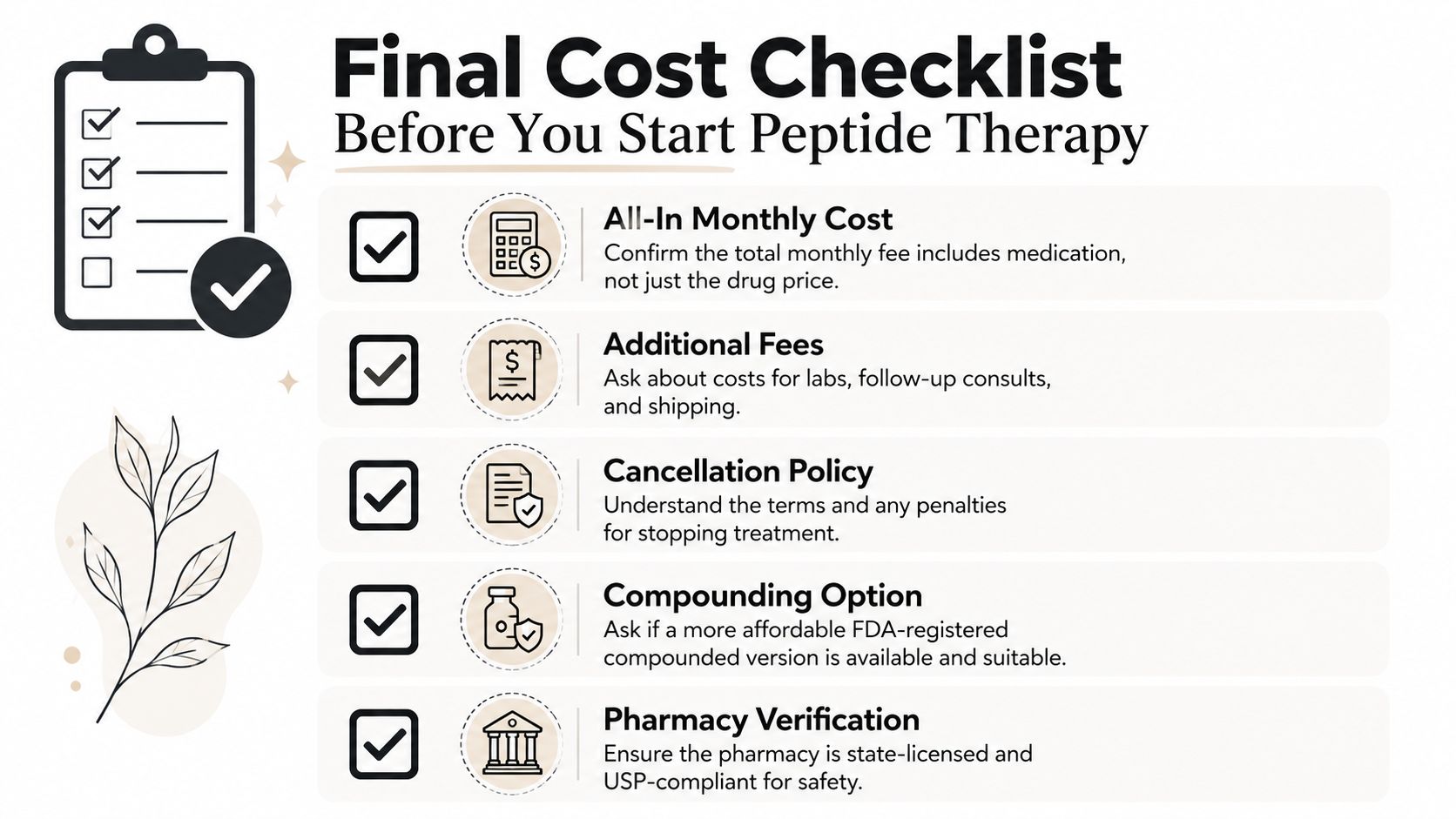
Before you sign up, demand a 12-month cost scenario, not a welcome-month price. The scenario should show the starting dose, possible dose increases, medication cost at each stage, follow-up frequency, lab timing, delivery charges, supplies, and the cost of stopping.
Ask these questions in writing:
- What is the all-in monthly price? Does it include the medication, provider evaluation, follow-up access, shipping, and administration supplies?
- What happens when the dose changes? Request the cost for each prescribed stage and ask whether clinical review is included.
- Which pharmacy dispenses the medication? Confirm licensing, compounding category, labeling, beyond-use information, and how the provider handles pharmacy problems.
- What testing is required? Ask which labs are clinically required, where you can complete them, and whether the program bills them separately.
- How does insurance billing work? Find out whether the provider submits claims, supplies documentation, or operates entirely as a cash-pay service.
- Can you use FSA or HSA funds? Confirm eligibility with the account administrator and ask whether the provider supplies receipts or superbills.
- What happens if you pause treatment? Review refill timing, cancellation rules, unused medication policies, and re-entry requirements.
- What does support include? Clarify messaging access, response expectations, dose-adjustment visits, and emergency guidance.
- What is the pharmacy verification process? Request appropriate documentation, including a Certificate of Analysis when relevant and available.
- Is the flat fee worth it? Compare the convenience premium with the cost of arranging medication, clinical visits, labs, and supplies separately.
The question that exposes weak pricing
Ask: “What will I pay in an ordinary month after the introductory period, at the dose my provider expects me to reach?” If the answer is vague, the advertised starting price isn't a budget. It's a lead-generation number.
The U.S. market also carries a global pricing problem. A health-system review listed a one-month supply of tirzepatide at $1,023 in the United States, compared with $444 in the Netherlands and $319 in Japan. The cross-market analysis illustrates how reimbursement rules, market exclusivity, and negotiation power influence what patients pay.
The best value isn't always the lowest medication price. It's the option that gives you a transparent total, legitimate clinical oversight, a dependable dispensing path, and an exit plan if the cost or treatment fit changes.
If you want a transparent way to compare supervised GLP-1 care, visit Weight Method. Its telehealth model combines licensed-provider evaluation, ongoing support, dose management, and home delivery, so you can review the treatment cost as a complete care plan rather than a medication-only quote.